Book Review
 By Kulbhushan Kain
——-
“Being an Indian Teenager”
By Pooja Marwah
——–
Growing up in a world before algorithms, smartphones, and viral validation, teenagerhood was a distinctly localised affair. It was shaped by classroom friendships, parental boundaries, and long summer afternoons. Today, however, the landscape of youth has fundamentally mutated. The modern Indian teenager navigates a hyper-visible digital world, where identity is curated in real-time, and validation is measured in likes, shares, and followers.
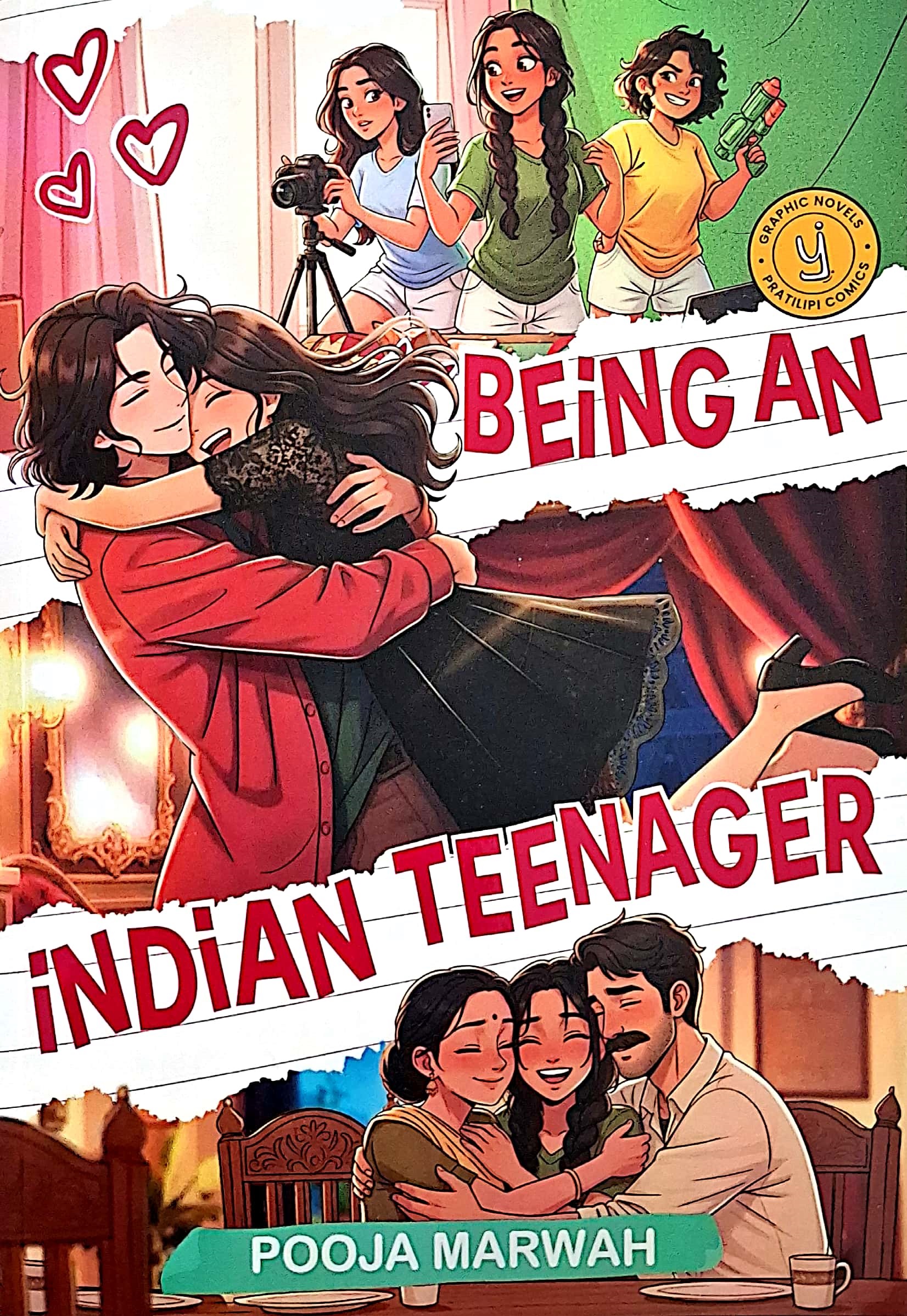
Capturing this whirlwind with absolute honesty, humour and heart is Pooja Marwah’s highly unique new graphic novel, Being an Indian Teenager (published by Westland Books and Pratilipi Comics).
The book follows fourteen-year-old Bhanupriya Vaishnavi Puttuswamy – affectionately known as Riya, who has officially had enough of navigating a world governed entirely by adults. Her parents seem to speak a completely different dialect (not literally, but culturally), academic pressures loom large, and her internal monologue is permanently stuck in a state of bewilderment. In an attempt to find comfort and a sense of belonging, Riya and her two best friends, Sam and Alisa, create an anonymous Instagram handle: @Being-an-Indian-Teen.
What begins as a simple coping mechanism and a plea for cosmic help quickly spirals into an accidental phenomenon. The universe doesn’t send guidance; it sends drama, thousands of followers, unexpected digital fame, and a cascade of chaotic, “wait, what just happened?” moments.
Pooja Marwah, an alumna of Welham Girls’ School, is a brilliant storyteller known for her sharp wit and deep empathy, and handles this contemporary landscape beautifully. What sets “Being an Indian Teenager” apart from standard teenage fiction is its format and authenticity. Born out of the collective confinement of the lockdown, where the author found herself observing her own children in what felt like a real-life sitcom – the book carries a lived-in genuineness. Pooja Marwah reportedly drafted chapters in parking lots while waiting for her kids, and that immediate proximity to the subject matter shines through on every page.
The graphic novel medium serves the story wonderfully. Visually vibrant and fast-paced, it perfectly mirrors the quick, episodic rhythm of a teenager’s daily life. Yet, beneath the laugh-out-loud comedy, the chaotic Instagram posts, and the “crush-adjacent” situations, she weaves a deeply thoughtful narrative about peer pressure, social media expectations, and the arduous process of figuring out who you want to be when the whole world is watching.
More importantly, this is a book that bridges the generational divide. While teenagers will find their lives mirrored perfectly in Riya’s relatable chaos, parents will find it an eye-opening window into a world they often struggle to comprehend. It doesn’t preach down to its young audience, nor does it villainize the well-meaning but bewildered parents. Instead, it listens.
“Being an Indian Teenager” is a delightful, meaningful addition to contemporary Indian literature. It is messy, magical, and entirely necessary. For parents wanting to understand their kids, or for anyone nostalgic for those intensely formative years, Pooja Marwah’s book is a masterful, heartfelt read that deserves a permanent spot on the family bookshelf. I thoroughly enjoyed reading it, and I promise – so will you!
(Kulbhushan Kain is an award winning educationist with more than 4 decades of working in schools in India and abroad. He is a prolific writer who loves cricket, travelling and cooking. He can be reached at kulbhushan.kain@gmail.com)