By RATNAJYOTI DUTTA
NEW DELHI, 26 July: Bureaucrats must cultivate humility to better serve the nation and strengthen democratic institutions, former Chief Election Commissioner SY Quraishi said, recalling how a gardener taught him one of the most enduring lessons of his life during his initial posting as a civil servant.
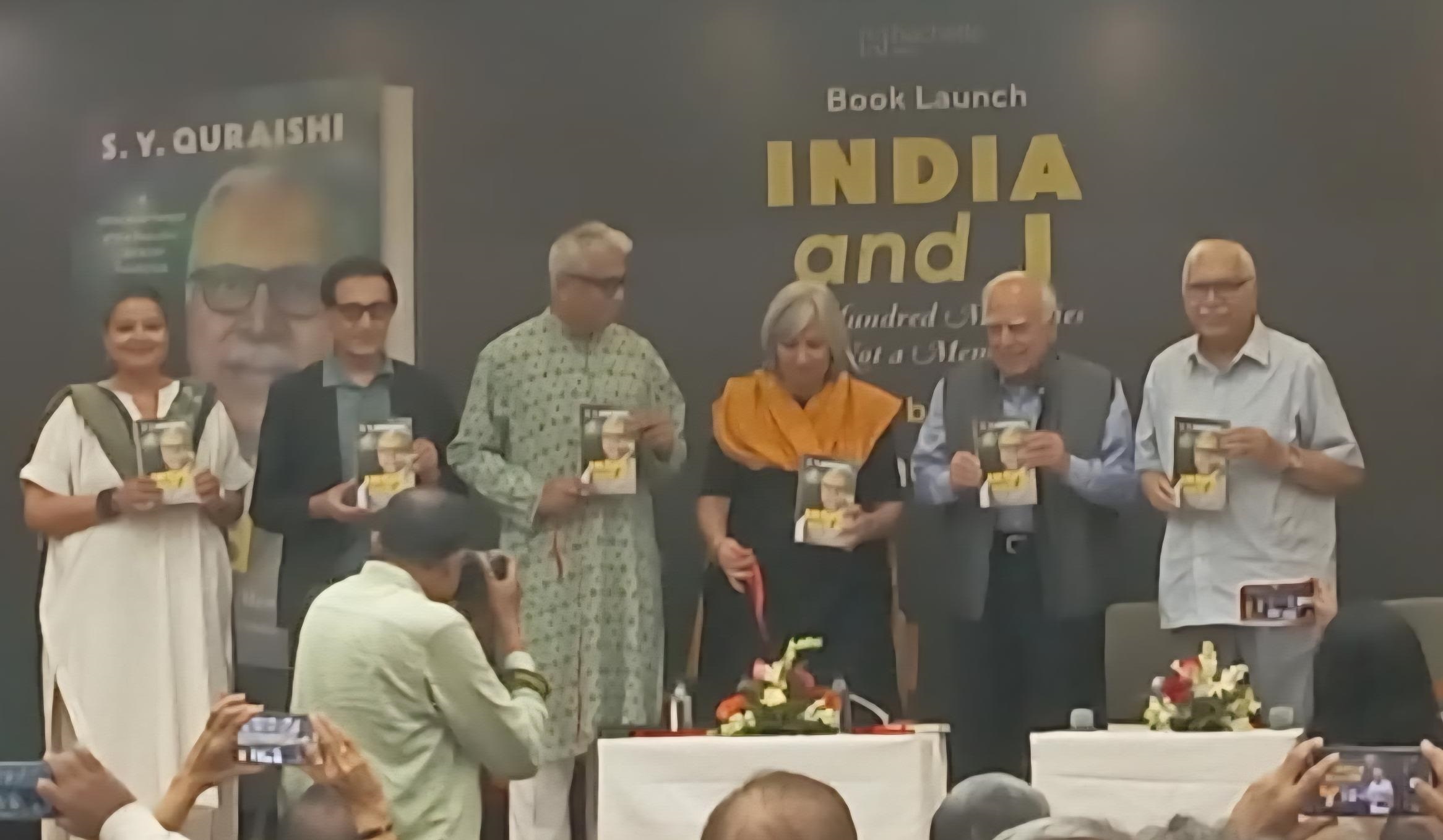
The anecdote features in Quraishi’s latest book, ‘India and I’, a collection of 100 personal memories that the author describes as “not a memoir” but as a reflection on the people and experiences that shaped his life.
Speaking at the book launch at the India International Centre on July 24, Quraishi said the lesson in humility stayed with him throughout his career in public service.
“I was probably the most accessible Chief Election Commissioner the country has ever had,” Quraishi said, attributing that approach to the values he imbibed early in life.
Launching the book, Rajya Sabha member and former Union Law Minister Kapil Sibal described it as an intensely personal narrative. “In this book, the writer focuses on himself,” Sibal said.
Recalling his days with Quraishi at Delhi’s St Stephen’s College, Sibal said his former college mate had upheld democratic values through integrity, humility and exemplary public service.
Actor, broadcaster and author Sunit Tandon read excerpts from two chapters of the book, including the episode in which a gardener instilled in the young civil servant the value of humility. Tandon also read the concluding chapter, in which Quraishi pays tribute to his late wife, a native of Nepal, whom he describes as a multifaceted woman of exceptional grace and strength.
Reflecting on public office, Quraishi said positions of authority are temporary and should never become a source of arrogance. “No matter how important the position one holds, one should always remember that it is temporary,” Quraishi said.
A former Indian Administrative Service (IAS) officer, Quraishi said he had seldom encountered communal discrimination during his long administrative career, although he recalled one isolated incident.
Recalling a visit to Pakistan, Quraishi said he met former Prime Minister Imran Khan when the latter was still an emerging political leader and was critical of democratic institutions, including the Election Commission.
“I advised him not to criticise an institution that could one day declare him elected,” Quraishi said, drawing laughter from the audience.
Quraishi said one chapter of the book underscores the indispensable role of a strong Opposition in a democracy and highlights the importance of earning the confidence of opposition parties for the smooth functioning of institutions such as the Election Commission.
Moderating the discussion, senior journalist Rajdeep Sardesai said he would be keen to read Quraishi’s account of his interaction, as part of a delegation of Muslim intellectuals, with Rashtriya Swayamsevak Sangh Chief Mohan Bhagwat.
An attendee remarked that it would be interesting to find whether the interaction with the RSS Chief features in the released edition or has been reserved for a future volume.
During the discussion, Sardesai observed that retired bureaucrats often appeared more candid after leaving office. Quraishi responded that serving civil servants are bound by service conduct rules and urged the media to appreciate those institutional constraints.
Editor-in-Chief of The Tribune, Jyoti Malhotra described ‘India and I’ as a compelling account of Quraishi’s decades in public service, offering readers valuable insights into governance, democracy and public life.