
 By Dr Indresh Kumar Pandey
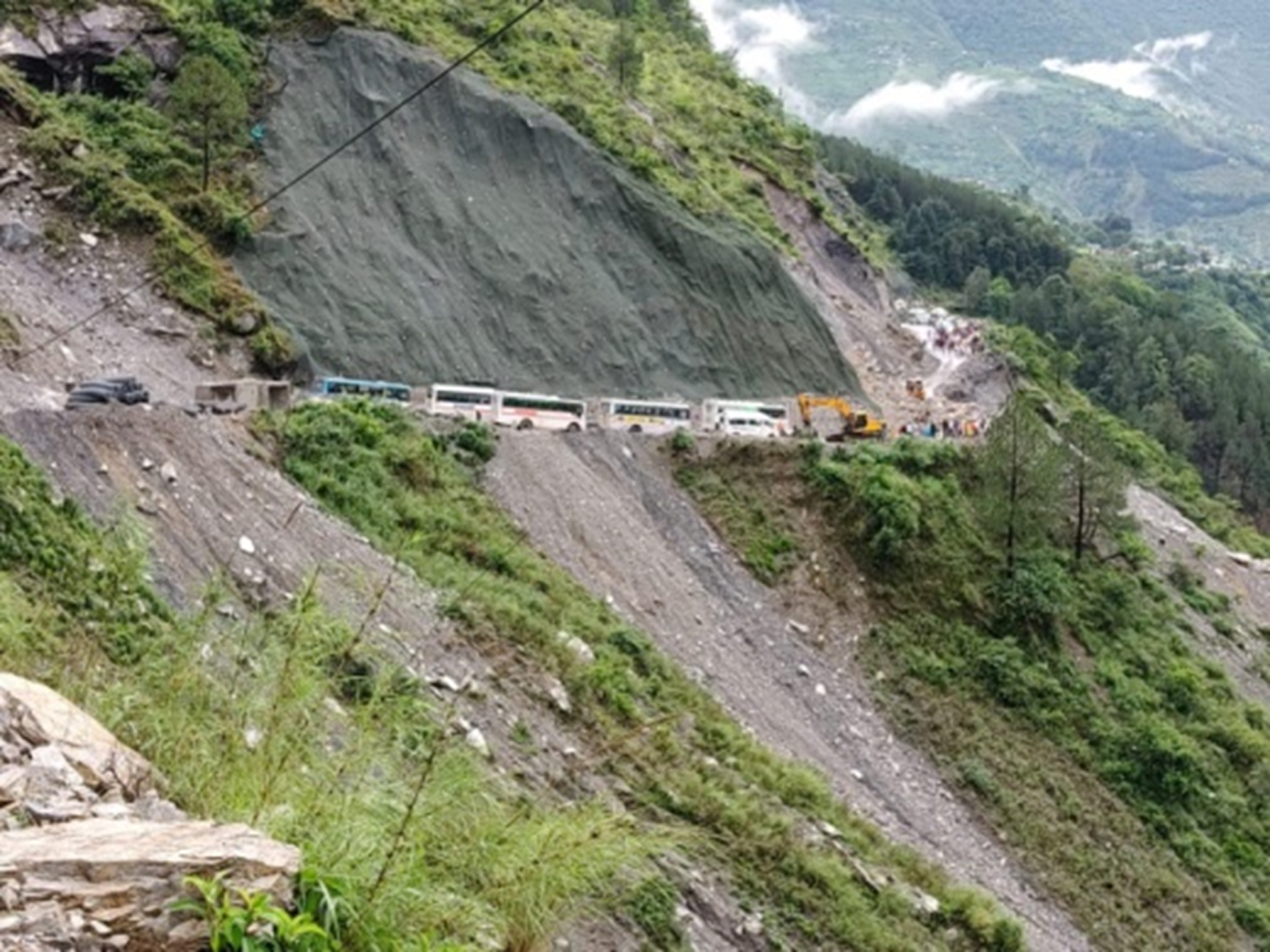
The Himalayan region is becoming increasingly vulnerable to climate change and global warming. Abnormal pattern of Western Disturbances, an increasing number of natural disasters and ecological imbalances are becoming matters of concern for Uttarakhand. It has become imperative to find ecological solutions to these disasters and efforts to address natural problems using natural means are likely to be more successful. In this context, Khas grass can provide a solution to various issues in the mountainous region of Uttarakhand, including landslides and soil erosion.
Khas is a perennial grass that grows up to approximately two metres in height. Its roots spread extensively like a mat and can reach depths of up to four metres. The plant grows in clumps. Its unique structure makes it resistant to frost and wildfires and also helps it withstand heavy grazing pressure. Khas leaves serve as a useful by-product for feeding livestock. Its stems are erect and rigid, enabling them to survive even in deep water currents.
The scientific name of Khas (Vetiver) is Vetiveria zizanioides. It is a fast-growing, eco-friendly grass belonging to the Poaceae family which aids in preventing soil erosion and rehabilitating soil contaminated with heavy metals. Its name originates from the Tamil language and is found throughout Southeast Asia, including various regions of India. It is a clump-forming grass with a massive, dense root system that can extend up to seven metres deep, making it useful for slope stabilisation and drainage control. A key characteristic of this plant is its ability to easily adapt to extreme environments ranging from aquatic to arid conditions and withstand, both, high temperatures and cold. Due to its dense and deep fibrous root system, which binds soil particles together and protects slopes from rainwater and runoff the plant can be highly effective in controlling soil erosion in the Himalayas.
Since this plant requires minimal maintenance and can adapt to diverse environmental conditions, it serves as an ideal, sustainable solution for preventing soil erosion and stabilising land in the mountainous regions of Uttarakhand. It also holds economic significance as the oil extracted from its roots is used in perfumes, cosmetics and aromatherapy. Khas has been used in India for millennia and is mentioned in various ancient Indian scriptures, including the Vedas. Traditionally, its aromatic roots have been utilised for their cooling properties, as well as in perfumes and herbal remedies. In Indian culture, khas is considered sacred and is used in numerous religious rituals. The plant is also employed in afforestation, soil conservation and bioremediation projects, while its fibrous leaves and stems are used for making handicrafts and as animal fodder.
A key characteristic of Khas grass roots is that they grow vertically and bind the soil to a considerable depth, creating a robust soil stabilisation system that resists erosion. Its stiff, upright stems act as a living vegetative filter, reducing the velocity and force of water runoff and thereby diminishing the potential for soil detachment and transport. Furthermore, as a perennial plant, Khas provides continuous protection once established and survives even under adverse conditions.
The steep slopes of Uttarakhand’s mountainous region are particularly vulnerable to soil erosion and landslides. Khas grass can prove effective in stabilising these slopes and preventing land degradation. In areas with heavy rainfall, the plant’s ability to slow down water flow and absorb impact protects the soil from loosening and washing away. Beyond erosion control, Khas grass roots also improve soil structure. As the plant requires minimal maintenance, it can serve as a sustainable cost-effective solution for environmental conservation in the region and help the state to achieve the fifteenth SDG goal.
(The Author is Assistant Professor at Government PG College, Karnprayag, Chamoli.)


