By Arun Pratap Singh
Garhwal Post Bureau
Dehradun/ Haridwar, 12 Aug: With the world-famous Kanwar Yatra drawing a record 4.8 crore pilgrims to Haridwar this year as per the official claims, the Haridwar Nagar Nigam and the district administration are now facing the equally daunting task of clearing the huge quantity of garbage left behind by the fortnight-long pilgrimage.
The Kanwar Yatra concluded yesterday, and the municipal corporation thereafter intensified its special cleanliness drive across the city, with its teams working round the clock to remove waste from the ghats, roads, Kanwar tracks and other areas that witnessed massive footfall. The 4.8 crore figure is the highest-ever recorded during the Kanwar pilgrimage, surpassing the previous record of about 4.5 crore in 2025.
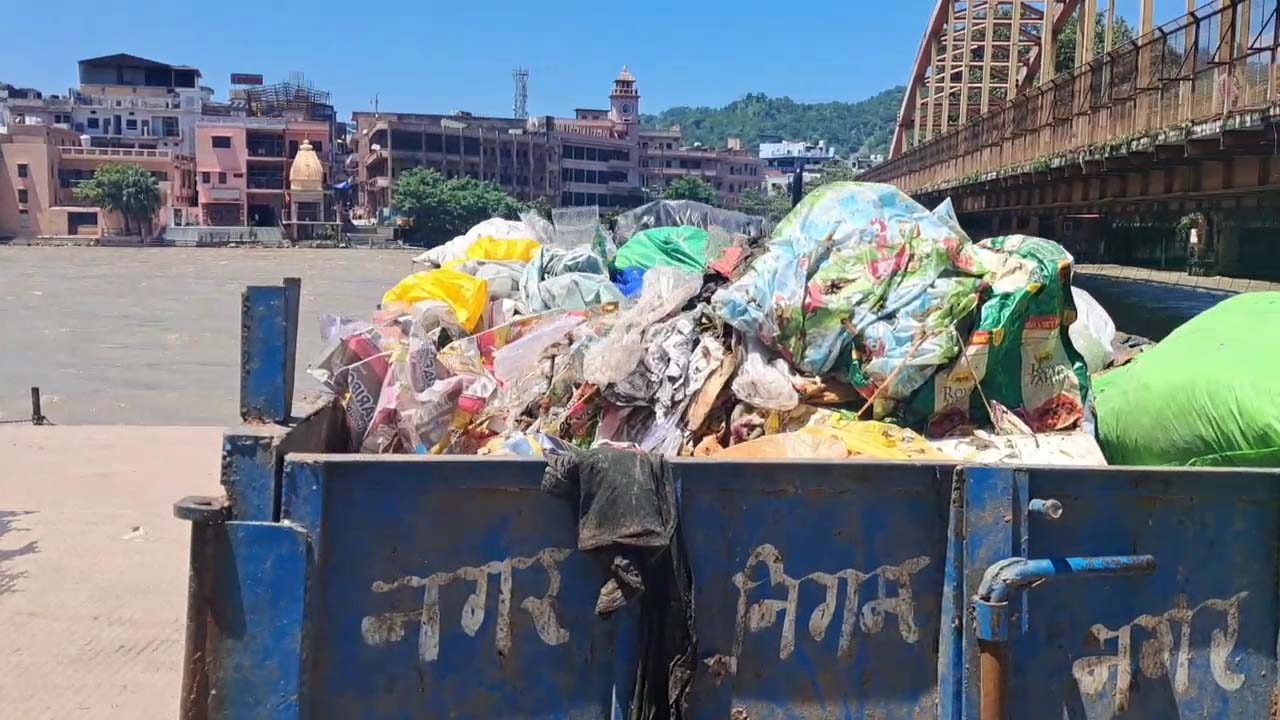
The scale of the challenge can be gauged from the fact that around 7,000 metric tonnes of waste has been collected during the Kanwar Mela period, including the additional waste generated by the massive influx of pilgrims. Of this, around 4,000 to 4,500 metric tonnes is estimated to have been generated over and above the city’s normal daily waste. A substantial quantity accumulated along the Ganga ghats and on the Kanwar track, particularly at places where movement of vehicles was restricted during the Dak Kanwar period. Local residents however claim that a large quantity of the garbage including the plastic waste is still littered all over the place.
Haridwar Municipal Corporation has begun the intensive post-Mela cleaning operation on Tuesday evening itself. The Har Ki Pauri area was taken up on priority, followed by other ghats and stretches adjoining the Ganga. Around 1,000 municipal sanitation workers have been deployed for the operation, while personnel of the Zila Panchayat and Transport Department have also joined the cleanliness drive in areas under their respective jurisdictions.
Har Ki Pauri, Subhash Ghat, Nai Ghat, Alaknanda Ghat, Birla Ghat and Vishnu Ghat are among the areas taken up on priority. According to the Nagar Nigam, around 90 percent of the ghats had already been cleaned by this evening. The collected waste is being transported to the processing plant and Material Recovery Facility at Sarai, where efforts are being made to segregate recyclable material from the remaining waste and ensure its scientific disposal.
Haridwar Municipal Commissioner Nandan Kumar claimed that the cleanliness operation had been intensified immediately after the conclusion of the Kanwar Yatra. During the Dak Kanwar period, restrictions on vehicular movement on roads and narrow lanes had resulted in garbage accumulating at several locations. The Nigam therefore gave priority to the ghats and major routes before moving to other parts of the city.
Kumar shared that since the beginning of the Kanwar Mela, around 7,000 metric tonnes of waste has been collected. If the city’s regular waste is excluded, around 4,000 to 4,500 metric tonnes of additional waste was generated during the Kanwar Yatra. The collected waste is being sent to the processing plant and MRF centre at Sarai,” Kumar said.
Special segregation teams have been deployed this year to deal with plastic waste, discarded clothes and other material collected from the ghats. The objective is to ensure that recyclable waste is separated and sent for recovery instead of being dumped along with mixed municipal waste. The civic body has set a target of making most parts of the city clean by Wednesday evening, though additional teams are expected to remain deployed for several more days for cleaning, monitoring and removal of residual waste.
The Transport Department has also taken up cleaning work at locations under its control. Its officials and employees are also carrying out cleaning at the Haridwar bus stand and the department’s office premises and removed waste accumulated during the Kanwar Yatra. ARTO Neha Jha said special cleaning drives were being undertaken at all places where garbage had accumulated on the instructions of the District Magistrate and that the exercise would continue.
The Zila Panchayat has similarly begun removing waste from the Kanwar tracks and rural stretches outside the municipal limits. Since the Zila Panchayat is responsible for sanitation along several portions of the Kanwar route outside Haridwar city, its employees have been deployed to collect and clear the waste. Additional Chief Officer of Haridwar Zila Panchayat Mahesh Bishnoi, along with field staff and other officials, has been supervising teams working at different points along the route.
District Magistrate Mayur Dixit has directed all departments to work in coordination and ensure that Haridwar is restored to a clean condition at the earliest. He has also appealed to social organisations and other stakeholders to participate in the cleanliness campaign.
Every year, the administration and municipal bodies face an enormous challenge in cleaning the cities and the Ganga ghats after major religious gatherings. While the present intensive operation is necessary, the recurring accumulation of thousands of tonnes of waste raises questions about whether the existing system is adequate to cope with the extraordinary seasonal pressure generated by pilgrims and tourists.
It may also be reminded here that Haridwar and Rishikesh attract visitors throughout the year and are among Uttarakhand’s most important religious and tourism centres. Yet, despite their enormous importance, both cities continue to struggle with littering, waste collection, segregation and the maintenance of public spaces, particularly around the ghats and high-footfall areas. Rishikesh’s own Municipal Corporation lists door-to-door garbage collection, cleaning of drains in all wards and disinfection among the regular functions of its sanitation department, with the city’s 40 wards monitored by sanitation inspectors. Besides Rishikesh city, the Muni Ki Reti area also witnesses regular visitors and as the Municipal body there is very small, the sanitation remains a big challenge in the area.
The problem becomes particularly serious during periods when the normal population of the two cities is multiplied several times over by pilgrims and tourists. The pressure is not confined to garbage lying on roads. Plastic bottles, food packaging, discarded clothes, religious material and other waste can find their way towards drains and eventually the Ganga unless collection and segregation systems operate continuously and efficiently.
The district administration has, in fact, been holding regular meetings on solid waste management and sanitation this year. The official Haridwar district records show a series of meetings in June and July 2026 relating to implementation of solid waste management measures, including reviews of sanitation work and monitoring mechanisms. The existence of these mechanisms is important, but the real test lies in ensuring that they translate into visible and sustained improvements on the ground.
What Haridwar and Rishikesh require is not merely a post-festival emergency cleaning operation but a permanent, professionally managed sanitation and waste-management mechanism for high-footfall religious and tourist zones. A dedicated task force equipped with adequate manpower, waste-collection vehicles, compactors, segregation facilities and rapid-response teams probably needs to be kept operational throughout the year, with its strength increased substantially before Kanwar Yatra or the Kumbh-related events, major festivals and peak tourist seasons.
There is also a strong case for making source segregation and recycling an integral part of the system rather than attempting to separate massive quantities of mixed waste after they have already accumulated. Dedicated collection points for plastic, cloth, food waste and other recyclable material, adequate bins at strategic locations, regular lifting of waste and strict monitoring of garbage vulnerable points could substantially reduce the burden on sanitation workers. Public toilets, drinking-water facilities and clearly marked waste-disposal points along major pilgrimage routes would also help reduce indiscriminate littering.
Technology can further strengthen the system through GPS-enabled waste vehicles, real-time monitoring of collection routes, CCTV surveillance at chronic garbage dumping points and digital complaint and response mechanisms. The aim should be to identify and remove waste before it turns into a visible heap rather than waiting for complaints or for the conclusion of a major event.
The need is even more pressing in Rishikesh, which has acquired an international reputation as a centre for yoga, spirituality, adventure tourism and wellness and receives a substantial number of foreign visitors throughout the year. The city’s international image is directly linked to the condition of its streets, ghats, riverfront areas and public spaces. The Municipal Corporation itself has stated that cleanliness and waste management, including modern methods of waste disposal and recycling, are among its priorities.
It is therefore ironic that cities which depend so heavily on pilgrimage and tourism should continue to appear unusually dirty at important locations. The sight of overflowing bins, plastic waste, discarded food packets and other litter around prominent ghats and tourist areas not only causes inconvenience to residents but also undermines the image of Uttarakhand as a clean and environmentally conscious Himalayan state.