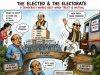
The 2026 Monsoon Session of Parliament, which concluded on 13 August serves as a striking case study for the strengths and vulnerabilities of contemporary parliamentary democracy. While the session demonstrated the government’s robust capacity to execute legislative agendas, it also highlighted a severe gridlock in collaborative governance, resulting in a historically low productivity rate of 19% in the Lok Sabha and 39% in the Rajya Sabha.
Despite relentless political friction, however, the democratic machinery proved capable of passing critical legislation. The Parliament cleared 12 key Bills, delivering on functional governance requirements in sectors like mining, co-operatives, and regional identity. The passage of The Kerala (Alteration of Name) Bill, 2026 demonstrated the federal government’s respect for state-level democratic mandates, formally changing the state’s name to “Keralam” following a unanimous resolution passed by the Kerala Assembly.
When faced with severe opposition pushback on highly sensitive laws, the government utilised institutional safety valves. A prime example was sending the contentious Foreign Contribution (Regulation) Amendment (FCRA) Bill, 2026 to a 31-member Joint Parliamentary Committee (JPC) for cross-party scrutiny. The tabling of the inquiry panel report regarding cash irregularities involving a former High Court judge highlighted the parliament’s vital role as a watchdog, ensuring that even the judiciary remains accountable to the public under democratic frameworks. Reflecting democratic protocols, Union Home Minister Amit Shah formally offered to engage in an unconstrained, extended debate regarding pressing public grievances, such as student protests and the NEET examination issues. However, the ultimate goal of a parliamentary democracy is the thorough vetting of laws. Unfortunately, 11 out of the 12 Bills were rushed and passed through voice votes without any parliamentary debate amid the chaos, heavily diluting democratic oversight.
The persistent logjam led to a near-total collapse of the Question Hour. This stripped Members of Parliament (MPs) of their primary democratic mechanism to hold ministers directly accountable for daily governance issues.
Notable was the weaponisation of disruptions and deadlocks: The session was marred by absolute gridlock. The Opposition (led by the INDI Alliance) completely rejected government offers for debate on student crackdowns, demanding rigid preconditions and staging walkouts. Conversely, the Opposition accused the Treasury benches of actively stifling and censoring their voices. As has been reported in the news, parliamentary standoffs come with a steep literal price tag. With operating costs estimated at Rs 2.5 lakh per minute, the 2026 Monsoon Session disruptions resulted in a staggering waste of over Rs 175 crore of taxpayer money with minimal deliberative output. The session ended with bitter symbolism, as major opposition parties boycotted the traditional, non-partisan post-session tea party hosted by the Lok Sabha Speaker, signalling an acute breakdown of basic political civility necessary for a healthy democracy.
It is now for the voter and taxpayer to decide what correctives are needed. Opportunities will be available in the coming elections.