 By Ganesh Saili
It was evening at the Landour Community Hospital. I had barely knocked on the door when it swung open. Out stepped a stranger, his hand outstretched, ‘You may call me Santra – half sour, half sweet!’
It was the 1980s; we, well-wishers and friends, had dropped by to see Mrs Pritha Santra, widow of the late Air Marshal P.C. Santra, AVSM, who had been unwell and was admitted to the hospital. Her husband’s cousin from Orissa had come out to help.
I first met Air Marshal P.C. Santra, AVSM, on an afternoon when I sat with Uncle Kunhi Raman, the genial owner of Seaforth Lodge – a picture-perfect house that sat on a bit of lawn along the road in the Upper Chakkar. The retired officer had dropped by, looking for a place to rent.
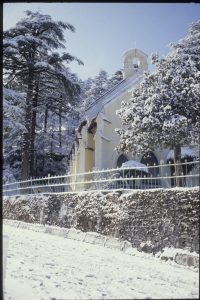
Pic courtesy: daughter Maya Narula
Afterwards, I heard on the grapevine that he had bought Hamilton House, which was sunnier as it faced southwards.
It is to his generosity that I owe a debt for the day Sundari, his help, appeared at our gate gingerly balancing a bag with two bottles of wine, brewed from rhododendron flowers. Ah! Those days of innocence, when we all brewed or at least, pretended to. You could say it was neither here nor there – no brilliance of the deep crimson flowers, nor of the tarty-tanginess associated with those who gave it birth. Personally, I don’t think he would have made it as a Master Brewer.
Then came the day when word filtered in that he had passed away. When I hastened to Hamilton House, I found the thespian Victor Banerjee lending a helping hand in getting the body ready for the funeral service. A niggling problem remained: the stubble that had sprouted overnight on the Air Marshal’s face.
‘Ganesh! Fetch me a mug of hot water?’ he asked, clearly struggling with the job ahead.
And that, in brief, is how Santra Saab had got his last shave!
At the mouth of Hamilton House still stands The Shanty. It’s a small cottage which was rented by Dhiren Bhagat, the young Oxford-educated, nimbu-soda-drinking journalist, who arrived in the 1980s, hoping to write his magnum opus. But Fate decreed otherwise. While visiting Delhi to sort out a household problem, his car was involved in an accident that snuffed out a life full of great promise.
I remember meet him sipping chai on Tehri Road. As the South-East Asia correspondent for the Observer, he had just returned from covering the Pakistan elections.
‘Who is winning out there?’ I chit-chatted.
‘The JJUN!’ he chuckled.
‘What’s that?’
‘The largest party in Pakistan! It’s the Joh Jeetay Oddey Naal or Whoever-Wins-Party.’
After that he achieved notoriety by writing a mock obituary of Khushwant Singh, where he’d claimed that for thirty-one years the only warm thing the old man ever had in his bed was a hot-water bottle. He ended the piece: ‘Even as I write this, I am sure Khushwant is busy looking up the angels’ skirts.’
Khushwant didn’t have to retaliate! He simply outlived Dhiren by twenty-five years.
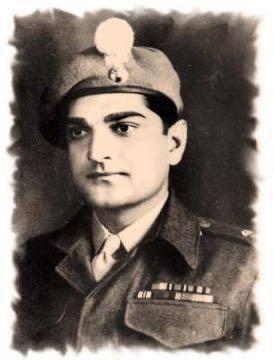
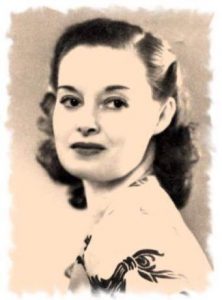
Meantime in Landour’s Inda Cottage, above Redburn and below Villa de Bethany, in those magical times lived Brigadier Hukum Singh Yadav, or called ‘Kim, a name given to him during his days in the British Indian Army. He was the first Indian aide-de-camp to the last Viceroy of India. At Government House (which later became Rashtrapati Bhavan) the strapping young officer met the Viceroy’s secretary, Ann, whom he befriended, wooed and married in December of 1947. Their daughter Maya taught at a local school. Oftener than not, you would have found him at Char Dukan surrounded by a gaggle of visitors, regaling them with tales of battles in the Far East or the early days of the anti-insurgency operations in Nagaland.
In a recent piece I had mentioned the shooting of Dusri Dulhan in Elcot Lodge owned by Anna De Vreeze, a Dutch lady, I owe it to the Yadav’s daughter, Maya, who course-corrects me: ‘Anna De Vreese was a close friend of my mother. She was married to a diplomat, posted in Delhi. He fell in love with another woman and before he left, bought her Elcot Lodge.
Ganesh Saili, born and home-grown in the hills, illustrates his words with his pictures. Author of two dozen books, some translated into twenty languages, his work has found renown worldwide.