By Ratnajyoti Dutta
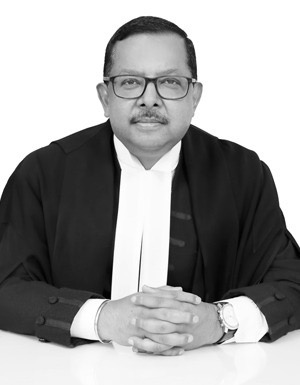
NEW DELHI, 6 Sep: Supreme Court judge Justice Ujjal Bhuyan has raised major concerns over police accountability, extrajudicial killings, political interference, and the crisis in Manipur.
The judge urged the police to serve the Constitution and protect human rights. Justice Bhuyan raised the issue of rising custodial deaths and pointed to official figures showing a worrying rise in deaths while in police custody.
Parliament data, he stated, shows that India recorded 170 custodial deaths in 2025–26, up from 140 in 2024–25. “These are cruel,” Bhuyan said.
Speaking at the launch of former IPS officer Yashovardhan Azad’s book on 4 September,‘Policing the Republic’, he asked: “Does a citizen shed his fundamental right to life, the moment a policeman arrests him? Can the right to life of a citizen be put in abeyance on his arrest?”
Quoting the landmark DK Basu judgment, he noted, “Custodial death is perhaps one of the worst crimes in a civilised society governed by the rule of law.”
Justice Bhuyan strongly criticised fake encounters. Referring to the Prakash Kadam judgment, he reminded the audience that the Supreme Court had previously held that police involved in fake encounters should face the death penalty.
He added that the “Supreme Court took a very serious note on fake encounters in Prakash KadamVs Ramprasad Vishwanath Gupta, and declared in no uncertain terms that fake encounters nullify the very essence of the rule of law.
“Encounter philosophy is a criminal philosophy,” he said, adding that such actions nullify the core of the rule of law.
Justice Bhuyan also spoke about the situation in Manipur. He called Manipur the “Jewel of India”,home to talented artists, scholars, and sports figures. However, he expressed grief over the continuous conflict.
“Despite being perhaps the most fortified State in terms of the presence of security personnel… peace continues to remain elusive. In the tragedy of Manipur, there is a lesson for all of us,” he noted.
Justice Bhuyan called for urgent police reforms. He quoted past Supreme Court rulings and government reports warning that political interference weakens democratic foundations.
Citing the 2006 Prakash Singh judgment, he noted that political control carries “the inherent danger of making the police a tool for subverting the process of law”.
He quoted the judgment warning that “Excessive control of the political executive and its principal advisors over the police has the inherent danger of making the police a tool for subverting the process of law, promoting the growth of authoritarianism and shaking the very foundation of democracy.”
He insisted that “the commitment, devotion and accountability of the police has to be only to the rule of law”.
Reflecting on broader systemic corruption across all state organs, Justice Bhuyan also recalled a 1991 speech by former Assam Chief Minister Sarat Chandra Sinha, noting: “When there is an avalanche, it does not distinguish between any biological species… Where there is a societal degradation, the legislature, the executive and the judiciary are equally affected.”
While highlighting shortcomings, Justice Bhuyanacknowledged that officers often work under severe conditions like poor infrastructure and staff shortages. He added that many officers perform their duties with total integrity. He emphasised that effective policing and human rights go hand in hand.
“Policing and upholding human rights are not mutually antagonistic,” he stated. He further asserted, “There is no contradiction between police or policing and human rights. Policing and upholding human rights are not mutually antagonistic. There can be effective policing without any excess or infringement of human rights.”
He urged the force to transition from a colonial-era force into a modern, sensitive protector of the public.