 By Anil Raturi
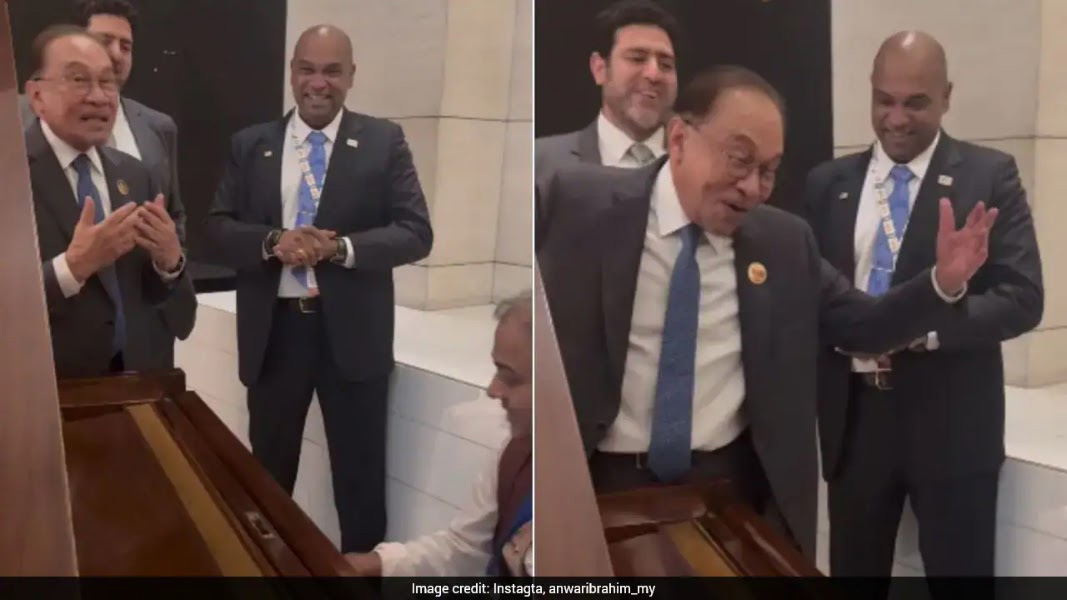
Recently, I saw a clip of the Malaysian Prime Minister, Anwar Ibrahim, who attended the BRICS Summit in Delhi, singing an old Bollywood song.
For decades now, Hindi films have been popular in South East Asia, South Asia, West Asia, Central Asia and Africa. Some Indian films have even become popular in China too.
Malaysia’s socio-economic indicators of development are better than India’s. Its per capita income is about five times that of India.
Yet, the PM of Malaysia is singing Indian movie songs!
It made me ponder on the question: what attracts non-Indian audiences to Bollywood films? What is the secret of this soft power that India seems to possess?
The ability to tell stories is something which makes human beings distinct from all other creatures on earth.
Like all creatures, humans too need to fulfill their basic needs relating to food, shelter and reproduction. However, beyond these basic needs, as a species, only human beings have the capacity for creativity and expression. It is through creativity that human beings ultimately realise their true potential. Science and technological innovations help societies to improve the quality of life of its people. They are an effective “means” for making life more comfortable. However, by themselves, science and technology remain inadequate in providing the “meaning” of life – the “ends” which satisfy human emotions and make the experience of life truly fulfilling!
It is in this context that story telling becomes important. It provides essence to human existence. Stories talk about human journeys of life; the struggles and emotions involved with it. They tell us about failures and also triumphs, they tell us about values that men and societies uncompromisingly uphold for providing meaning to their individual and collective existences. They give us hope and inspire us!
As a country, India is a complex mixture. On the one hand, despite its enormous natural resources, millions of its people are still struggling with poverty. On the the other hand, Indian civilisation dates back to almost the dawn of history. It is one of those few places on earth, where the human species was first civilised.
The Rig Veda is one of the oldest written works of mankind. The Sam Veda is one of the oldest books about music in the world.
The stories of the Upanishads, the timeless stories of the ancient epics – Ramayana and Mahabharata provide Indian society an ethos of written story telling that dates back to more than three millenniums!
History tells us that all along people of varied hues kept coming and settling in the fertile land of this subcontinent. It was the first melting pot of the world. This created a rich and varied culture.
It is this depth of indigenous culture, crystallised over thousands of years, that fosters the incredible Indian talent for song, music and storytelling!
Among all its talents, mankind celebrates and respects those the most who are good story tellers. They are considered the wisest -Homer, Virgil, Ved Vyas, Valmiki,
Kalidas, Firdausi, Dante,
Shakespeare, etc., all masters of storytelling through the written word. They continue to live even today through their timeless works.
When we speak of Akbar the Great we say “Akbar said…,” (as he is long dead). But when we talk about Kalidas, we say “Kalidas says…” (Because even though long dead, he continues to speak to us through his immortal writings)!
Such is the power of storytelling.
At the turn of the 20th century Europe saw the advent of cinema. It became a platform through which song, dance, music and acting could all be seamlessly stitched together -making it a perfect medium of storytelling!
The Indian penchant for story telling grabbed at this new kind of opportunity.
As early as 1899, HS Bhatavdekar made the first Indian motion picture, called “The Wrestlers”.
Soon, in 1913, Dada Saheb Phalke made “Raja Harishchandra”.
Indian society, which had millenniums of experience of storytelling took to this new medium of cinema as fish takes to water! Great Indian film makers such as Bimal Roy, Raj Kapoor, Guru Dutt, Chetan Anand, Satyajit Ray, Hrishikesh Mukherjee, Mrinal Sen, Ritwik Ghatak, etc., are all products of this legacy.
This extraordinary Indian talent for story telling – honed through millenniums – makes Indian films popular around the world. The stories told by them breach the limitations of language and culture because they speak of the universally intrinsic emotions of the human heart – something that compels Anwar Ibrahim to sing “Khwaab ho tum ya koi haqiqat…!”
(Anil Raturi is a retired IPS officer and former DGP, Uttarakhand.)