The Cloud (AI) isn’t in the Sky
 By Atul Rawat
“Sir, your data is stored safely in the cloud,” my bank relationship manager assured me. I looked out of the window. All I could see were the clear blue skies of Doon and my beloved mountains. Yet apparently, all my photographs, bank statements, tax returns and embarrassing WhatsApp forwards were floating somewhere up there.
“Your storage is almost full. Subscribe to our cloud storage service,” my Google account prompted. “There must be something in this cloud,” I thought.
From the physical world that engaged our five senses, we have journeyed through floppy disks, hard disks, CDs, pen drives, portable drives and, finally, to the cloud—up above the world so high.
Artificial Intelligence and data centres have now become as much a part of our everyday vocabulary as smartphones and Wi-Fi.
Somewhere inside vast data centres, a vast number of processors work ceaselessly to make all this possible. The smarter AI becomes, the hungrier it grows. More intelligence demands more computing power. More computing power demands more electricity. More electricity demands more cooling. And more cooling demands even more electricity.
“Papa, that’s all backend,” my son said with the confidence only twenty-somethings possess. “You don’t need to worry about it. Just enjoy the results.” He seemed visibly exasperated by my sudden curiosity about this thing called Artificial Intelligence.
Perhaps he is right. But doesn’t every backend eventually become somebody else’s front end.
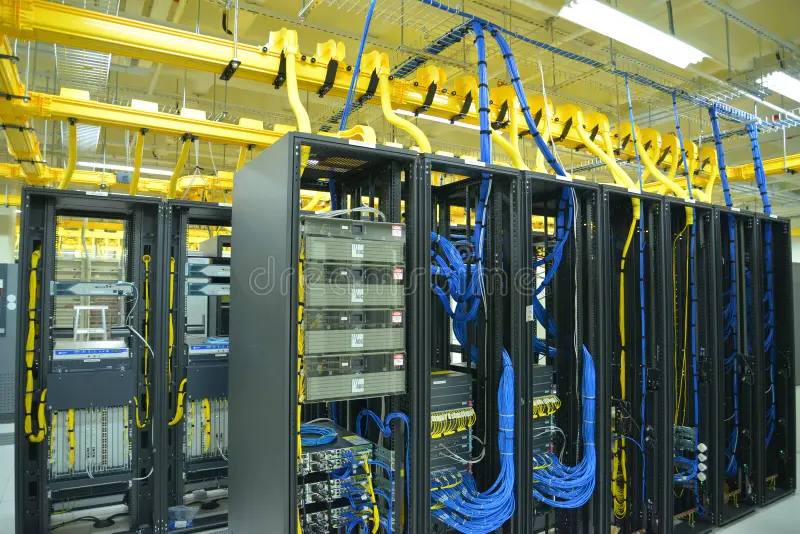
And that, I realised, is where the real story begins. I realized that the cloud is not the real cloud after all. It sits in the data centres inside giant warehouses packed with servers that consume astonishing amounts of electricity, water and land while quietly powering our digital lives. Are they now competing for some of the same resources that humanity had used since the stone-age? Perhaps they are.
Unconscientiously, I checked my weather app. It told me to expect rain expected in Doon in the next 45 minutes. Then I googled for the location of the new restaurant in the town, checked my WhatsApp and topped it up with a selfie on my Instagram feed. The data was exchanged between me and the digital world seamlessly and instantaneously. However, behind the scenes, thousands of GPUs were processing data inside enormous data centres while cooling systems, backup power and global communication networks worked together to answer my query and execute my command. Convenience – yes.
But, is there a cost attached to all that convenience. Yes, there is as we are told now. “Nothing comes for free sweety,” my wife cooed in my ears mischievously.
In this vast digital world, what is the environmental footprint? One statistic stopped me in my tracks. I was told that in 2025, data centres consumed 23% of Ireland’s metered electricity, almost as much as all Irish homes combined (28%). Ireland can perhaps absorb that burden. But India? Here, where millions still struggle for reliable electricity and water supply, should we need to ask harder questions and seek painful answers?
Well, providing electricity to these GPUs is not good enough. They have to be cooled also since they generate heat. And, lo & behold, a lowly ceiling fan isn’t good enough for the silicon. They require industrial cooling systems—chilled water plants, cooling towers, liquid cooling and even immersion cooling. During summer, while entire Indian neighbourhoods endure power cuts while sweating through the night, our silicon chips enjoy climate-controlled luxury. That is “Just like a wow”.
Soon, I learnt that the chips that are powering these data centres are also high end and are using various types of rare earth metals. If that was not enough, they require something called ultrapure water. While many of us are struggling to drink just water free of germs, these (silly) Silicons have to use purified water far beyond drinking standards.
With the enhanced electricity requirements for the Data Centres, the transmission lines that were hitherto laid for domestic and industrial usage are creaking under the additional load. So the environmental footprint extends well beyond electricity, as they also require vast parcels of land, substations, transmission lines, backup power and enormous quantities of water.
There is a positive side to AI and the associated Data Centres as well. We learn that AI is also helping to optimise electricity grids, improve crop management, model climate change, accelerate medical research and make transport systems more efficient. That is impressive. So why this hullaballoo over a small contribution that we have to make?
Beyond the easy façade lies the key challenge of ensuring that AI’s infrastructure grows in a way that is compatible with climate goals and local resource constraints. Governments have begun asking difficult questions. New York recently announced a temporary pause on permitting new hyperscale data centres while it studies their impact on electricity prices, water resources, land use, noise and public infrastructure. The era of “build first, think later” may finally be ending.
Little did we imagine that these cloudy people would be noisy. Even these “clouds” make noise. No baba, it is not thunder, it is the cooling fans, the chillers, transformers and the backup generators. Instead of lightning, they produce a constant low-frequency hum, which affects the neighbourhood and the birds/animals.
The truth is uncomfortable. Having got used to the effortless operation of gadgets, we cannot bear to see a world where there would be no AI, digital payments, streaming, online education, telemedicine or modern banking. They are now an indispensable part of my very living life. The crux is that while they may be indispensable but that does not mean that are also unregulated. A good enforceable regulation is therefore a must for mutual coexistence.
We need cleaner power, smarter locations, better water management and developers who pay the true cost of the infrastructure they consume. I confess that I enjoy my OTT platforms, I ask a lot of questions to ChatGPT. I also regularly back up my photographs to the cloud. I simply don’t want my convenience to quietly become somebody else’s water shortage.
The cloud isn’t in the sky after all.
It sits firmly on the ground.
Which means its environmental footprint does too.
Perhaps the next time someone tells me my data is “in the cloud”, I’ll ask them a simple question – Which neighbourhood is paying the electricity bill?
Amen!!
(The author blogs at NotesfromDehradun@Atul Rawat)