The Books from My Shelves
By Nitin Jugran Bahuguna
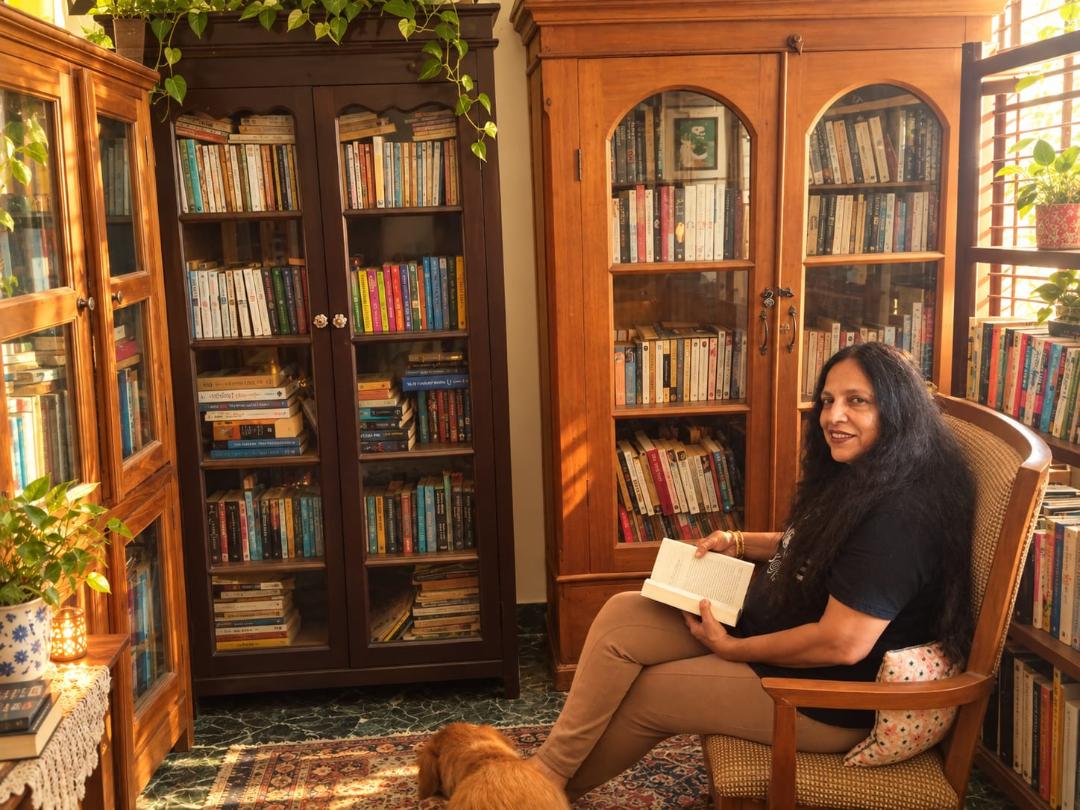
My personal library is my Mother Ship, my go-to place for my creative writing, professional work and, of course, the sheer pleasure of plucking an old favorite book from one of the shelves and getting down to the blissful business of reading.
I belong to the generation dubbed the late Baby Boomers. In the sixties, only the privileged few owned televisions so for the majority of us reading was our salvation, a chance to get away from the humdrum reality of everyday life, minding our social mores and coping with the three ‘R’s of education.
In our readings, we shared the adventures of our protagonists, seeing through their eyes the wonderful and exotic locales they visited and the exciting and spine-chilling encounters they underwent along the way. Birthdays, special events and competitions in school were eagerly awaited because we knew the prize would be that pot of gold at the end of the rainbow – a story book from one of our favorite authors.
My childhood years revolved around Enid Blytons and Hardy Boys interspersed with comics featuring the Phantom, Mandrake – the Magician, the Archies and the Avengers. Then came early adolescence and with it the heady romance world of Mills and Boon.
Over the years, my reading has evolved to cover diverse genres and many authors have moved me and left indelible impressions in the different phases of my life. The following compilation is just a small illustration of the deep impact books have made on my perspective of the human condition.
‘Wuthering Heights’ by Emily Bronte
Inspired by the bleak gothic surroundings of the wild Yorkshire moors, this vivid tale of thwarted love explores the themes of passion, revenge and social divides which viscerally destroy personal relationships. Beneath Catherine’s love for Heathcliff lies a genuine conflict – a clash of different levels of passion which ends by consuming her. The part of her nature that craves civilized and social fulfillment makes her marry Edgar Linton, but her feelings for him are superficial. Her dilemma is powerfully described in her anguished words: “Linton is like the foliage in the woods: time will change it, I’m well aware, as winter changes the trees. My love for Heathcliff resembles the eternal rocks beneath: a source of little visible delight, but necessary…I am Heathcliff! He’s always, always in my mind: not as a pleasure, any more than I am always a pleasure to myself, but as my own being.”
‘Sons and Lovers’ by DH Lawrence
A truly gifted writer with an innate understanding of the female psyche, this novel stands out for its powerful use of imagery to show people’s relationship with each other and nature. The protagonist Paul Morel struggles to break away from the maternal tie that is strangling him. The mother seeks spiritual satisfaction from her sons and when the eldest dies, the youngest (Paul) becomes her ‘man’. It is the doomed story of a young man unable to sustain a healthy relationship with women because of a selfish, manipulative mother.
‘The Liberation of Sita’ by Volga
Volga is the pen name of Popuri Lalita Kumari, an acclaimed Telugu poet renowned for her pioneering feminist perspective in Indian literature. This novel is a feminist re-telling of the Ramayana. It recounts Sita’s interactions with other marginalized female figures of the epic like Surpanakha, Ahalya and Urmila, helping her to understand and process the structural patriarchy surrounding her.
‘Palace of Illusions’ by Chitra Banerjee Divakaruni
This book narrates the Mahabharata through the eyes of Draupadi, one of the most fascinating heroines of Indian mythology. Her childhood days, her friendship with Krishna to her Swayamwara and eventually marrying all five brothers and struggling with the hardships imposed by exile have all been exceptionally documented. The author poignantly illustrates Draupadi’s travails against the social structures around her and her disillusionment with her husbands after her humiliation in the Sabha. “What did I learn that day in the sabha? All this time, I’d believed in my power over my husbands. I’d believed that because they loved me, they would do anything for me. But now I saw that though they did love me– as much perhaps as any man can love – there were other things they loved more. Their notions of honour, loyalty toward each other and reputation were more important to them than my suffering.”
‘A Doll’s House’ by Henrik Ibsen
This 1879 three-act pioneering play shook audiences of the time for its sharp criticism of traditional marriage during the Victorian era and rigid gender roles. The play exposes marriage not as a sacred, ideal institution, but rather a gilded cage where women are treated like children. Nora Helmer’s decision to leave her husband and small children to find her own identity and independence was an un-heard of thing for those times and viewed as immoral and unwomanly. The play ends with her slamming the front door, rejecting her old life in a patriarchal society.
‘The Little House Books’ by Laura Ingalls Wilder
The nine books in this series describe simply but eloquently the tough pioneer life of the 1870s in the eyes of young Laura. Moving from their snug cabin in the Wisconsin woods to Indian territory, then to the pretty little house ‘Pa’ built on the prairie followed by the dugout on the banks of Plum Creek in Minnesota, the series highlights everyday survival skills like building log cabins, making butter and smoking meat to prepare for the harsh winters. It is a testament to strong family values and the resilience to cope with challenging conditions.
‘Lord of the Flies’ by William Golding
What starts as a war-time evacuation turns into a chilling tale of survival when a plane crash leaves a group of schoolboys stranded on an island. They attempt to formulate their own rules but fear, rivalry and the hunger for power shows us the worst and darker side of human nature.
‘The Kite Runner’ by Khaled Hosseini
A deeply moving tale of guilt and redemption, it moves from the fall of the monarchy in Afghanistan to the Soviet invasion and the rise of the Taliban. Amir, a privileged Afghan boy, flees his country carrying the guilt of betraying his childhood friend Hassan. He returns later to confront his past and make things right.
‘Chronicle of a Death Foretold’ by Gabriel Garcia Marquez
Perhaps not as acclaimed as his other works, this novella is, nevertheless, a powerful indictment against an entire community which looks the other way when a man is hunted down and murdered in the name of honour. Through different memories and perspectives, Marquez explores honour, fate and guilt and societal complicity in the tragedy.
‘Catch -22’ by Joseph Heller
Yossarian is a World War II bomber pilot who is terrified of dying and desperately trying to escape the war even as his leaders keep raising the number of required dangerous missions. Through dark humour and the ‘Catch-22’ phrase coined by the author which denotes an impossible problem where the solution is denied by the problem itself, Heller exposes bureaucracy and how war can strip away reason, freedom and humanity.
(Nitin Jugran Bahuguna is a senior freelance journalist, columnist and author of ‘Comet in the Village”, a novel set in the hills of Uttarakhand.)