 By Alok Joshi
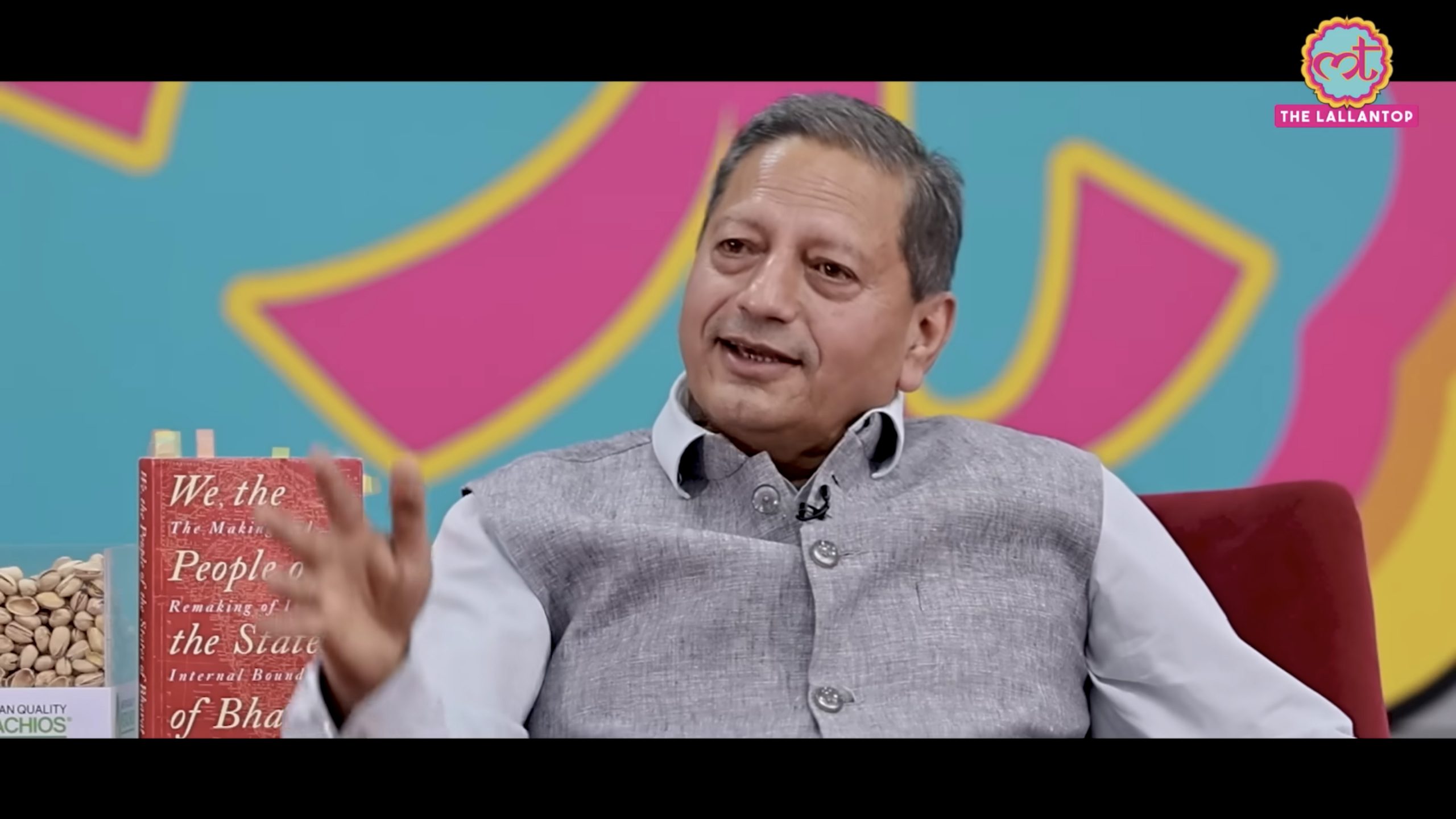
His recent wonderful interview at ‘Lallantop’ (on YouTube) had triggered my desire to meet him face to face. Through his post-interview research, I realised there were several commonalities between us: both Pisceans, English Hons, speech writing, Civil Services, books/ reading habit and finally settling down in Dehradun.
Like many bureaucrats, he had his share of problems and challenges during his postings in West Bengal. One amazing thing I noticed from his interview was that he never highlights or exaggerates the difficulties. Instead, he looks at problems from a positive angle and believes that unexpected challenges eventually become great opportunities by some strange way of destiny. For instance, how destiny helped him get relieved as Industries Secretary under Mamta Bannerji to join as Director, Lal Bahadur Shastri National Academy Of Administration, Mussoorie (LBSNAA).
It is obvious that he was always passionate about his role as the Director of LBSNAA, which he considers as the next best to the Vice President of India. It was interesting to hear him speak about LBSNAA, where young and bright minds are trained to take on higher responsibilities. One would assume the foundation course to be knowledge-based and theoretical. But Sanjeev Chopra believes that knowledge and intelligence have already been tested during the selection process. Therefore, the focus is on the attitude of the officer. One may be individually very bright, but team spirit is required to deliver results. A District Magistrate can do nothing without the support of police and other stakeholders. It is a combined effort. Hence, they encourage officers to meet other officers coming from different parts of the country with different backgrounds, mingle with each other and open up in parties and events. All that is part of the training. Some even find life partners during the course of training.
His recent book, titled “We the People of the States of Bharat”, reveals his “love affair” with maps. He used the word “Bharat” in the title of the book much before it became a political controversy. He supports the idea of reorganising the states based on their identity and culture.
He also mentioned that he was working on the biography of the late PM Lal Bahadur Shastri, about whom not much material is available. Incidentally, during my tenure with ONGC in Dehradun in the late ‘80s, I had the privilege of being the immediate neighbour of Sunil Shastri, the younger son of Shastriji. He gifted his adorable pet dog Micky to my little daughter when he relocated to New Delhi.
As an avid reader and die-hard book lover, Chopra considers Mahabharat and Gita as one of the best reads. He has a varied range of interests. What impressed me the most is his charming, conversational style with a smile and a no-complaint, no-regrets attitude. But I do have a small regret. Wish I had met him before!
(Alok Joshi is an HR Advisor, freelance writer and author of “12 Sweet and Sour Years in China”)