 By: Ganesh Saili
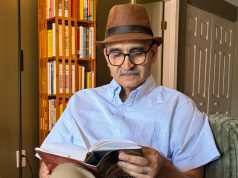
‘Remember the fellow who once ran Mullingar? Lekh Raj – had a squint.’ I let slip a childhood memory to Aloke Jain, who is now retired and lives in the library area. Little did I know that he, too, had met the old man in the 1960s.
‘Of course, he had a squint! Though you had to watch out for his ‘glad eye’ – it could have lit up the whole hillside when some schoolgirls arrived looking for a place to stay! One whiff of the girls and he shot out, forgetting everything, especially the rent he owed us. Instead, he insisted on personally showing them his sparse, unfurnished rooms!’ he chuckles at the memory of those halcyon days.
Aloke Jain, a grandson of Seth Chander Sen, who started the Mansaram Bank that crashed in 1955, tells me: ‘My father was one of three sons, who could never agree on anything! One day, on a lark, I accompanied the family’s Munshiji to collect rent from our tenants, one of whom happened to be Lekh Raj, who had taken the Mullingar estate on lease.’
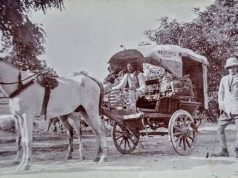
Author’s Collection.
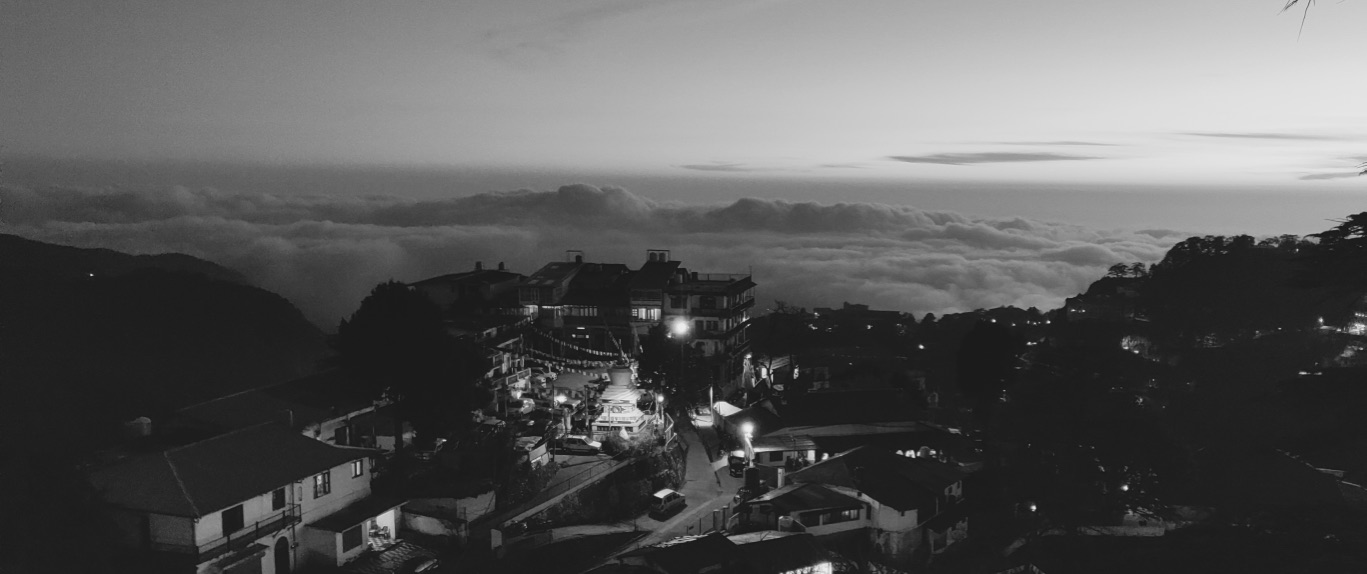
‘Mullingar’ (properly pronounced Mulling-gaar) is outside our front gate. Looming large above us, it straddles a ridge on a large flat; despite its ruined look, it was the first building in Landour. Its chequered history begins with a youthful officer scampering up these hills on goat tracks in pursuit of ‘game’ (as the Shikaris called their quarry). In the 1820s, he built himself a shooting lodge here as a getaway from his main job of raising the Sirmur Rifles, which later turned into the Gurkha Rifles in Dehradun. His fluency in the Gurkhali language made him popular with those redoubtable fighters.
At the end of the Gurkha War, several Gurkhas had been taken prisoners of war and shifted to internment camps in Saharanpur. Captain Young pleaded with the officials of the East India Company: ‘I undertake to raise in a short time a body of soldiers that will not disgrace you, or the country, or myself.’
Granted permission, he went to the prison camps in Saharanpur, told the men they were free, and asked them to volunteer.
Proudly, he announced: ‘I went there as one man and came out 3,000.’

Mullingar was named after a small town off the Irish coast, from which he had come and to which he returned after fifty-four years on retirement, as a General. Nothing remains of the original structure he built in Mussoorie.
Mullingar was put to several uses: one being a Convalescent Depot for recuperating soldiers or those on furlough at the end of the second war. After several incarnations, it became the Philanders Smith Institute for orphaned children, before being bought by the bank as an investment.
Later, the Philanders Smith Institute moved to Nainital and became the All Saints School, whose famous alumni included the naturalist Shikari Jim Corbett. When the bank crashed in 1955, the government appointed an official receiver who leased it to Lekh Raj, who started a shoddy hotel. Large billboards were put up which advertised it as a place with ‘Beautiful views of a Pine Valley!’
Nothing could have been more untrue; even if you stood on your toes and craned your neck, you would not have found a single pine tree anywhere in the vicinity.
I still recall the catcalls that chased the Mullingar’s harassed ‘guide’, emanating from the other ‘guides’ gathered at the Masonic Lodge bus stand: ‘Do take your bench along!’ they yelled: ‘That place has no furniture!’
Another ‘guide’ yelled: ‘Remember to take your bedding along also!’
One day, Lekh Raj passed away in Delhi, and the very next day, displaying considerable alacrity, the squatters moved in.
As a child, I remember tales told by the old chowkidar Jabbar Singh (probably intended to frighten us away). Conjuring up tales of moonless nights when a ghostly rider would arrive astride a white horse, tie it to the rails of the old grill, dismount and snap to attention.
Was it Captain Young or General Young who waited for his ghostly parade to begin? Jabbar Singh was never too sure.
Ganesh Saili, born and home-grown in the hills, belongs to those select few whose words are illustrated by their pictures. As the author of two dozen books, some translated into twenty languages, his work has found recognition worldwide.