All Around the World with the Most Travelled Indian
 By NITIN GAIROLA
No human has set foot on Mars yet. We all know this. Mars is a desert and I suppose most know this too, since the defining feature of any desert is the lack or absence of water. This is why a desert on Earth is the closest you will get to the vision of an alien planet or its moon (satellite). And since my life’s passion project is visiting all deserts of the world, I have this mad fascination for visions of Mars.
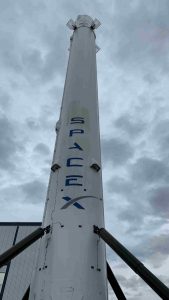
But not all deserts look like Mars. The classic sandy ones like the Sahara or the Arabian Desert especially do not resemble the surface of Mars since Mars is more rocky than sandy on the surface. You may also say that the ice desert of Antarctica is not exactly Mars in appearance either as its white whereas Mars is a rusty red. Our very own Thar Desert doesn’t fit the bill as well since it is the most populous desert on Earth and the one thing you don’t want in your vision of an alien planet are people smiling back at you. You want it to be desolate, isn’t it? So it would take a rocky, rusty and empty place for it to look like our closest planetary neighbour. This neighbour has been the object of obsession for Hollywood in the 1960s & 1970s and is now the obsession of a modern day visionary – Elon Musk.
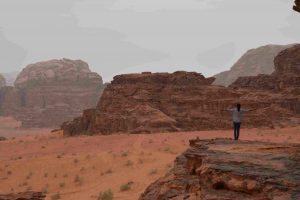
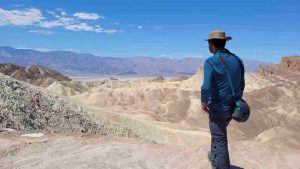
Present day filmmaker’s go-to destination to represent Mars (as in ‘The Martian’) is the Wadi Rumm desert in Jordan. It is actually the north-western part of the Arabian Desert itself and it lies just to the south of the Syrian Desert. For Indian tourists who want an accessible view of Mars, Wadi Rumm should be their top choice. For those Indians who live in North America and USA in particular, I would recommend Death Valley (in Mojave Desert, Western USA). It is another accessible desert, yet is utterly desolate and breathtakingly beautiful.
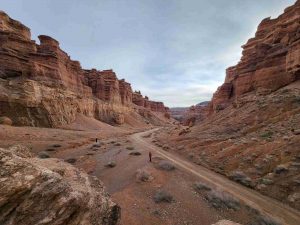
The Indian travellers who can take on a few more hardships and venture a bit further into Asia, I would suggest the Gobi Desert in Mongolia. Also the deserts of south-eastern Kazakhstan (the area that borders Western China) would do just as well. In fact this area is part of our recent travels that we have just come back from (thankfully in one piece). Then there is the Kyzyl-Kum which covers most of Uzbekistan. Kyzyl means red and Kum means sand in Turkic language and ‘red sand’ can somewhat describe the surface of Mars. In fact ‘Kum’ means a lot to me as my mother’s name is Kum Kum.
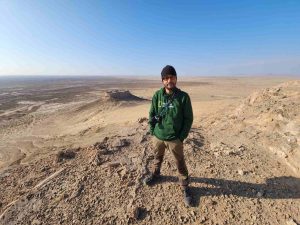
For the Indian Americans (I mean Indians in America and not native Americans) a somewhat difficult but rewarding journey to a desert would be the Atacama in Chile or the Altiplano Plateau in Bolivia, both of which are way down in South America. The Atacama is the ‘driest hot desert’ on Earth (the direst desert of our world is of course Antarctica but as you can guess, it is not a hot desert)
Now let me come to the most driven desert-nuts which are people like me and I am sure there are many, many such travel fruitcakes out there. They should venture to the far, far reaches of the planet for their desert adventures. The first place that comes to mind is the lower Arctic region that is not fully ice and is in fact cold, bone dry and brownish just like Mars. In particular there is a place called Devon Island in far north of cold Canada where they actually conduct Mars simulations and trainings. We must remember that while we think of our deserts as hot, Mars is actually a very cold desert. And we have many cold deserts on Earth too other than the ones covered in an ice sheet like Antarctica and Greenland.
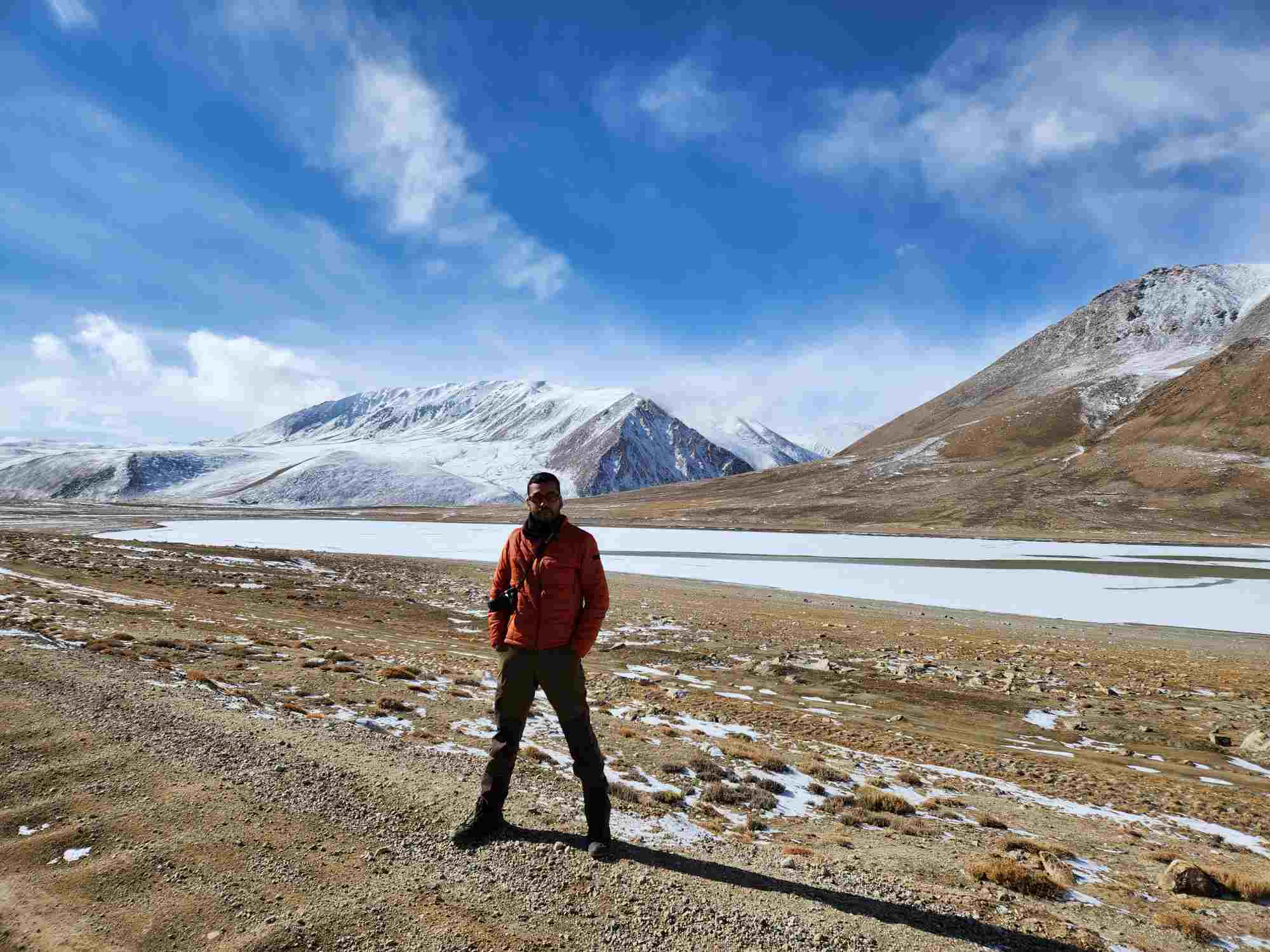
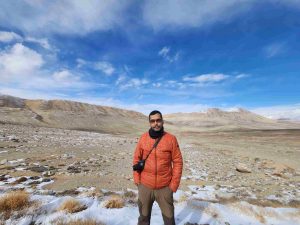
Moving to the opposite end of the thermometer, you can visit the super-hot and super-dry deserts of Iran – Lut and the Great Kavir. These are two of the most alien places on our planet and are few of my last remaining deserts to visit in order to achieve my record of being the first Asian and Indian to visit all deserts of the world. I must also mention the mysterious Taklamakan of Western China, the frontiers of which creep into the neighbouring ‘Stans’as well. I visited parts of this most magnificent & magical place recently too and will soon be narrating micro-adventures from the ground in Tajikistan.
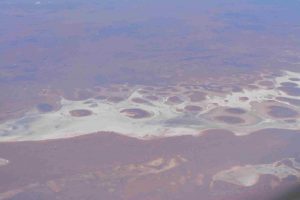
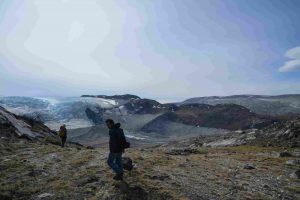
And then there are our Indians down under in Australia. All I can tell them is to take a flight from Adelaide in the south-east of Australia to Alice Springs in the center and see Mars below just as I did in 2015. The center of Australia is red so it is truly an incredible sight from the air. However on the ground you do need to find your special spot which is shrub-less, since most of the great Australian Outback in bushy (and it may take a bit out of the image of Mars).
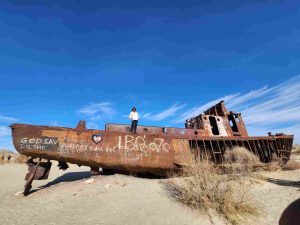
Finally if (or when) we leave behind space junk to rust in Mars, then to view such a future scene might I suggest a crazy location? The location would be Aral Sea in Central Asia which houses rusted ships stranded on its sandy sea bed. Why you may ask does a sea have rusted ships on the sea bed filled with sand instead of water? Well the salty Aral Sea actually dried up two decades back (due to over industrialization) and the small ships that once floated on it are now beached in their rusted glory on the white sands left behind. The only difference compared to the ‘possible future’ Mars would be that Mar’s rusted ships would actually be space ships and not fishing vessels.
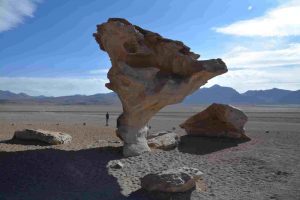
So while Elon Musk plans his grand space mission and will probably send a man on a ‘one-way’ journey to Mars within our lifetimes, you can actually go on a return journey to the red planet if you just Google these places. Why burn millions on a one-way ride when you can have your Mars and your oxygen too.
(Nitin Gairola is from Dehradun and has travelled the natural world more than almost any Indian ever. He has set world travel records certified by India Book of Records, has written for Lonely Planet, and holds National Geographic conservation certifications. He is also a senior corporate executive in an MNC and in his early days, used to be a published poet as well. More than anything else, he loves his Himalayan home. Reach him at: www.facebook.com/ MostTravelledIndian/ ; www.instagram.com/ MostTravelled_Indian/)