 By Dr Satish C Aikant
In the State Roadways buses a sign is displayed for the attention of the passengers: Yaatri apaney samaan ki swayam raksha karein. I think signs need to be prominently displayed along the Mall Road in Mussoorie with the cautionary message: Paidal chalaney waaley apane sharir ki swayam raksha karein.
The Mall Road in Mussoorie has seen better days. Once the scene of dalliance for the colonial elite, there was a time until not very long ago it was used for the purpose it was intended – for the town’s men and women as well as the visiting tourists to saunter down in the fresh air and admire the surrounding landscape overlooking the picturesque Doon Valley with its view unhindered by the unplanned concrete structures. All that has receded into the past and is lost irretrievably. What the Mall presents now is virtually the residents’ nightmare. The volume and disorder of the traffic on it is unbelievable. Unlike the Shimla Mall which is restricted for all vehicular traffic, and the rule is strictly enforced making no exceptions even for the local VIPs or the vising dignitaries, the Mussoorie Mall is free for all where the pedestrians have to jostle to move ahead brushing past not only the stray cattle and dogs and fellow citizens but also avoid close shaves with the passing sundry vehicles – two wheelers, cars and taxis. Needless to say, it is the hapless pedestrian who is constantly at risk of being thrown off his way unless he or she constantly watches out for safety, not always succeeding. Hit and run on the Mall is an all-too-common occurrence.
Recently I was the victim of one such misadventure by a biker moving with desperate speed. As I was out on my evening stroll the rushing biker hit me from the back and knocked me down just below the local thana above Hakman’s Hotel on the Mall. The severe impact, when I fell on my right side, thrashed my leg and fractured the bones of the right arm. The biker did not as much even stop to take a look at my condition but quickly sped away. Some passersby, the tourists, lifted me and helped me to a roadside bench. When I called home, my son came to take me. I spent the night in excruciating pain. The health services in Mussoorie being what they are (deplorable to say the least) I was rushed to Param Hospital in Dehradun where the X-ray revealed that my arm was fractured and needed surgery. A titanium plate implant was required to support the bone alignment and put it in place.
For all the agony I had suffered there was however this reassurance that I was in the care of good hands. I must express my heartfelt admiration and gratitude for the exemplary treatment I received from Dr Vimal Kumar Nautiyal, an outstanding orthopaedic surgeon at Param Hospital. His exceptional expertise, coupled with a compassionate and humane approach, has made a profound impact on me and my family. A true professional with a healing touch he addressed my complex condition with utmost confidence and precision. I say this not only by my own experience but also on the testimony of several others.
Outraged on account of what had happened to me, my son had reported the hit-and-run incident to the police. It was picked up by the local media which made the police swing into action to apprehend the culprit. That being done on the basis of CCTV recording, the SHO sought our consent to proceed against the offender. However, we said that we did not want that he should be fined or arrested but be let off with a warning. Enough to know that he realised how reckless he had been, that his father too had admonished him, and that he was penitent now.
I tried to rationalise my painful experience but without much success. Then I tried to convince myself that perhaps it was due to my karmic destiny or a malefic conjunction of stars. Yet the existential situation remains. While pain is both a contingent and a subjective condition, often accompanied by emotional and cognitive components, I began pondering on the semiotics of pain as to how pain is represented, communicated, and interpreted through signs, symbols and verbal expression, more to while away the time and distract my mind than in serious thought. While it did not help me alleviate my pain I could empathise with a wider circle of community and accept pain as a human condition.
The surgery necessitated my stay in the hospital for eight days with my wife to attend upon me and my son making anxious visits to and fro. While in the hospital, I was completely dependent on my wife since my right arm was at that time almost dysfunctional. It is she who helped me with my daily routine even though she is herself in delicate health, proving that she indeed is the ‘the better half’. In the Hindu tradition marriage is a sacrament and presupposes an enduring bond unlike in other traditions where marriage as a social contract can be annulled often on flimsy pretext. So, a wife appropriately called an ‘ardhangini’, more or less remains devoted to her husband. This perhaps is incomprehensible to a feminist, in the western sense, who can only call tradition- bound Indian women as being ‘oppressed’ by men. Patriarchy as a theoretical construct does not adequately address the Indian family values. My mother was a plain housewife and a homemaker and if I told her that her devotion to my father was premised on her ‘false consciousness’ she would have considered my statement to be sacrilegious. This archetype of feminine devotion has remained more or less intact despite our exposure to modernity. Taken in this context I have no hesitation in praising my wife for taking very good care of me in my hour of need.
As my condition gets better, I venture forth to resume my walks on the Mall, though with more self-consciousness and caution. As I do so I have developed a little more respect for my spouse, devotion to my mother and a sense of profound gratitude to the kindly doctor.
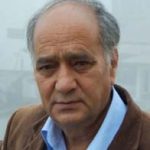
(The narrator is former Professor and Head of the Department of English, HNB Garhwal University and former Fellow of the Indian Institute of Advanced Study, Shimla)