Garhwal Post Bureau
Dehradun, 15 Apr: The Indian National Trust for Art and Cultural Heritage (INTACH), in collaboration with the Wildlife Trust of India (WTI), and with the support of Rohini Nilekani Philanthropies hosted a one-day awareness and engagement event today at the Rangers’ College, here.
This initiative is part of the broader Gaj Utsav – Gaj Lok series, which seeks to highlight the ecological and cultural significance of elephants while fostering a deeper understanding of human–elephant coexistence. Rooted in both tangible and intangible heritage, the collaboration with INTACH brings forward narratives of oral traditions, rituals, and indigenous practices that reflect long-standing relationships between communities and elephants.
A key highlight of the day was the Bala Gaja session—a bespoke engagement designed for young learners. “Bala Gaja” (meaning children and elephants) focuses on nurturing early awareness and empathy by blending conservation education with creative expression. In alignment with INTACH’s emphasis on cultural heritage, the session connects traditional art forms with contemporary conservation messaging, encouraging children to explore the human–elephant relationship through hands-on experiences.
The Bala Gaja session will feature a series of interactive workshops:
- Origami by Kalyani Voletti, Head of Visual Arts at Suncity School, an accomplished art educator known for her contributions to visual arts education and curated student exhibitions.
- Gond Art by Japani Shyam, a distinguished contemporary artist and recipient of the Rajya Hasta Shilp Puraskar, recognised for her work in preserving and evolving Gond traditions.
- Clay Modelling by Ashish Verma of Nature’s Buddy, where students will create elephant forms while learning about conservation.
One of the major highlights of the event was a nukkad natak (street play) performed by the community of Jim Corbett Heritage Village, Kaladhungi, who have been working on the Fatepur –Gadgadiya corridor, which effectively portrayed the issue of human–elephant conflict and the need for harmonious coexistence. The performance used powerful storytelling and local narratives to connect with the audience and convey conservation messages in an accessible format.
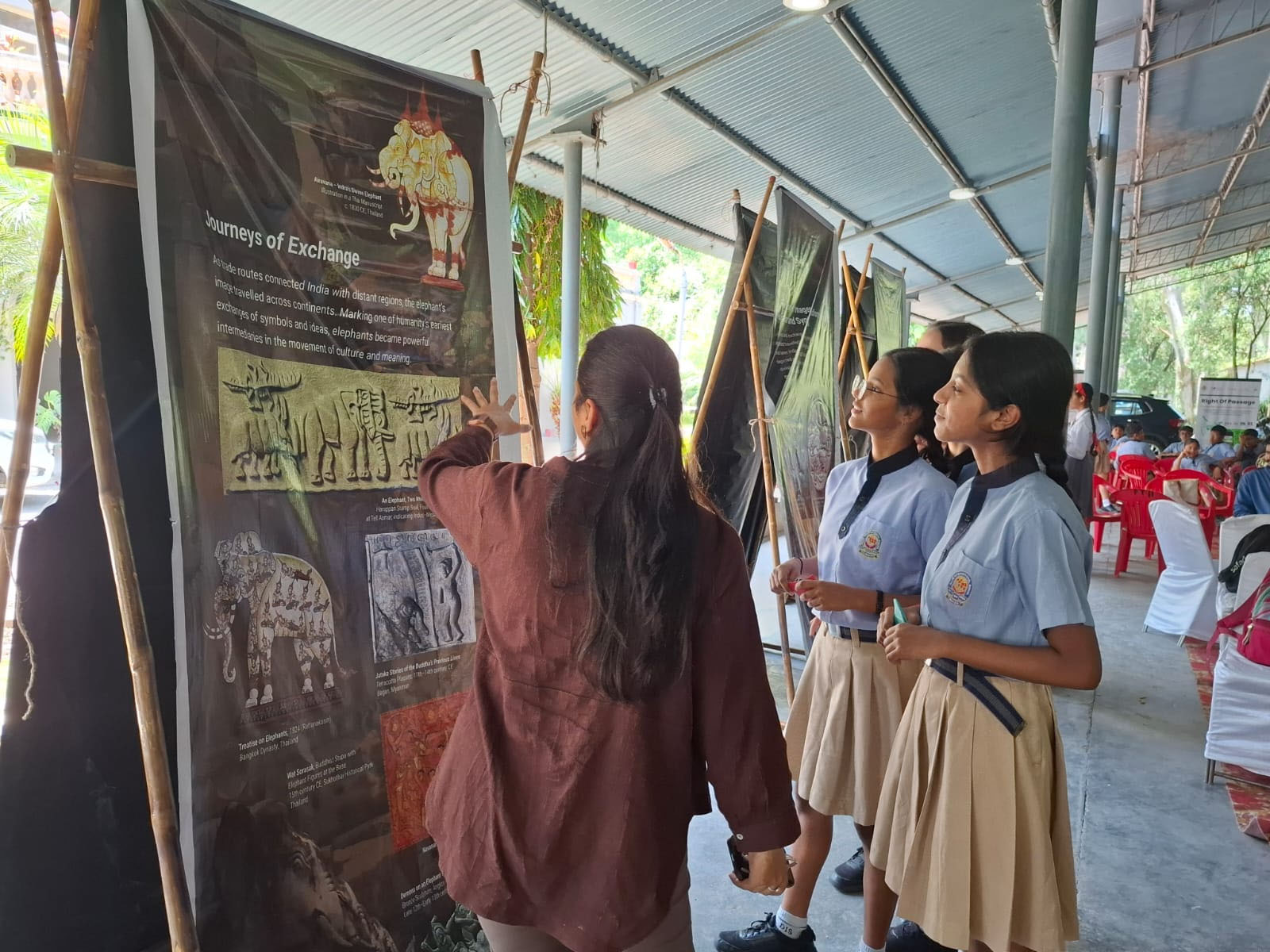
The students were given a guided tour by Anjali Bharthari, PhD, Co-convenor, INTACH, Uttarakhand, on the diverse exhibition on elephants, showcasing their ecological importance, cultural significance, and the challenges they face in the modern landscape. Students had the opportunity to explore the role of elephants as keystone species and their deep-rooted presence in art, mythology, and traditions.
The programme also included an open mic session, “Stories for the Wild”, providing students a platform to express their perspectives through poetry, storytelling, and short talks inspired by wildlife and coexistence.
These activities encouraged both creativity and cultural appreciation, linking conservation with indigenous art practices said Abhishek Rawat of the Nature Buddy Society working on elephant corridor of Thano with the schools and communities.
Further enriching the programme were recitation sessions and storytelling segments centred on elephants. Overall, the Bal Mela under Gaj Utsav successfully created an immersive learning environment that combined education, culture, and creativity. By engaging students through multiple mediums, the event contributed to building awareness, empathy, and a sense of responsibility towards elephants and their conservation said Saymanti Bandyopadhyay, Manager and Head, Natural Heritage Campaigns, Wildlife Trust of India who is leading this initiative with INTACH across the country. Students from Army Public School, Birpur, Brooklyn School, MKP, LDA Junior High School, AASRA trust, Universal Academy, Green Valley Public School, Doon International, Kasiga School and Doon Presidency attended the event. Neelima Sah, AIG Forest, Regional Office, Ministry of Environment and Forest & Climate Change, felicitated the student winners of the open mic event.