All Around the World with the Most Travelled Indian
 By Nitin Gairola
During our school days we have all read about the great Indus Valley Civilization which sits right at the cusp of pre-history. Why I say that it is at the cusp? Well, as we know, pre-history and history are divided by a record of written language. Any archeological site of a city or civilization with a written language falls under history and the rest is pre-history. What is intriguing about the Indus Valley is that it did have a script (hence the later phases of it fall under ‘history’) but the script is yet not deciphered. So here’s a challenge for all the ‘Indiana’ Jones of India who can truly move the Indus Valley from ‘pre-history’ to ‘history’. Someone needs to find the Rosetta Stone of Indus Valley.
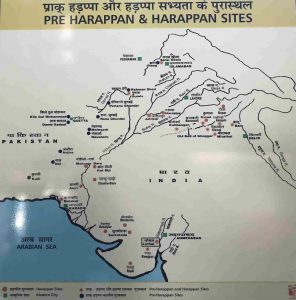
Also it must be understand that the Indus Valley was not just one civilization at a given place and time under a few famous rulers. Rather it evolved over 2,000 plus years (3300 to 1300 BC) in various places within present day Pakistan and north-western India. It even reached the north-eastern part of Afghanistan which we had visited recently. The Indus Valley was also the earliest ancient civilization in South Asia and one of the oldest in the world. While two of its most celebrated cities are Harappa and Mohenjo-Daro in Pakistan, a lot of equally important cities and towns are scattered all over modern day states of Gujarat and Haryana in India. This raises the question as to why there are a dig sites dotted all over Pakistan in the west, Gujarat in the south and Haryana-Punjab in the north but very few in Rajasthan which sits in the middle. So far Kalibangan is the only major Indus city that has been found in Rajasthan (that too very close to Punjab in the north and Pakistan in the west but not really in the middle of the state). The search for this ‘missing middle’ is another challenge for any budding Indiana Jones of India.
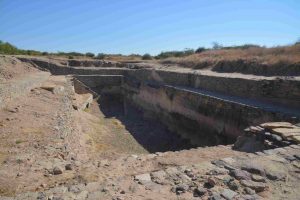
So the Indus Valley was essentially a cluster of agrarian villages bound by a certain architectural style (paved roads, granaries, aqueducts, state of the art drainage etc). This is also called a Bronze Age civilization and it was not just on the plains of the Indus River but away from it too and on other river banks as well. And with the presence of aqueducts and drainage systems in many sites, clearly they knew how to manage water and they prospered the most near river waters and basins. This is also a reason as to why it may not have been deep in the deserts of western Rajasthan but the greener eastern part of the state can’t be ruled out unless I don’t know something that professional archeologists do (which could be quite a few things actually)
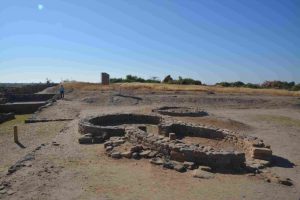
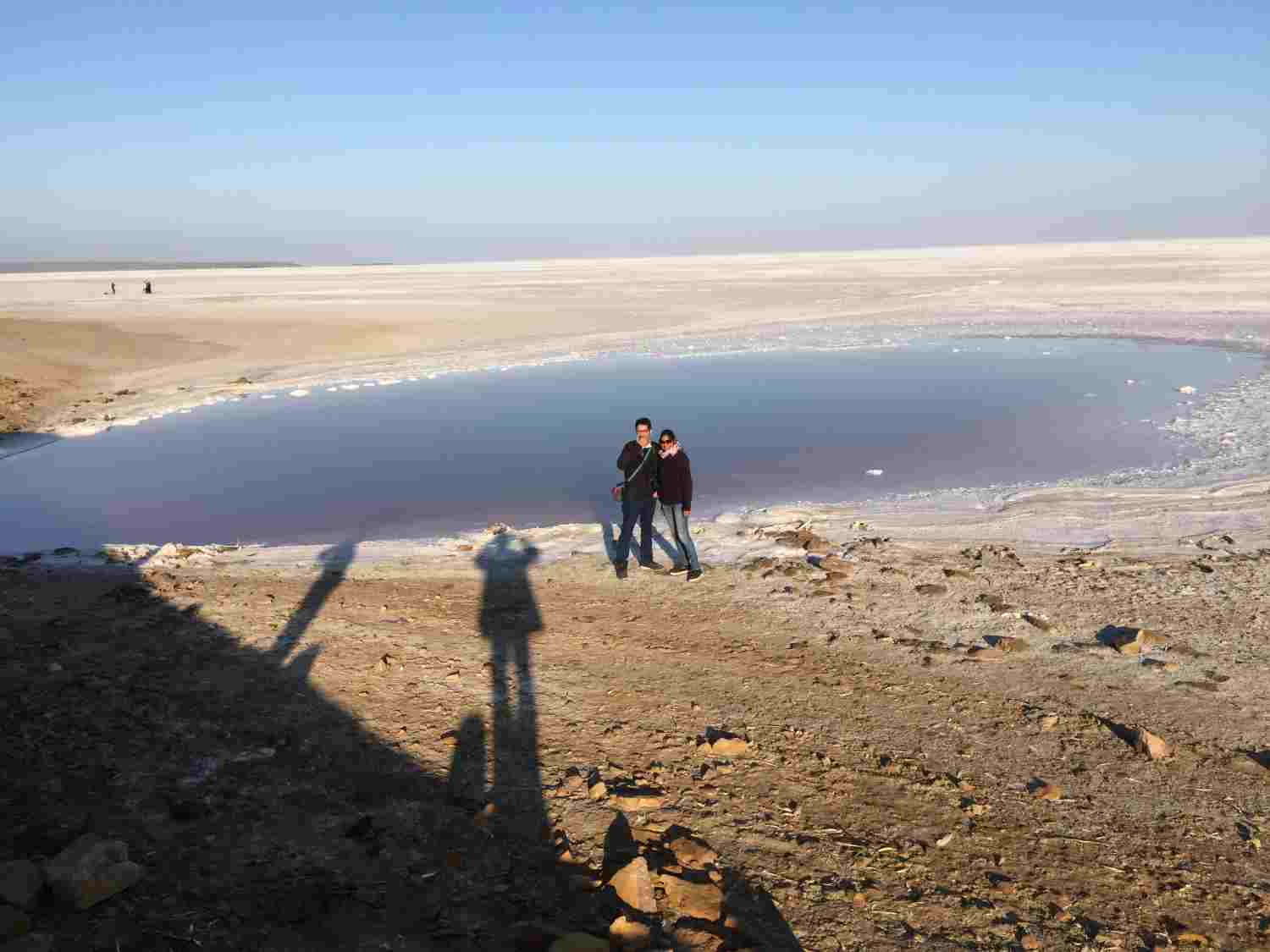
Our own experience of the Indus Valley in India started in 2017 when we were on our Kutch trip where we had met fellow traveller Mr. Amiteswar Sen, mentioned in my feature two weeks ago. During that visit, Richa and I decided to visit Dholavira too, an ancient Harappan city, since I had read so much of the Indus Valley in my school books way back when. So one early December morning in 2017, we found an auto owner named Ramesh and requested him to take us across the narrow paved road through the salt desert and into the ‘island’ of Khadir. That is where the Dholavira Indus Valley site is situated. It was a calm morning drive on an empty road with an endless horizon (dramatically said for effects). At one point there were acid pools and white salt flats as far as the eye could see, with a few pink flamingos licking the salts too (this is actually true). These salt flats are different from the ones at that portion of the Rann of Kutch which most people visit. The all too touristy Kutch Mahotsav in the ‘tent city’ gives me goose bumps and not in a good way.
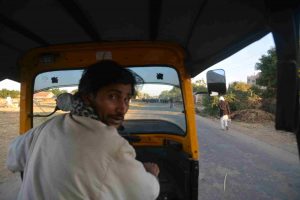
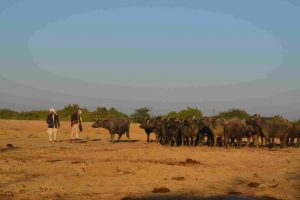
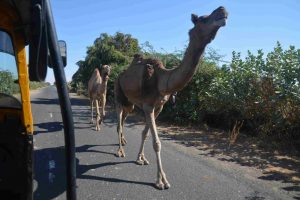
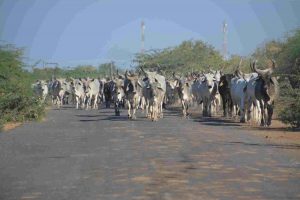
Initially the auto owner, Ramesh was wondering where we were taking him or he was being taken to, quite like Malli from last Sunday’s feature on Hire Benekal. So we had to tell him to soak in the sights and have a good time and make some dough while doing so. We crossed huge herds of camels, buffalos and other cattle across dusty villages and finally reached our first Indus Valley site ever and it didn’t disappoint one bit. It had it all – vessels, wells, homes, roads and their famous aqueducts and granaries. It even had an adjoining little museum full of coins, stamps, pottery, toys and tablets with the not-yet deciphered script inscribed on them.
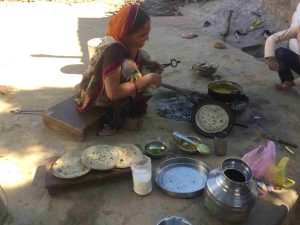
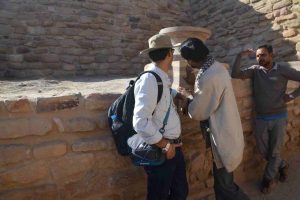
And to our surprise, our grumpy and grudging Ramesh become super excited when he got to know that the site was 5,000 years old. He was walking closer to the guide than us and he wanted to soak in every moment and morsel of the new found knowledge. And after this collective enlightenment for Ramesh, Richa and I, we all realized that knowledge alone would not keep our spirits up and bodies going. We were now hungry for more than just information and decided to walk into the home of a villager. We found a family of 6 (but there could be more at it was a massive home) and the middle aged couple gladly welcomed us in. And we had one of the yummiest meals on the road. The chapattis were thick and fresh off the tava or flat pan and the veggies were finger licking good (since we necessarily had to lick our fingers). Then to our sheer amazement, the man (who served in the police) showed us a picture of Bollywood star, Aamir Khan, eating on the same floor that we were eating our lunch on. This was apparently from the days of Lagaan and I am sure it wasn’t photo-shopped but we were wondering as to how we stumbled upon the exact same home. In any case, we thanked them for the hearty meal and paid for it. As you know there are no free lunches and we had always intended to pay well.
Few years later we visited the Harappan port city of Lothal in southern Gujarat at the Gulf of Khambhat not too far from present day Vadodara. Don’t ask me how we reached there since the memory is vague. Who would want to remember multiple rickety state transport bus rides but that is precisely how we found Lothal. Returning before dark was another challenge but we evidently made it back.
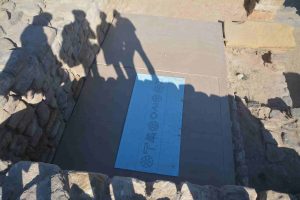
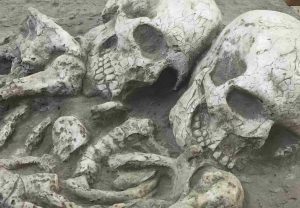
Finally I would highly recommend a visit to Rakhigarhi in Hisar district of Haryana, only around 160 kilometers from Gurgaon and a few more from Delhi or Noida. Rakhigarhi is situated on the banks of the now dried up Saravati River and besides the usual digs, it has a burial ground as well. So if you are one who is not visited by skeletons and ghosts at night, then I am ‘dead’ sure you would not want to miss the oldest city in India, the oldest civilization in Asia and one of the oldest marvels of the ancient world.
Nitin Gairola is from Dehradun and has travelled the natural world more than almost any Indian ever. He has set world travel records certified by India Book of Records, has written for Lonely Planet, and holds National Geographic conservation certifications. He is also a senior corporate executive in an MNC and in his early days, used to be a published poet as well. More than anything else, he loves his Himalayan home.