 By: Ganesh Saili
Looking back, I often try to figure out when I first met Anand K Jauhar, or ‘Nandu’ as his school friends affectionately called him.
‘Let’s grab a quick coffee!’ my wife, Abha, had said.
I remember it was a cold winter morning. She and I were in the Library area; we panted up the ramp to the Savoy and bumped into Nandu, who had returned after running the Indira Restaurant in London’s Marble Arch.
The year? It was 1980.
Come summer or winter, the bar became a watering hole where author Ruskin Bond and I, over the years, met a galaxy of characters: film stars, rogues, politicians, business tycoons, fly-by-night operators and fading beauty queens.
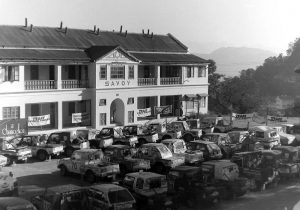
The only constant was the hotel’s staff, which had a firm pecking order like a totem pole. The manager was at the top, followed by the stewards, reception counter clerks, chefs, waiters, room boys, and night watchmen.
Take the late Chatter Singh Negi. He had spent seventy years on the job. Starting life at the hotel as a ball boy, he had reached the front counter when I met him. ‘During the Raj, we only let in officers with pips! The rest were fobbed off with a stern “We are full!”
At the lower end of the totem pole was the hotel’s cook, Gabbar Singh, who lived up to his namesake brigand in the film Sholay by always brandishing a large chopping knife. Granted, it made him look more menacing, but it also made him no friends.
‘Jauhar Saab! We’ve bolted the room from outside!’ gleefully said Mr Sharma, the Assistant Manager.
That was where the cops found Gabbar Singh with a lady of easy virtue who visited him in the little room above the ballroom.
Having supped with the Devil, he had to live in disgrace. Instead, he chose the expedient of leaving his employ.
No such fate awaited Chandra Mohan, the electrician, who waylaid Nandu on his walks to the office nearly every day to say: ‘Yesterday’s power surge burnt three elements in the geysers’.
The money was, of course, pocketed!
Then there was Mr Sethi, the Manager, always immaculately dressed, always with a rosebud on his lapel. It took me many years to figure out he had a secret stash of plastic rosebuds because winter can get so cold in our hills that no flower would bloom.
Sitting next to him was the Savoy’s chief accountant, Gurbachan Singh Sestian, who had come as part of Bibiji’s trousseau when Captain Rai Bahadur Kirparam took Bibiji as his wife.
‘As a fifteen-year-old, I was in Sestian, in Iran, when I was told to be ready to accompany her to Mussoorie!’
My schoolmate, Murari Singh Bhandari, was a bill boy at the front counter. After retirement, his mind addled, he would often arrive at the hotel gates and wonder: ‘Why have I come here?’
In the Writers’ Bar stood Lal Singh and his stinking glasses. They both stank, he because he refused to bathe, and the glasses because of the old stinky rag that he used to polish them with. Towards the end, we started bringing our own glasses, carefully wrapped in old newspapers. We’d also bring in boiled eggs and salt from the roadside shacks in the bazaar.
As fairy tales go, this place had once been ‘the queen of resorts and the resort of kings.’ But the days of family-run hotels were over. This woolly mammoth could not survive in a changing world.
Much has changed, and much remains the same. Mr Kishore Kaya, the new owner, sees me off. We chit-chat. ‘Saili Saab,’ he muses, ‘We have got to confront our mortality. You have to take control of your narrative, lest someone else does it for you. Put on film the hotel’s history before others shove words into your mouth. Soon, we will both be gone, and it will be too little or too late.’
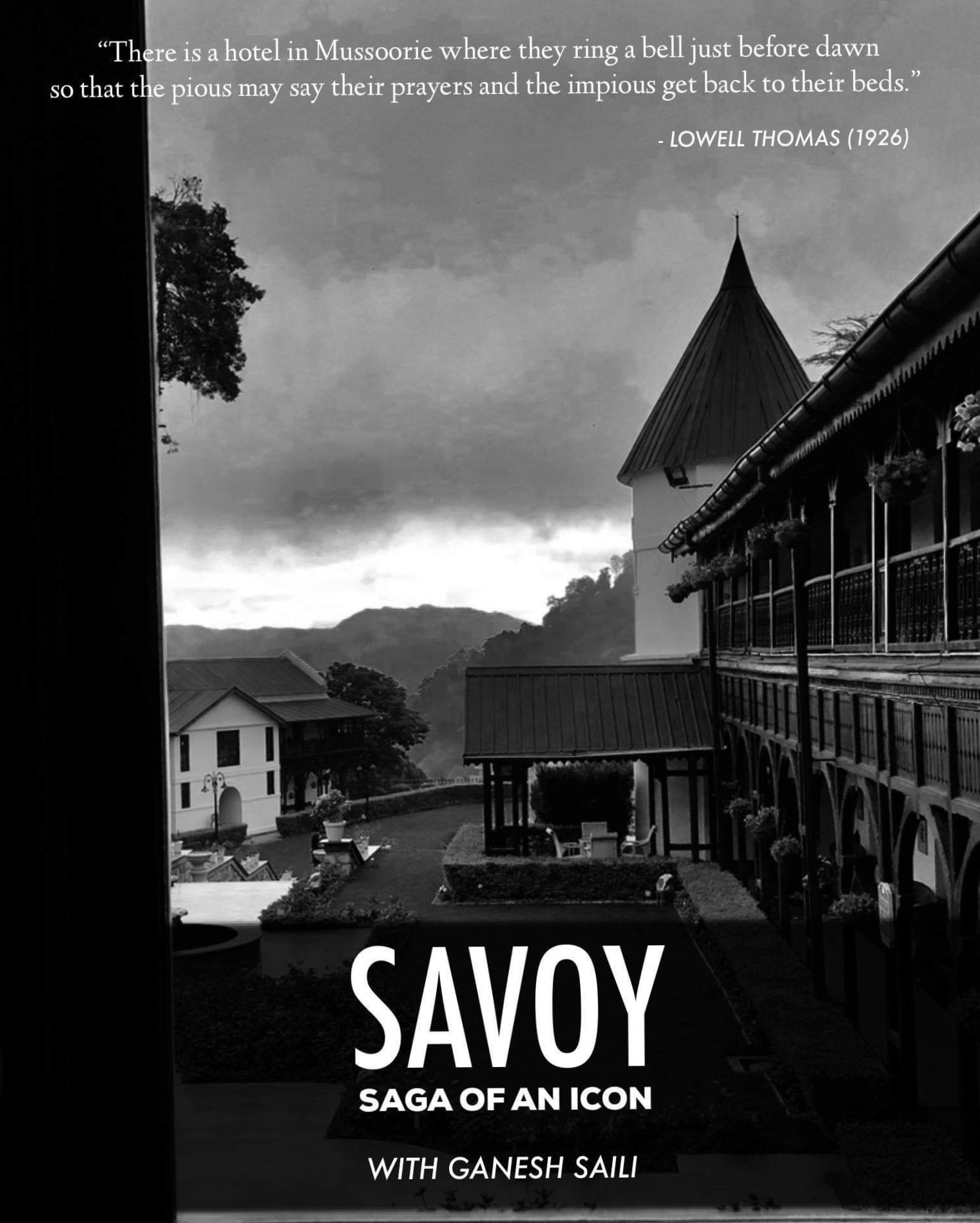
Saga of an Icon squeezes two centuries of the station’s history on film.
With the warmth of meeting an old friend, I stand under the archway and look down at the steps where emperors and clowns once walked.
Ganesh Saili, born and home-grown in the hills, belongs to those select few whose words are illustrated by their pictures. Author of two dozen books, some translated into twenty languages, his work has found recognition worldwide.