By OUR STAFF REPORTER
Dehradun, 8 May: Experts from across the country are deliberating on the environmental impacts of microorganisms at Graphic Era.
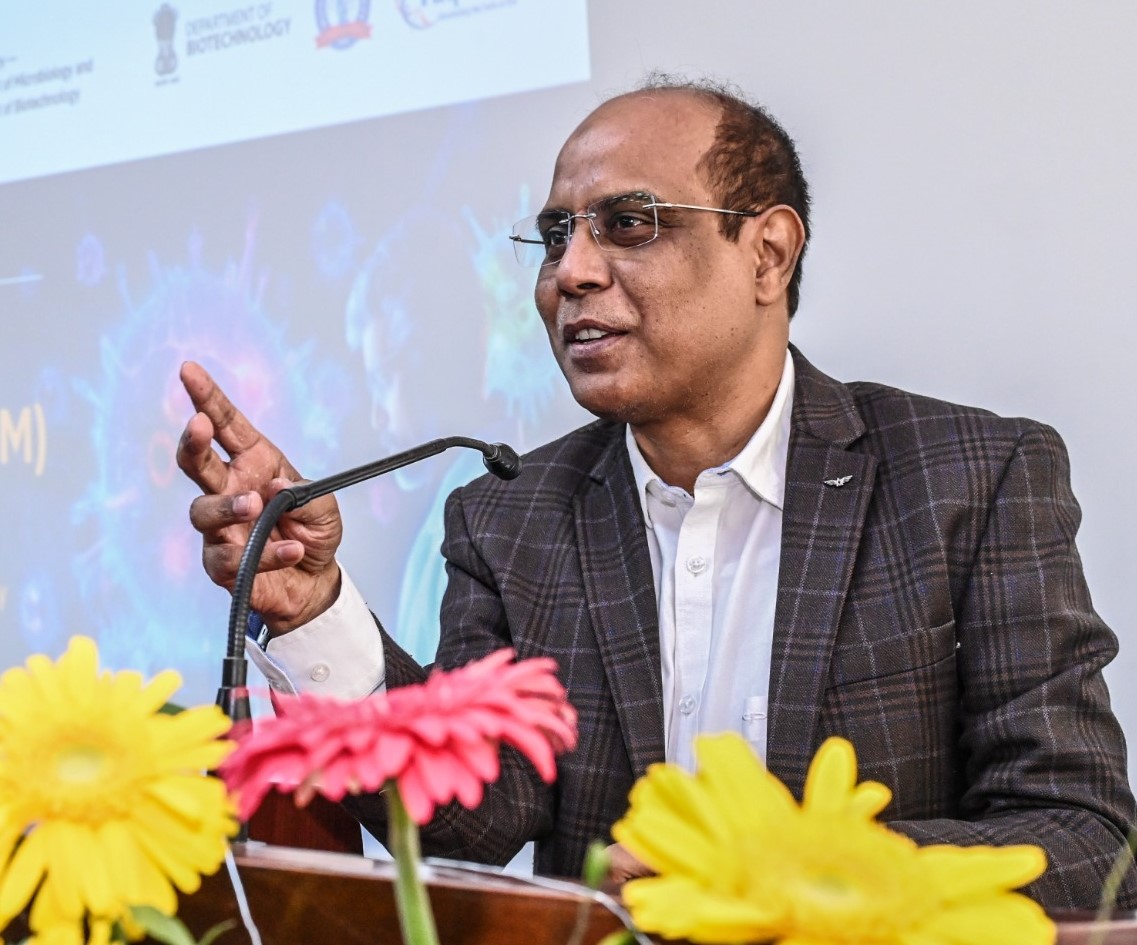
A three-day national conference on challenges in microbiology began today at Graphic Era Deemed University. Scientists and researchers from across India, including Uttarakhand, Odisha, Kerala, Chhattisgarh, Jaipur, Goa, Punjab, and Himachal Pradesh, are participating in the conference. Today, Scientist and Dean (Faculty of Life Sciences) at Jamia Millia Islamia University, New Delhi, Prof Mohammad Zahid Ashraf, addressed the conference as the Chief Guest. He said that in hypoxia, oxygen levels in the body tissues decrease. People living in high-altitude regions may face challenges like anaemia, cancer, stroke, and infections due to hypoxia. While presenting his research on hypoxia, he said that a protein called calpain is useful in the early detection of blood clots known as HA Thrombosis. He also shared detailed information about MRNAs.
Vice Chancellor, Graphic Era Deemed University, Dr Narpinder Singh, said that the microorganisms present in the gut are extremely important for brain health. Compared to earlier times, it is now possible to modify genes through DNA editing using research and innovation. He encouraged students to pursue research in various areas of microbiology.
Representative of the Microbiology Society of India, Prof AJ Nair highlighted the significance of microorganisms in the environment, healthcare, and other sectors.
The conference was also addressed by Professor Anita Pandey of Graphic Era Deemed University, Professor Rupesh Chaturvedi of Jawaharlal Nehru University, New Delhi, Dr Shailesh Pandey of the Forest Research Institute, Professor Rakesh Bhutiani of Gurukul Kangri, Haridwar, and Dr Shama A Baig of Swami Shri Swaroopanand Saraswati Mahavidyalaya, Bhilai.
On the first day, a souvenir was released and ten research papers were presented.
The national conference is being organised by the Department of Microbiology and the Department of Biotechnology in collaboration with the Microbiology Society of India and TagGene Training and Research Institute (TGTRI). Pro-Vice Chancellor Prof Santosh S Sarraf, HOD of Microbiology Prof Anju Rani, HOD of Biotechnology, Dr Rupak Nagraik along with Prof Pankaj Gautam, Prof Pramila Sharma, Prof Ashish Thapliyal, Dr Divya Venugopal, Director of TGTRI Dr Sachin Chauhan, scientists, researchers, faculty members, PhD scholars, and students were also present.