 By Rajshekhar Pant
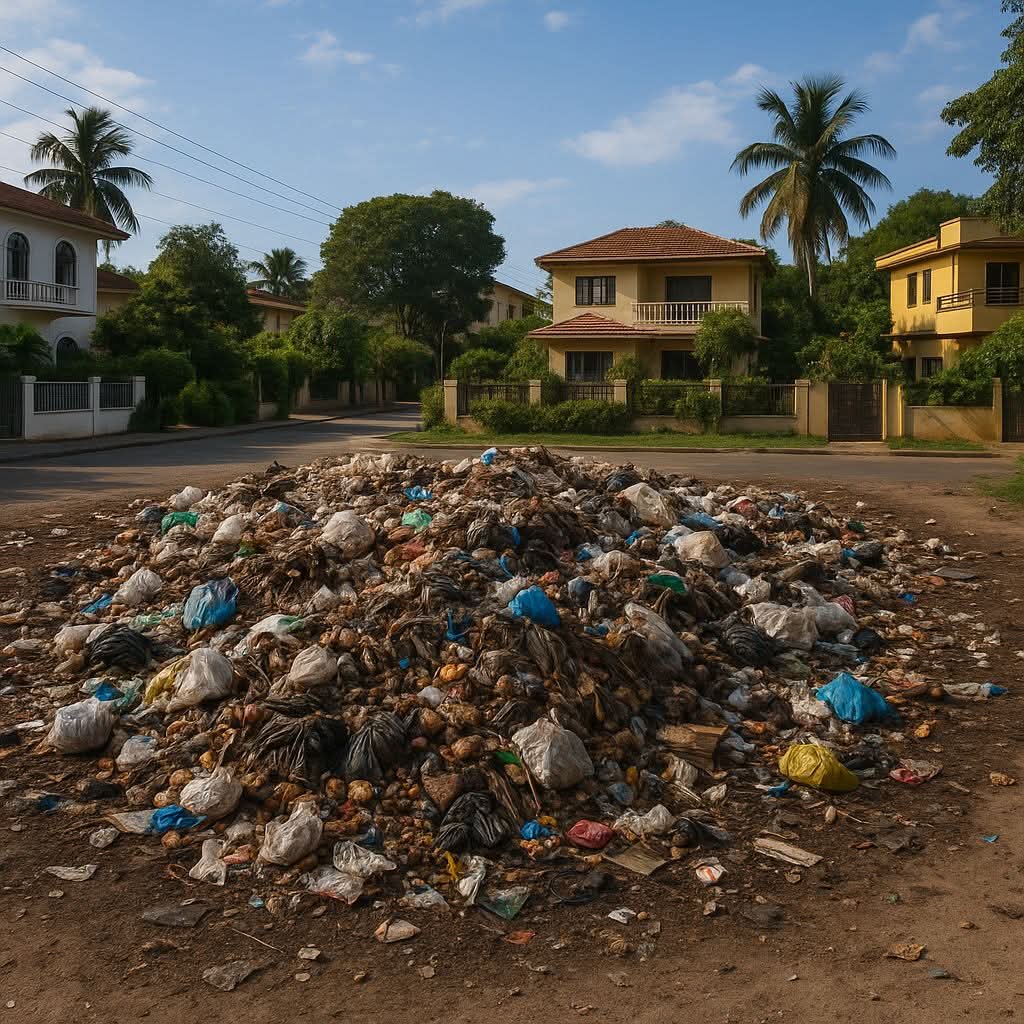
No matter how polished or neglected, every neighbourhood quietly adopts something no one officially designates but everyone steadily contributes to: a dustbin. Not the sanctioned, colour-coded receptacle provided by the municipality, but the unspoken, unofficial kind. The kind that begins with a single plastic bag, tossed casually by the roadside or into an empty plot—no announcement, no plan. Just one simple act of convenience.
Then another follows. And another. Soon, the place becomes “that spot”—the accepted dumping ground. The transformation is swift and seamless. No one questions it. No one resists. The land is rebranded, not by decree, but by habit. Even the person who threw the first bag would be unaware of the long-term impact of their small, thoughtless action.
Once upon a time, a hopeful city worker might have planted a few saplings here during a government cleanliness drive, dreaming of a lush grove. Perhaps the plot owner, in a moment of optimism, sowed hedge seeds along the boundary, imagining a green fence for the dream home he would build there one day. But alas, in places that lose their identity so completely does rarely grow anything other than the ever-thriving brush and weed. All high-pitched dreams were summarily laid to rest the day the first bag of trash landed there.
And then, one day, perhaps years or decades later, a municipal truck finally rumbles in. The heap is cleared. In its place, a plaque is installed—maybe commemorating a long-forgotten freedom fighter or a soldier who fell at the border. A chain is drawn around it to lend a sense of purpose and dignity. Sometimes, the site morphs into a public washroom, a police booth, or may be a liquor store with solemn grills. Eventually, the original plot owner might also return, fuelled by dreams of construction or resale. The garbage is removed. But the need for a dustbin, as always, survives. So, the cycle resumes—somewhere else, with someone else’s garbage, in some new forgotten corner. For who would like to heap muck and grime and other kinds of wastes inside their house?
Beyond the one that is perceptible, we all do carry a quieter kind of waste too—the kind that doesn’t crumple or stink but weighs us down just the same. Frustration, bitterness, anger, helplessness, envy, regret… precisely, all that we cannot say, cannot act upon, cannot even fully acknowledge. These emotional residues, too, require disposal. So, we find other kinds of dustbins.
In families, some members silently take on the role- a retired father, an unemployed son, a quiet daughter-in-law or others of their ilk. They absorb the mood swings, the irritation, the neglect, the unspoken tensions of the household. Not long ago, this role was almost exclusively assigned to women. For decades, they served as the emotional landfill for entire families—absorbing their husbands’ tempers, their children’s demands, and their in-laws’ dismissals. Films of the ‘60s and ’70s portrayed them routinely—the self-sacrificing woman cloaked in patience and pain. But times change. With empowerment came a reversal. Today, many men, willingly or otherwise, have become the new emotional absorbers. In the few joint families still holding on, it is often these silent men who carry the invisible burden—internalising jibes, anger, and disregard, functioning like shock absorbers over the potholes of daily life.
And beyond the home? Precisely such have become our times that one may get transformed into a dustbin anytime… anywhere. Watch enough shouting matches disguised as panel discussions, and you’ll find yourself echoing borrowed outrage. Print media polishes your worldview until it fits snugly into its editorial agenda. Social media does it even more insidiously. You don’t even notice it. You consume its waste voluntarily. You internalise it. You share it. You become it.
On a geopolitical level, powerful nations now treat smaller or dependent nations as ideological dump sites—exporting their opinions, interests, and ambitions under the guise of diplomacy or development. Garbage, it turns out, travels well—especially when disguised as virtue.
But let’s set the world aside for a moment. Sit quietly. Listen. Not to the television or your phone—but to yourself. There’s a lot of garbage piled up inside. So much that the new waste that lands daily no longer shocks or overwhelms. We’ve adapted to it. We carry it without complaint. Within us, where meadows of compassion, joy, and wonder should have grown, there are now only heaps—festering, stinking, growing. Packed so tightly we no longer remember the feel of open space.
And in this age of polarisation, this inner garbage plays one last cruel trick—it forces us to choose sides. To stand on one end or the other. To split into teams, into factions, into echo chambers. And amidst the clamour, no one dares ask the simplest question: Is division even necessary?
No municipal truck will come to carry this burden away. No grand reckoning is guaranteed. But perhaps—just perhaps—one day, someone will begin. Someone will clear the internal plot, haul away what doesn’t belong, and make space once again.
Space for a house of dreams.
Space for something beautiful.
Something worth living in.
(The author is an amateur filmmaker, a photographer, and a writer, who has written over a thousand write-ups, reports, etc., published in the leading newspapers and magazines
of the country. He can be reached at pant.rajshekhar@gmail.com)