 By Devendra K Budakoti
Migration from Uttarakhand has been studied since the 1970s, but it became a prominent public issue during the Uttarakhand statehood movement of the 1990s and has remained relevant since the state’s formation in 2000. The state government established a Migration Commission to address the issue. However, programmes like encouraging Covid-19 migrants to return to their native villages largely failed, highlighting the challenges of retaining the population in the hills.
The earliest movement of Uttarakhand youth outside the state began with enlistment in the Gorkha battalions after the defeat of the Gorkhas in 1815 and the establishment of the British administrative system. Revenue and civil administration, along with the police system, were set up in the hills. Local officials—tehsildars, qanungos, and patwaris—handled law and order. In many interior areas, patwaris continued policing duties well after independence. Similarly, the Forest Department, established around the 1880s, employed forest guards—popularly called “Patrool”—to patrol and protect forested areas.

Uniformed services, particularly the army and police, offered steady employment and attracted many Uttarakhand youth. Early opportunities included the Assam Military Police (later Assam Rifles, established 1835), the Kolkata Armed Police, and positions in Dhaka and Burma police. Uttarakhand soldiers participated in both World Wars in Europe, North Africa, the Middle East, and Asia. Many even joined Subhas Chandra Bose’s Indian National Army in Singapore.
Beyond uniformed services, Uttarakhandis sought civilian and private employment across pre-independent India in cities like Delhi, Lahore, Quetta, and Karachi, and post-independence, across major Indian towns. These communities were often well organised, reflected in the early formation of Garhwal Sabhas. The Garhwal Sabha of Delhi was first registered in Shimla in 1923, when it was the summer capital of British India, and formally in Delhi in 1941. During the same period, Garhwal Bhawan was established, with land later acquired in 1956 and the foundation laid in 1958. Early in British period, support from figures like Philip Mason, ICS, who served as Deputy Commissioner of Garhwal, helped consolidate these efforts in Delhi. Other diaspora organisations, such as the Sarv Garhwal Hiteshni Sabha, were established in Lahore and Quetta in 1923, demonstrating the cohesion of the Garhwali community before and after independence.
The army and other uniformed services initially provided a structured employment pathway, but once these positions were filled, youth sought opportunities outside these domains. After the national capital shifted from Kolkata to Delhi in 1911, Uttarakhandis filled numerous positions in the lower civil services. Many, lacking formal education or technical skills, started as domestic help in shops and other establishments or in entry-level jobs, gradually advancing to higher positions and improving their social status.
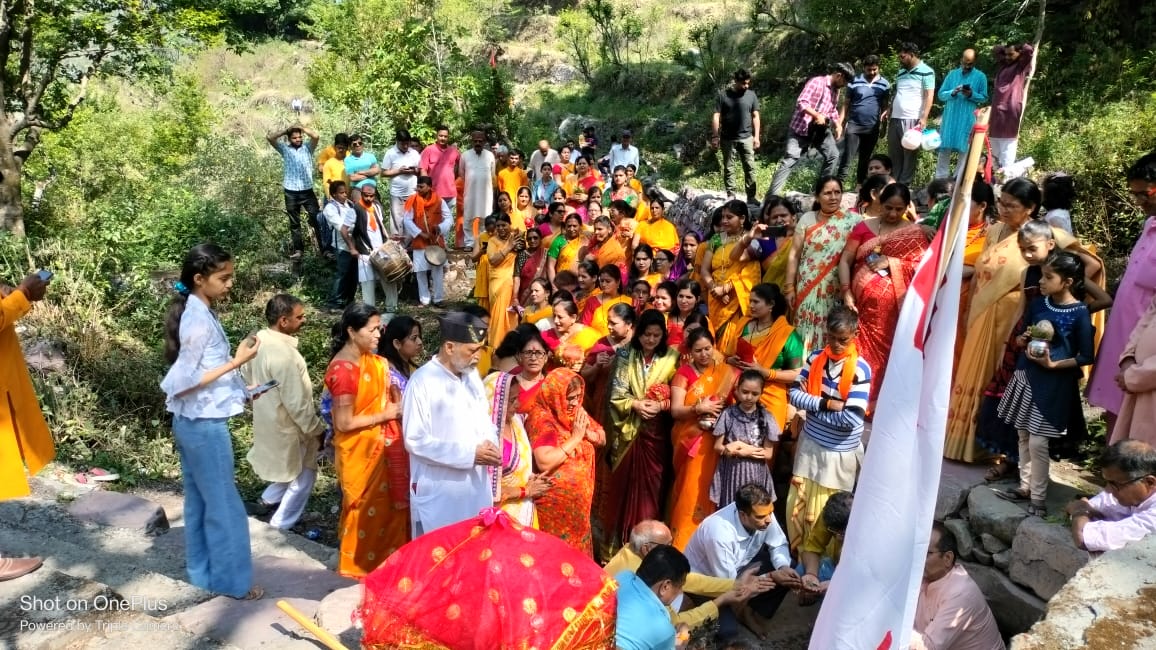
Today, Uttarakhandis are spread across major Indian cities and global metropolitan hubs. The Uttarakhand Associations in these cities actively organise cultural programmes and community gatherings, preserving the state’s traditions and heritage.
While migration from the hills has a long and vibrant history, it has led to concerns such as locked houses, crumbling old structures in the villages, and the emergence of “ghost villages” in Uttarakhand. Addressing this requires practical measures, including land consolidation (chakbandi) to boost agriculture, animal husbandry and horticulture and establishing Gairsain as the permanent state capital, which would stimulate local development and through the trickle-down effect generate employment opportunities in the hills.
(The author is a sociologist with over four decades of experience in the development sector.)