Veteran’s Reflection from Uttarakhand
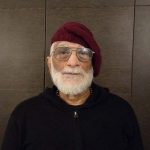 By Brig Sarvesh Dutt (Pahadi) Dangwal (Retd)
Across democracies worldwide, societies today face a common challenge: the politicisation of identity and the mobilisation of religious sentiment for short-term gain. This phenomenon is observable across democracies—from North America and Europe to South Asia and Africa—where identity and religious sentiment are increasingly mobilised for short-term political advantage, often at the cost of institutional trust and social cohesion. India, a civilisation that has historically absorbed diversity rather than feared it, is not immune to this global trend.
Recent religiously charged confrontations in a small town in northern India, Kotdwar, District Pauri Garhwal, have highlighted how easily public discourse can descend into mistrust and antagonism. More concerning, however, is the ripple effect such episodes have on communities traditionally associated with discipline, restraint, and national cohesion—particularly military veterans. This is not merely a local or social issue; it is a constitutional and civilisational warning.
As veterans, the India we served was not defined by a single religion, ethnicity, or cultural identity. It was founded on the principle of unity in diversity, where pluralism was a source of strength rather than vulnerability. In an age of emotional mobilisation and digital outrage, the responsibility to foreground reason becomes ever more urgent.
Sanatan: A Civilisational Ethic of Acceptance
For international readers, Sanatan refers not to a rigid religious system but to an ancient Indian civilisational philosophy—often called Sanatan Dharma—that predates modern religious categories. It is frequently described as “tolerant” of other faiths, but this description falls short.
Tolerance implies endurance.
Sanatan philosophy goes further—it emphasises acceptance.
This worldview is encapsulated in an ancient Indian aphorism: Truth is one, but expressed in many ways. The statement does not claim that all paths are identical; rather, it recognises that human approaches to truth are diverse and shaped by culture, history, and conscience.
This ethic of acceptance explains why India historically became a refuge for persecuted communities—Jews, Zoroastrians, Christians, Muslims, and others—long before modern ideas of multiculturalism emerged. At its core, Sanatan thought prioritises ethical conduct over identity. Values such as duty, non-violence, compassion, and self-restraint are considered universal, not the monopoly of any one group.
When such a philosophy is reduced to narrow identity politics, it ceases to be Sanatan in spirit.
Sanatan and the Constitution: Not Opposites, but Complements
India’s Constitution, often described as secular, is frequently misunderstood outside the country. Secularism in the Indian context does not mean hostility to religion. It means equal respect for all faiths and principled distance of the State from religious control.
Far from being an imported framework, the Constitution is a modern expression of India’s civilisational conscience. It enshrines equality before the law, freedom of expression, and freedom of belief—while clearly stating that these freedoms operate within the bounds of public order, morality, and social responsibility.
For those who served in uniform, allegiance to the Constitution meant understanding a critical distinction: the role of the State is not to impose belief, but to protect rights. Whenever religious passion threatens to overwhelm public reason, constitutional principles serve as the stabilising force that prevents democratic erosion.
Veterans and the Ethics of Restraint
Globally, military veterans are often viewed as symbols of strength. In reality, professional soldiering teaches something deeper: control over force. Veterans are trained to assess situations calmly, de-escalate tension, and treat the use of force as a last resort. Religious provocation—whether amplified through social media or street mobilisation—runs directly counter to this ethic.
If veterans themselves succumb to polarisation, society loses one of its most credible moral anchors. Democracies need veterans not as participants in cultural conflict, but as voices of balance and institutional memory.
The Politics of Frenzy
History offers a consistent lesson: when religion becomes a political instrument, societies fracture. Emotional mobilisation may produce immediate energy, but it never yields durable solutions.
Sustainable stability arises from three sources:
Impartial rule of law.
Responsible leadership.
Civic dialogue grounded in facts rather than fear.
These principles are universal, applicable well beyond India’s borders.
Complementarity, Not Conflict
A false binary is often drawn between ancient traditions and modern constitutions. In India’s case, this opposition does not exist.
Sanatan philosophy encourages discipline of the self.
The Constitution enforces discipline of power.
Together, they create balance. Compassion aligns with equality. Restraint complements freedom. The synthesis of moral self-control and institutional accountability is what sustains plural democracies.
A Choice Facing Democracies Everywhere
Veterans—and citizens more broadly—must decide whether to amplify division or to anchor society in reason. This is not a rejection of faith, nor an endorsement of relativism. It is a reaffirmation that democracy survives on restraint, not rage.
Societies are preserved not by provocation, but by judgement.
Nations are built not on identity alone, but on conduct.
Reason is the highest form of courage. Restraint is the strongest expression of belief. And constitutional values remain the shared covenant that binds diverse peoples into a single political community.