By Ganesh Saili
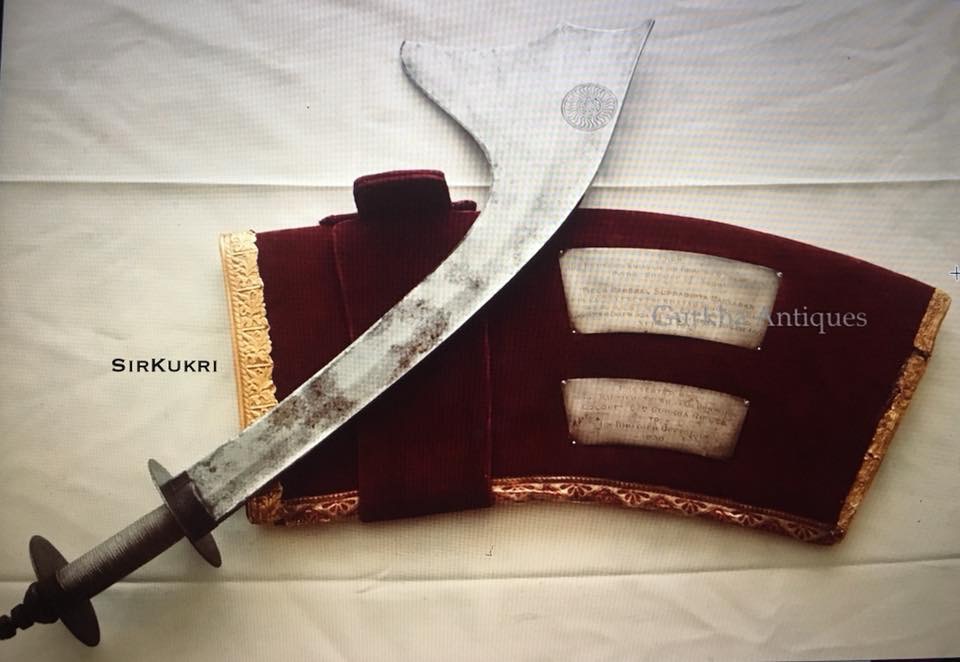
Imagine a horde of fierce warriors shouting ‘Aayo Gurkhali!’ as they descended en masse on their hapless enemies. It is a battle cry that still curdles the blood. Armed with the fearsome khukri, the mountain machete that could sever the neck of a water buffalo in a single stroke, they left the surviving British with nightmares and cold sweats.
Subsequent events, however, turned out to be very different. Balbhadra, the hero of the Doon, after giving up the Jaithak fort where he was one of the defenders, returned to Nepal. While in Nepal, he formed an illicit relationship with another man’s wife, which became publicly known. Under the Nepalese law, his crime of seducing a brother officer’s wife was punishable by death. Balbhadra escaped from Nepal, and found employment in Ranjit Singh’s army at Lahore. He died fighting the Afghans at the battle of Naushera.
The Gorkha taught the British the art of mountain warfare. It was a hard lesson learned over several bitter encounters, but even so, the British ultimately emerged victorious not so much by their military prowess as by their guile and long purse strings.
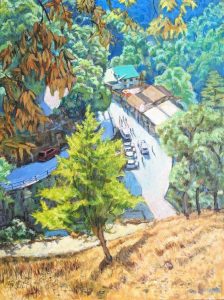
Skillicorn.
It must be acknowledged that the Gorkhas were an experienced and brave army. They had been continually waging war in the mountains for more than fifty years, and knew well how to use the terrain and resources to their advantage. Caution and guile were therefore more effective against them than boldness of action or of decision.
The Gorkha army was well-nigh unbeatable, with its leaders, its organisation, fighting skills and the topography of Kumaun and Garhwal. But with the financial resources of the East India Company at their disposal, the British were able to employ Pandits, soldiers and others as paid spies. It was their services in the Kumaun campaign that were invaluable in turning the tide.
A scribe notes, ‘Unlike other enemies, the Nepalese showed a remarkable spirit of courtesy to us, worthy of a more enlightened people. Instances of poisoned wells or arrows, or of cruelty to the wounded, are only recorded in one or two cases; no rancorous spirit of revenge appeared to animate them, they fought in fair conflict like men, and abstained from insulting the bodies of dead or wounded. In no case was there any interference with the dismal duty of collecting the casualties at the close of an action.’
The bravery and fighting spirit of the Gorkhas is legendary. A man with his shoulder shot off by a musket, waving a white flag, approached the British forces for medical assistance, and when he had mended, he asked the British if he could return to the battlefield to fight them once more.
After the battle, Captain Young, recovering from his wounds, wrote to the East India Company asking the Directors to permit him to raise a force of Gurkhas who would one day do the King and Country proud. On receiving approval, he went to the POW camps in Saharanpore to recruit the Gorkhas interned there. He announced his success with almost childlike glee, exclaiming: “I went in one man and came out three thousand!”
Perhaps the British redeemed their failure in the Doon by erecting two obelisks to the memory of the men who gave their lives. To the west is a plaque in memory of Major General Sir Robert Rollo Gillespie KCB and those who fell with him. To the East is a plaque to a hundred men of the 8th Royal Irish Light Dragoons, and above this to the west loomed the Fort of Kalinga. It was not a fort in the traditional sense; the fortifications were largely made of rough-hewn wood and stones, but Gorkhas were defending it, and there were plenty of them to keep the British at bay.
Balbhadra’s return to Nepal was not quite as happy an event as he had hoped. Amar Singh Thapa declared him an outlaw and sent an army to hunt him down. He barely escaped death and fled Nepal to join The Lion of the Punjab, Maharaja Ranjit Singh, in Naushera. As mentioned above, he perished while doing battle with the Afghans.
Ganesh Saili, born and home-grown in the hills, belongs to those select few whose words are illustrated by their pictures. As the author of two dozen books, some translated into twenty languages, his work has found renown worldwide.