 By Ratna Manucha
And why is that, you wonder? Well, because there are infinitely more birds than humans in this beautiful continent!
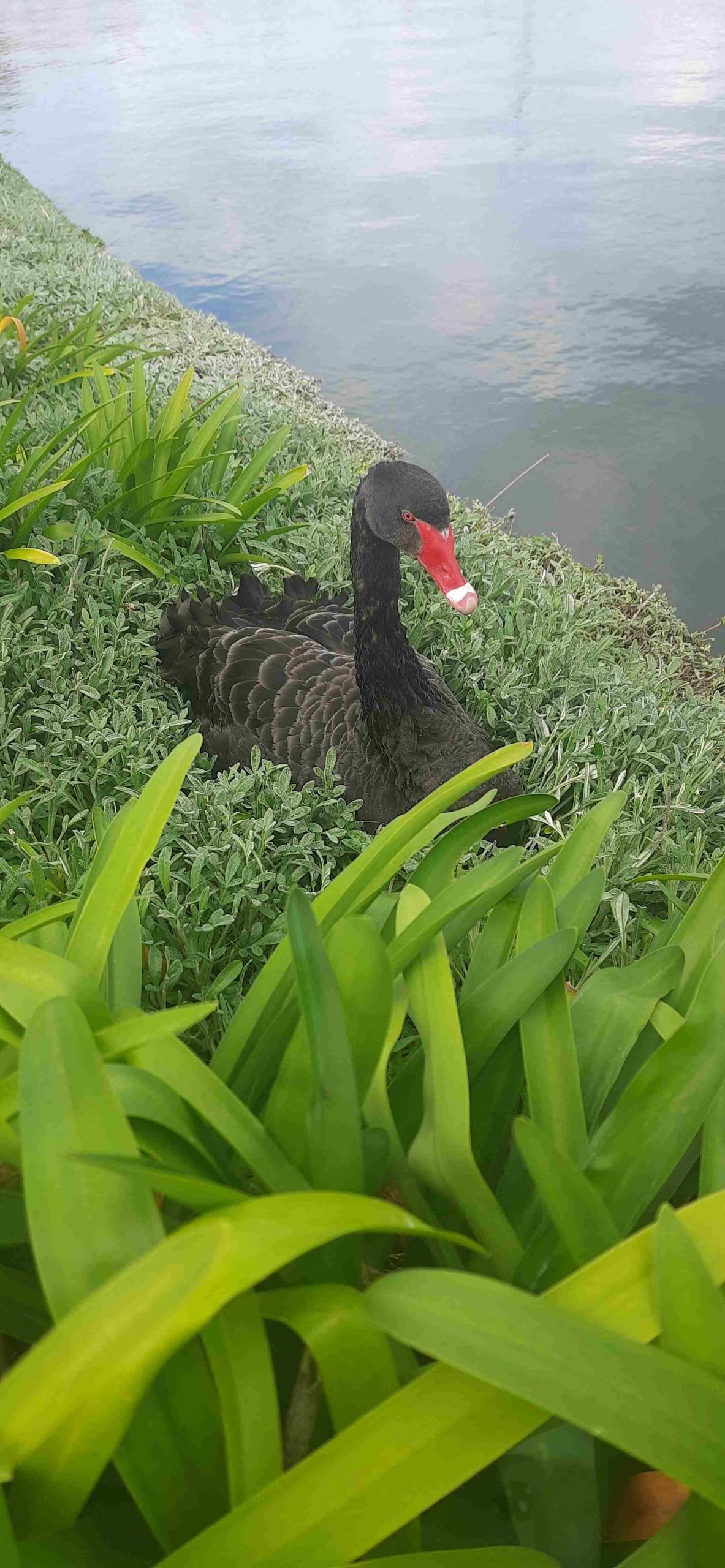
They have the run of the land and the right of way. Go for a walk at any given time of the day and you come across waddling Australian shelducks and swans, strutting magpies and even Australian black ravens, flocks of pink and white galahs, all over, in gardens, in roundabouts and even on walking pathways. Aren’t the pathways meant for us humans, I ask myself bemusedly as I nimbly step aside to let a pair of black swans waddle past me. You think they’d be scared of us humans. Isn’t that what happens in India? Our birds are shy, maybe even frightened and one is lucky if they sit on a branch long enough for one to click some pictures before flying off. Most of the time they fly off even if one is a couple of feet away – just at the sound of our footsteps.
But these birds Down Under … they are made of sterner stuff! It’s their territory and we humans are very graciously allowed to co-exist.
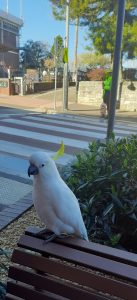
Come dusk and the trees echo with the melodious sounds of dozens of birds that have come home to roost. They include the exquisitely coloured rainbow lorikeets, pink and gray galahs among others.
The signboards show crossings for ducks and swans and woe betide if you’re driving to work and a Mommy Duck decides at that very moment that she needs to usher her six little ducklings across the road to the other side of the lake for breakfast (maybe the worms there are juicier!), you’ve got to hit the brakes and wait patiently till this little family waddles across. And they’re not in a hurry. No Sir, not them! And if you’re in a rush, too bad. This is where you learn patience! No wonder the Australians are a patient lot! It’s the birds, you see.
It’s not uncommon to see a couple of stately pelicans swimming in the lakes or standing on the sand drying their wings in companionship with the graceful black swans, ducks, moorhens and of course the ubiquitous sea gulls who are everywhere, flying overhead, perched on walls, walking on sidewalks, looking for crumbs or just swimming in the water.
And don’t get me started on the magpies. Did you know there’s actually a swooping season for magpies? It’s in the spring, from August to November, when they breed. The territorial magpies perceive humans to be a threat to their eggs or chicks so typically walkers, joggers and cyclists are their targets. So, if you see a magpie swoop once over your head, screeching or flapping its wings, consider it a warning and cross the road and move on to the other side. Otherwise, you’ll be swooped! And I know ‘cause that’s what happened to Boss Man, who ignored an irate magpie’s warning and came back home after his evening walk with a nick on his head! OOOPS!
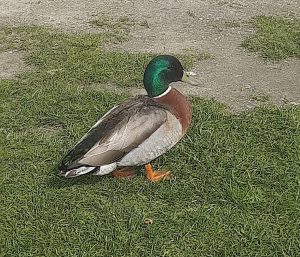
Ducks and swans are in no hurry to move away when they see people milling around them. There’s enough space for everybody is what they must be thinking as they very graciously allow us to use the footpaths! Swans mate for life and ducks too typically mate for one season. Spring being breeding season, it is not uncommon to come across pairs of ducks and swans sometimes with their brood of ducklings and cygnets, happily strutting around in gardens and even marketplaces which have lakes around them and posing patiently for eager photographers.
The beautiful blue fairy wren flits around bushes and hops across patches of green grass almost as if playing hide and seek.
Not to mention the brazen cockatoos which seem to be perpetually hungry. They will perch on your picnic table waiting for scraps, but if you want to feed them from your hands, they will very graciously accept food from you. It’s another matter that one must not feed the birds and there are signboards saying the same thing, but one does come across over excited tourists who throw caution to the wind and do exactly what they shouldn’t be doing.
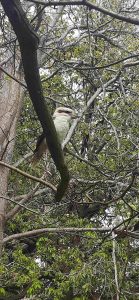
And my bird watching was suitably rewarded when one day a kookaburra flew right over my head and perched on a branch just as I was walking under it. I walked ahead and turned back to look at it. It looked back at me and matched stare for baleful stare till I summoned up the courage to walk back slowly and gently towards it. But it didn’t move. Instead, it twisted and turned as I circled the tree to click this beauty from all angles. It was almost as if it were saying to me, “You’ve hummed this ditty about me long enough. Now here I am…modelling for you. Your very own private viewing. Take your time. I’m in no hurry to fly off.”
And I hum to myself, one more time…
‘Kookaburra sits on the old gum tree
Merry merry king of the bush is he
Laugh Kookaburra laugh Kookaburra
Gay your life must be!’
Mother Nature’s divine, unlimited bounty.
(Ratna Manucha is an academician, storyteller, poet, columnist and author of fact, fiction and textbooks for children and young adults. She lives, dreams and writes in Dehradun, her happy place).