Around the World with the Most Travelled Indian
 By NITIN GAIROLA
2 years ago, I had written an article in Garhwal Post called ‘Dunki and Dangerous Borders’. The article was inspired by Shah Rukh Khan’s Bollywood hit called ‘Dunki’ (a Punjabi word for ‘Donkey Flight’). As I had explained then – This ‘Dunki’ or ‘Donkey Flight’ refers to the arduous cross-country land & sea route which many misguided youths take to illegally emigrate from their home country to a more developed foreign land (like USA, Canada or UK) in the hope for a better life. And in this sweet and sad story, the hero (SRK naturally) is estranged from the love of his life as she settles in the UK (post the arduous Dunki route), while he returns home to India. However, I am not advocating doing any Dunki business here, since today we all can simply book a nice economy class flight ticket to any country we want. Trust me, it will work out cheaper than crossing all the borders by land, but the adventure of it is another story.


In my ceaseless need for adventure, I often find myself crossing somewhat dangerous borders and being in dangerous borderlands. I use ‘somewhat’ on purpose since many land-borders sound a lot more dangerous than they are and in many cases the borderlands themselves are a lot, lot safer than what’s going on deeper inside the dangerous country. Danger at the borderlands is also a function of when that border was crossed and by whom. For example, an American crossing the border into Iran and Afghanistan was very normal in the 1970s but try doing that post 2001 (er, we crossed into Afghanistan in 2023 after the US military had left the land and also left the void). Now the same can be said for South Sudan and Syria since we did that in 2016, a time when we were not supposed to. And the list goes on and on…


So, in this mini-series, I will narrate adventures to such dangerous borderlands. But after crossing in we rarely go into the heart of a troubled country since that’s where the real danger lies. In my need to fully colour the world map, we are visiting every country on Earth but we are doing that in the safest way possible. And I thought I should begin this series with a place that we visited very recently in 2025 called the Ogaden. It happens to be a desert land in ‘Somali’, which is the far eastern region of Ethiopia on the west of Somaliland. Now to give you some idea, the nation of Somalia (not the Ethiopian region of ‘Somali’ just mentioned) split into Somalia and Somaliland in 1991, when Somaliland declared its independence. So, the Horn of Africa in the south is now the original Somalia, with Mogadishu as the capital, and towards the north is Somaliland which is ‘relatively’ safer and that’s where we were to go later. But right now, we were in Ethiopia’s part of Somalia called ‘Somali’. This was taken from Somalia and in the 1960s there was a movement in Somalia to take it back and at that time the area was referred to as Greater Somalia. The two nations fought the Ogaden War in 1977-78 over this land and Ethiopia emerged the victor and to it went the spoils.


We landed in Dire Dawa on our small turbo prop plane and saw an airport that ended where it started. It was like one of our obscure railway stations in the hinterland. From there it was a drive up to an area known for growing and selling Khat. Now let me explain Khat, sometimes written as Chaat. It is a stimulant plant (to put it mildly) and all the locals munch on it anytime of day they can get their hands on it. But unlike our potato chips, this munchie makes you very relaxed. Khat chewing can start from the morning itself and it ensures that the locals are always in a happy state. The issue is that it doesn’t go well when locals carry guns with them and are in not so happy a mood on a given day. But very few carry guns in this area nowadays, so that’s a relief.


After freshening up, we were well in time for the action at a big Khat market where locals buy and sell this plant (some start eating their fresh purchase too, sort of like what we do with our potato chips). The market was intense to say the least. We had been warned to keep a close watch on our belongings as we were the only tourists there and were clearly standing out. But we had our wonderful guide who was looking out for us, so it felt moderately safe. More than anything, the locals were intrigued by us and were not there to cause any trouble but to sell their wares which in this case was either Khat or hot tea and coffee along with some deep-fried meats.

At the market, we also went up an abandoned building to capture images from a vantage point and that’s where I could take out my proper Canon camera. Otherwise there was no chance to flash it around in the midst of the crowd as it would not have been taken kindly. These days mobiles are such an advantage since they are both small and common, and snaps can be taken on the sly in such kind of places. Unless you carry the big iPhones Pros or Samsung Galaxy Ultras, no one is going to notice an ordinary smart phone in most towns. The trick in these places is to not look or act rich so that you can fit in better with the crowd and be no more than a curiosity for the locals.

The best part of this Khat themed day was that we were invited to the home of our guide, who very graciously handed us a bunch of leaves as soon as we entered, along with some freshly brewed black coffee. Imagine going to a party and instead of being served cookies and cupcakes, you are offered leaves. Even stranger was that his mother-in-law was sitting right behind me, in utter silence, just observing this stranger creature. That weird afternoon was no doubt the ‘highlight’ of the day and later we saw daylights at night and really enjoyed the experience.

We had to rest well as the next day would take us into the villages of Yemini refugees and also few Somalian villages in Somaliland. My heart was light and I felt at peace here. I also thought of home but was glad to do what I do in the area of extreme world travel. And one thing I can assure you – the world is not as dangerous as it is made out to be on TV. People are good, everywhere.
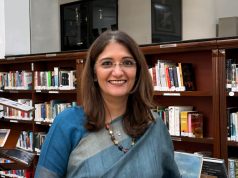
(Nitin Gairola is from Dehradun and is an extreme world traveller who has seen the natural world extensively and is often referred to as the ‘Most Travelled Indian’. He is on a quest to become the first person to travel to every major desert, forest, grassland, tundra & ice biome on Earth, besides every country. Nitin has set world travel records certified by India Book of Records, has written for Lonely Planet and holds National Geographic conservation certifications. He is also a senior corporate executive in an MNC and in his early days, used to be a published poet as well. www.facebook.com/ MostTravelledIndian/ www.instagram.com/ MostTravelledIndian/)