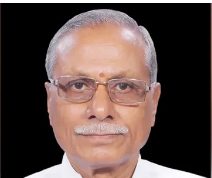
 By Prof HC Purohit
Contrary to what its name might suggest, Hindu Studies encompasses a far broader scope than it initially appears. Although the subject is often linked with Sanskrit, it is offered in both Hindi and English at numerous universities and institutions. This makes the course accessible to a diverse range of students, including those who may not have proficiency in Sanskrit.
Though knowledge of Sanskrit can undoubtedly enhance communication skills, the course itself is designed to provide students with a deep understanding of Hindu philosophy, culture, history, and religious practices. This makes it an intellectually stimulating option for those looking to develop critical thinking and logical reasoning abilities.
Furthermore, Hindu Studies offers promising employment opportunities, equipping students with valuable skills applicable in diverse fields such as education, research, journalism, cultural heritage, and more. With its comprehensive approach, Hindu Studies is a course that appeals to a growing number of students seeking a holistic and insightful academic experience.
Pathway to Academic, Intellectual, and Personal Growth
The introduction of Hindu Studies in higher educational institutions offers students a unique opportunity for growth across various dimensions—academic, intellectual, social, spiritual, and personal. By engaging with key texts such as the Vedas, Upanishads, Puranas, Ramayana, Mahabharata, Bhagavad Gita, Dharmashastra, and other philosophical scriptures, students gain a profound understanding of Indian knowledge traditions. These foundational works provide insight into the core values of Indian culture, religion, ethics, and worldview.
This course is particularly beneficial in fostering philosophical and reflective thinking. Indian philosophical schools such as Samkhya, Yoga, Nyaya, and Vedanta emphasise logic, discourse, and deep intellectual exploration. As a result, students develop advanced analytical, critical thinking, and reasoning skills that can be applied across various disciplines.
Beyond academic learning, Hindu Studies also inspires personal and ethical growth. The teachings encourage the cultivation of values such as self-restraint, compassion, non-violence, service, and self-realisation. The course does not simply impart intellectual knowledge but also influences students’ conduct, behaviour, and overall approach to life, offering a holistic educational experience that extends beyond the classroom.
Employment Opportunities:
After obtaining a Postgraduate Degree in Hindu Studies, various career options become available, such as researcher, academician, writer, theologian, Sanskrit expert, translator, archaeologist, culture expert, positions in the Ministry of Culture, Indian knowledge institutions, universities, museums, media, and spiritual organisations. This study is useful in developing cultural and national consciousness, connects the youth with the soul of India, instils a sense of pride, and prepares them to play an active role in India’s cultural renaissance. Such youth can pursue careers in research, writing, teaching, and translation. In addition, they can become international trainers of yoga, Ayurveda, and meditation; work in internet dialogue, cultural outreach, and diplomatic cultural missions, benefiting from the vast global opportunities in the field of culture. It will help spread cultural awareness and harmony in society.
Youth with undergraduate and postgraduate degrees in this subject are not limited to knowledge acquisition alone—new employment avenues also open for them. After obtaining a postgraduate degree in Hindu Studies, there are opportunities to work as professors, research scholars, or guest faculty in various universities, colleges, and research institutes in the fields of education and research, as the UGC has also provided for the NET examination in this subject. Apart from this, teaching in subjects like Sanskrit, Dharmashastra, philosophy, and culture, working in independent think tanks, policy institutes, and cultural organisations, and conducting research is also possible. Moreover, there are many opportunities in translation and writing, especially in translating and publishing religious texts, literary works, and scriptures into modern languages, writing for media and digital platforms, scriptwriting, spiritual journalism, and content creation.
There are also opportunities in museums, archaeology, and cultural departments as curators, cultural officers, heritage managers, in archaeological surveys, archives, and art history institutions, after studying this subject. Furthermore, in the field of religion and spirituality, opportunities will open up in temple administration/management, religious organisations, management of ashrams, rituals, ceremonies, and teaching and serving in the Indian way of life.
Even in this age of technological and digital revolution, this subject will inspire youth to launch Indian culture-based YouTube channels, websites, apps, and e-learning platforms, as well as to establish startups based on Vedanta, yoga, astrology, Dharmashastra, etc.
International Significance
Hindu Studies also holds international significance, as Indian culture, yoga, meditation, Ayurveda, and arts and culture are gaining influence abroad. In such a context, there is a global demand for experts in Hindu Studies. Subject-related content is also available in many universities, research institutions, and internet platforms. Its scope is proving useful in areas such as history, folk art, music, customs, psychology, human behaviour, literature, sociology, linguistics, and management, revealing the subject’s wide scope and interdisciplinary relevance.
Refinement of Knowledge:
In today’s global world, where education is limited merely to employment, Hindu Studies takes students not only into the depths of knowledge but also connects them to Indian culture, values, and self-reflection. Under Hindu Studies, students study the Vedas, Upanishads, Ramayana, Mahabharata, Bhagavad Gita, Indian philosophy, Puranas, temple architecture, cultural traditions, religious rituals, and worldview. The goal is to understand the core of India, study it, and promote authentic research. Through this, students will gain the opportunity to deeply understand Indian philosophy and ethics, and their logical, critical thinking and self-analytical abilities will develop.
Major Institutions Offering Hindu Studies Courses:
Many universities in India—central universities, state universities, IITs, IIMs, private universities, and research institutions—are running Centres for Hindu Studies and conducting authentic research on related subjects, giving new perspectives to this field. Hindu Studies is not just a study of the past but a path that guides the future. It connects us to our roots and gives us the power to stand on the global stage with cultural confidence.
Some of the major higher education institutions in the country offering Hindu Studies are: Banaras Hindu University, Varanasi; University of Delhi, Delhi; Doon University, Dehradun; Nalanda University, Bihar; Indira Gandhi National Open University, New Delhi; Gurugram University, Gurugram, Haryana; Chhatrapati Shahu Ji Maharaj Kanpur University, Kanpur; Central University of Haryana, Mahendragarh; Sri Sri University, Cuttack, Odisha; Shri Lal Bahadur Shastri National Sanskrit University, New Delhi; Central University of Himachal Pradesh, Dharamshala; Hindu University of America.
Eligibility criteria for M.A. in Hindu Studies: A Comprehensive Two-Year Programme for Holistic Growth. The M.A. in Hindu Studies is a two-year, four-semester full-time programme designed for graduates from any discipline. Candidates holding a Bachelor’s degree with a minimum of 50% marks from a recognised university are eligible to apply for admission to this course.
This programme aims to enhance students’ logical, critical, and analytical skills, while simultaneously deepening their understanding of Indian culture and traditions. Beyond its academic rigour, the course opens up diverse career opportunities, equipping students with valuable knowledge and skills applicable in various fields, from education and research to cultural preservation and more.
(The author is Coordinator, Centre for Hindu Studies, Doon University, Dehradun)