 By Ganesh Saili
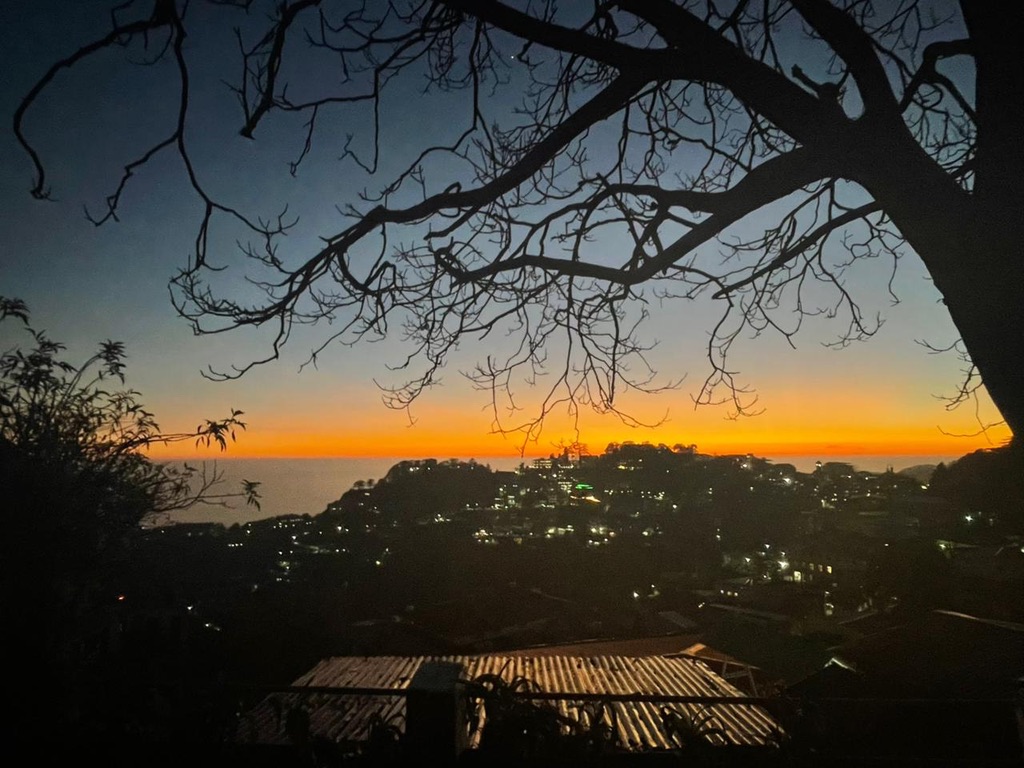
Of all our hill stations, Mussoorie was the raciest. We were once the pleasure dome of the maharajas – now overrun by mass tourism. Though Landour, like me, is still in love with the past, with its old bungalows still clinging onto their old names like Alyndale, Bellevue, Firs, Ivydene, North Cottage, Parsonage, Seaforth and Shamrock. Walk through our bazaar to debouch on a mountaintop full of deodar trees, church spires, flowering gardens and panoramic views. This is as close as you can ever get to the days of the Raj.
Our old churches, St. Peter’s (1829), St. Paul’s (1840), and Christ Church (1836), have been restored by public-spirited souls. On their walls are brass plaques put up in fond remembrance of the servants of the empire who sailed across the seas to die. They are going to be with us forever, in our dominions of silence, buried either on Camel’s Back Road or the Landour cemeteries.
If a visitor manages to break free, he may explore the extremities of the town towards Bhadraj in the west or the road to Tehri to the east. Of course, the tourist arrives with a list of his own of things he must-do. Start with Kempty Falls, include Lal Tibba, and end with a desire to peek at Ruskin Bond!
How they test his patience!
As he awakens, disturbed by the hordes, bleary-eyed, he’s like reminds one of a bear aroused from its siesta. Arrived at his home, they wait for him to bless their honeymoon or their children or to get photographed in the middle of the afternoon. Never mind, though he’s still in his crumpled pyjamas.
Once upon a time, or so my Mussoorie Miscellany (pub: 1936) tells me: ‘Amongst those who came to the hills used to be a percentage of ‘boys’. Before actually taking the first plunge into the nectar, or mire, of Mussoorie, they found an understanding guru in the Station Master at Dehradun. They came from lonely outposts, and their initial thirst was for companionship. As everyone had to pass his watchful eyes before leaving the railway station, he knew just whether Jill had come up the hill or not, and knew too whether it was politic or not to send Jack up for company. Thus, for years, he moved pawns much to his amusement. Then came a day, a particularly dashing gallant sought his guidance.
‘Yes, the prospects sounded topping, so he came and had all he wanted and more. Within four days, the guru received this laconic but expressive message: ‘Send second relief!’
Though for some, relief was far away. We have always been a station for scandal. But what we have marked as ‘top-secret’ is the tale of our man-eaters, whom no hunter would have dared to shoot for the simple reason that they do not lurk in the abutting jungles but in our alleyways, lanes or abandoned homes. They have far more cunning and much more guile than any wild creature could ever have had.
(Beware! Let them have sleepless nights, I have plans to write about them very soon!)
Of course, to this, add another dark secret. Inexplicably, Landour has had a tradition of gambling. You’ll notice this as you walk up the great ramp of Mullingar, clusters of residents playing cards, while sheltering from the wind or sunning themselves in a patch of sunshine. Writing in Charles Dickens’ magazine Household Words, January 30, 1858, John Lang describes a visit to Suakholi, then in the Tehri Rajah’s territory, where he came upon the largest gaming den north of Meerut. In the hostelries or sarais, nautch-girls danced the night away as the rich and famous (then outside the reign of British Raj and its stiff brass-hats!) gambled fortunes away.
Yes! Despite all this, Landour remains a very special place!
How long will it be able to stay this way? Given the plans to build a new elevated road and a ropeway that will bring in a thousand tourists per hour. I’m afraid, for those of us who call this home, it will forever destroy the reason we live here.
Ganesh Saili, born and homegrown in the hills, belongs to those select few whose words are illustrated by their pictures. Author of two dozen books, some translated into twenty languages, his work has garnered recognition worldwide.