All Around the World with the Most Travelled Indian
 By Nitin Gairola
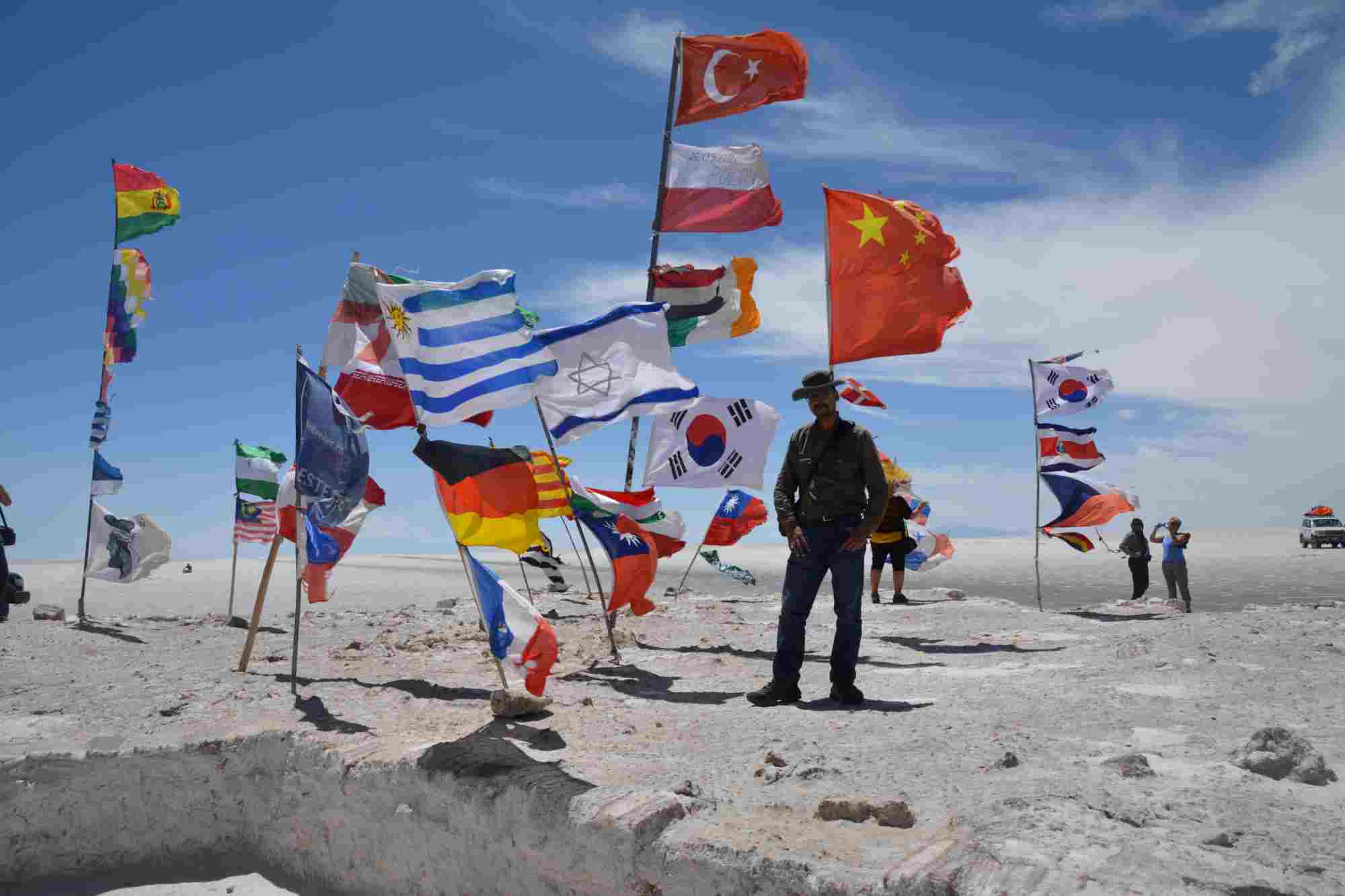
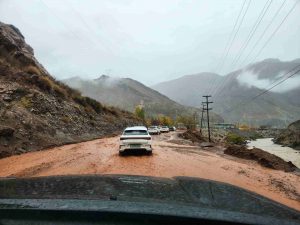
During the Central Asia tour when we crossed into Tajikistan via the land border between Samarkand and Panjakent, I had reached my country No. 125. As the regular readers of my articles would know, my aim is not to visit every country on Earth but to visit every natural world ecosystem or biome on Earth. But still, reaching country No. 125 is something I had never imagined would happen to me and I am happy I did it. It made me realize how lucky we all are to live during this time when an ordinary traveller like me can visit a century of countries and gain so many experiences in one brief lifetime. I do believe we live in the ‘Golden Age of Travel’ and I use the word ‘travel’ and not ‘exploration’ since we are in the age of ‘travel for almost all’ and not just ‘exploration for a few’. So this Sunday let me pause the Central Asia tour and instead take you through this Golden Age.
If we look back a bit in time, it was only around a century and a half back that formal tours for paying tourists were conducted for the first time, which later turned into a global phenomenon when the Great War ended in 1945 and the Jet age began in the early 1950’s. After the advent of commercial flights, no one could stop us from flying off to destinations and new adventures and to live a life far bigger than any one of us could imagine. Indeed, to travel is to live a larger reality in my view.
If we think of it fundamentally, throughout time man has wanted to venture outside his home and his hometown and to explore the unknown; to seek knowledge and wisdom or just to experience something new and unique. While initially in ancient times, travel was due to the necessity of finding food, shelter, and then later to trade, conquer or to seek faith, there was always an undercurrent to all these causes for movement, and that was the undercurrent of curiosity. The need to explore is in our DNA and it is an integral part of the human story, which certainly would not have been the same without travel. For starters, the early man would not have ventured out of Africa itself and later we wouldn’t have found the Americas or Australia, let also reach space or plant our foot on the lunar surface.
Travel was always there since the beginning of the human story, but only recently it morphed from the random to the organized when 2 centuries ago in Europe, the very wealthy & the aristocratic had started to go on tailor made long trips and would came back with fascinating stories to share. Many could not fathom how anyone would leave the comfort of their cushioned chair, even as they sighed ‘if only I could too’. Then came Thomas Cook to change all that and in 1841 organized the first group tour within England and later in 1879 the first package holidays to Europe by rail and USA by steamship. This ushered the era of organized tourism with all inclusive transportation, accommodations and even meals. Travel was released from the grasp of just the very affluent and into the hands of the upper middle class as well. It was aided by the expansion of the rail network throughout Europe as now tours could be shorter, more compact and less risky.
Towards the fag end of the 19thcentury, smack middle in the age of industrialization, the automobiles had also arrived. The first flying machine took to the sky thanks to the Wright Brothers in 1903, and in 1919 the first scheduled passenger airline flew between London and Paris. Transportation naturally played the deciding role in travel & tourism that was to boom in the second half of the 20th century. The first half however was wasted in two bloody & costly wars, the great economic depression of 1929 and the Spanish flu that ravaged the world for half a decade from the end of the First World War in 1918. Once World War II ended in 1945 and the economies and lives started to heal, tourism too made a comeback. These last 8 decades is what can be referred to as the Golden Age of Travel, from the end of WW-II to today.
Since tourism is a function of time & money in the hands of the tourist and political & social stability at the destination, most of the world was ready for this great act of human movement, with world prosperity and globalization as never before. The age of unequal abundance was about to begin. Commercial flights of the 1950’s just connected it all together and complimented rail and road. In the next few decades, the price of air transport also fell due to competition in the developed countries, giving a further boost to global tourism.
This revival of tourism in the 3 decades post World War-II was mostly in organized group travel and then a major event in modern travel history took place. This is when Tony and Maureen Wheeler released their first Lonely Planet book in 1973 after their backpacking journey from England to Australia via Asia. This ushered us into the time of the individual backpacker and budget conscious traveller. Lonely Planet became one of the most instantly recognizable brands in the travel industry because of the niche it addressed i.e. of the immersive, informed and long term sustainable (budget) traveller. This theme would play out for the next 50 years with sustainable travel and community & environment friendly tourism being the centerpiece for the conscious tourist. Many other comprehensive travel guides followed in the wake of Lonely Planet such as Rick Steven’s, Fodder’s and Rough Guides but none surpassed the sales of Lonely Planet guides (It even had a very popular TV series and you can find all episodes on YouTube).
The age of the internet was about to dawn in the 1990’s and a decade later at the turn of the 21st, it was to take the travel world by storm. This is when the true democratization of travel took place, the real inclusion which the UNWTO (United Nations World Tourism Organization) speaks of. Now the ‘trickledown economics’ could take place and you had lots of budget hotels, hostels, B &B’s, and the ‘mom & pop’ homestays mushrooming everywhere, all connected by the far reach of the internet cables.
The meteoric rise of Air B & B is a case in point. Travel companies & operators were either bracing for the online tsunami or proactively embracing it in order to ride the wave. Flight prices were never this low relative to incomes, fueled not only by cheap crude oil but also by demand over the internet which was ensuring maximum capacity utilization and the economies of scale. New flight destinations were being added by the day and low cost carriers were popping up in many micro-markets especially South East Asia and India after their expansion in Europe.
The smart phone revolution was the answer to the ‘information at your fingertips’ demand. Travel related online searches skyrocketed, the advice of travellers on sites such as TripAdvisor was all over the net, flight search engines were being used as never before and the ‘bucket list’ concept became synonymous with travel. Besides, the ease of using credit cards, USD as widely accepted currency and more open borders with ‘visas on arrival’ helped travel immensely too.
This is when the digitally savvy, deal searcher, airline mile collector and life hacker came to the forefront; the so called ‘flash packer’ packed with information. Many such wanted to pass on the tips & tricks of the trade or just wanted to become popular and so arrived the travel blogger and the vlogger (one who makes travel video content). These jet setters and influencers where to be found just about anywhere in the globe and gave all their readers & viewers some serious travel goals. Facebook & Instagram just added fuel to the desire.
Then most recently we had those who counted countries, had competitions on who the ‘most travelled person’ really is. The California based Traveler’s Century Club (TCC) is one such ultra-exclusive club of those who have travelled to 100 or more countries around the world. After TCC came the ‘Most Travelled People’ and ‘Nomad Mania’ travel clubs. Both of these are for the ultra-traveled people who don’t stop at visiting all countries but aim to visit all ‘states & provinces of every country in the world’. Yes they are very determined and persistent. Harry Mitsidis, Charles Veley, Babis Bizas, Don Parrish, Mark Spenser Brown, Lee Abbamonte, Rauli Virtanen and a few others are legends of extreme or systematic travel. Popular travel vlogger, Drew Binsky, is another such as is Lexie Alford who is the youngest person to travel to all countries in the world. Suitably, her social media name is ‘Lexie Limitless’.
Besides these, some people have been making their mark in ‘slow and long travel’ such as Paul Salopek. He is walking the entire world in the footsteps of our human ancestors who moved out of Africa 200,000 years ago. His walk is sponsored and promoted by the National Geographic and is aptly called the ‘Out of Eden’ project. This 40,000 kilometer walk will take Salopek around 15 years to complete. He started the walk from Ethiopia in 2013 and in 2024 had just reached South Korea (first impacted by Covid and now by the Russian conflict). Next he is supposed to cross over from the Bearing Strait in Russia into Alaska in North America. From there the plan is to walk the entire length of North and South America to end the odyssey at Tierra del Fuego in Argentina, the so-called ‘End of the World’.
But Paul is not the only epic ‘single journey’ traveller. Gunther Holtorf, along with his wife Christine, drove around the entire world in their Mercedes-Benz jeep called ‘Otto’. They journeyed 900,000 kilometers over the course of 26 years. Then there is the dramatically named ‘Thor’ who very dramatically visited every country in the world ‘without flying’. Some of these great travellers have also been TV show hosts such as the witty Michael Palin or the trio of Scott, Justin & Andre (from a TV show called ‘Departures’) and Josh Gates who is the fun presenter of ‘Expedition Unknown’ that is streaming on the Discovery Plus OTT platform. These are to name but a few of the travellers who have made the most of this time.
While we yet don’t have the case of ‘everyone can travel’, because it still takes money to buy flight tickets and it also takes a bit of free time, but we definitely live in an age with the greatest criss-cross mass movement of humanity. It’s easier to see the planet in one lifetime as never before in the past. And during this time, while Covid-19 did cause a 2 year clampdown on the industry through lockdowns, but travel bounced back just as soon as we felt it was safe to move out again. It had bounced back after the 9/11 attacks in NYC too, when all looked very dark and grim.
Today global travel has gone to such levels that we have almost taken it for granted, not realizing what a privilege it actually is compared to what people had just a few decades back. Now that we have time to pause and reflect, we can look back at the Golden Age of Travel and realize how lucky we are to be born during this time in history. This is a time when we have so much access to content, knowledge, entertainment, wealth and more importantly, access to air transport. Pinch yourself as you are flown to another continent while you sip your wine, watch a movie or catch a nap. And all this 12 kilometers up in the air. As I put my foot inside Tajikistan on that rainy day on 6th Nov’24, I silently raised a toast to curiosity. It was my country No.125 and one of our biggest adventures was about to start. But even with country No. 125 in the bag, I feel I still have ‘miles to go before I sleep, miles to go before I sleep’ (as Robert Frost so beautifully once wrote).
Nitin Gairola is from Dehradun and has travelled the natural world more than almost any Indian ever. He has set world travel records certified by India Book of Records, has written for Lonely Planet, and holds National Geographic conservation certifications. He is also a senior corporate executive in an MNC and in his early days, used to be a published poet as well. More than anything else, he loves his Himalayan home. Reach him at: www.facebook.com/MostTravelledIndian/ ; www.instagram.com/MostTravelled_Indian/; nitin.gairola@gmail.com