 By Satish Aparajit
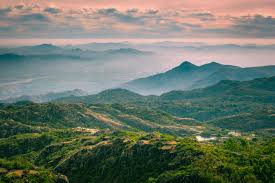
The Aravalli range, estimated to be around 2.5–2.8 billion years old, is among the oldest fold mountain systems on Earth, far older than the Himalayas. Stretching roughly 700 km from Gujarat to Delhi, with nearly 560 km passing through Rajasthan, the Aravallis are not just geological relics—they are a living ecological shield for north-western India.
Yet, recent policy decisions and judicial interpretations redefining what constitutes “Aravalli hills” have substantially diluted long-standing environmental protections. By altering criteria such as minimum height and slope, large tracts earlier treated as ecologically sensitive now stand reclassified, opening them up for construction, mining, and real estate activity.
Why the Aravallis Matter
- Groundwater Security
The Aravalli system is one of the largest natural groundwater recharge zones for Delhi-NCR, Haryana, Rajasthan, and western Uttar Pradesh.
Over 60% of NCR’s water demand is already met through groundwater. - Gurgaon’s groundwater levels, according to Central Ground Water Board data, have fallen by over 30 metres in two decades, placing the city in the “over-exploited” category.
Destroying recharge zones in the Aravallis will accelerate aquifer collapse in a region already facing chronic water stress.
- Barrier Against Desertification
The Aravallis act as a natural climatic barrier, slowing the eastward movement of the Thar Desert.- The United Nations Convention to Combat Desertification (UNCCD) identifies Rajasthan, Haryana, and Gujarat among India’s high desertification-risk zones.
- Scientific studies warn that degradation of the Aravallis could significantly increase dust storms, directly impacting Delhi-NCR, which already ranks among the most polluted regions globally.
- Air Quality and Public Health
Delhi-NCR regularly records PM2.5 levels 8–10 times above WHO limits.
Increased mining and construction in previously protected Aravalli zones will worsen fugitive dust emissions, adding to respiratory disease burdens in a region where asthma and Chronic Obstructive Pulmonary Disease (COPD) rates are already rising sharply. - Biodiversity at Stake
The Aravallis host over 20 wildlife sanctuaries, including parts of three major tiger landscapes (Ranthambhore–Mukundra–Sariska corridor).
These forests support tigers, leopards, hyenas, wolves, migratory birds, bears and critical pollinator species. Fragmentation will irreversibly damage these corridors.
Development or Dispossession?
The sequence is familiar: redefinition → notification → licensing. What was once “forest” becomes “non-forest”, then “developable land”. The beneficiaries are rarely local communities; instead, large land parcels move quietly into private hands for infrastructure projects that could be located elsewhere.
This is a classic case of public ecological loss and private economic gain.
While recent Supreme Court directions have placed a temporary bar on fresh mining until scientific mapping and management plans are prepared, the dilution of definitions itself risks undoing decades of conservation efforts achieved through earlier judgments.
The Bigger Picture
India’s capital region is already battling:
- Severe water scarcity
- Hazardous air pollution
- Rising urban heat islands
Weakening the Aravallis will worsen all three simultaneously.
Official assurances that only “0.19% of the Aravalli range” will be affected fail to inspire confidence when viewed against ground realities and cumulative impacts. Environmental damage is rarely linear; once thresholds are crossed, ecosystems collapse rapidly.
A Question of Intergenerational Justice
Environmental governance cannot be reduced to clever semantics. Definitions that ignore ecological function in favour of administrative convenience threaten not just forests, but food security, water security, and public health for millions.
Development that destroys natural life-support systems is not progress—it is deferred catastrophe.
If India truly aspires to be a “Viksit Bharat,” safeguarding its oldest ecological assets should be non-negotiable. The Aravallis are not vacant land banks. They are India’s climate infrastructure, built by nature over billions of years—and dismantled, if we allow it, in a few policy cycles.
(The writer is a retired IAF Wing Commander and Shaurya Chakra awardee.)