By Our Staff Reporter
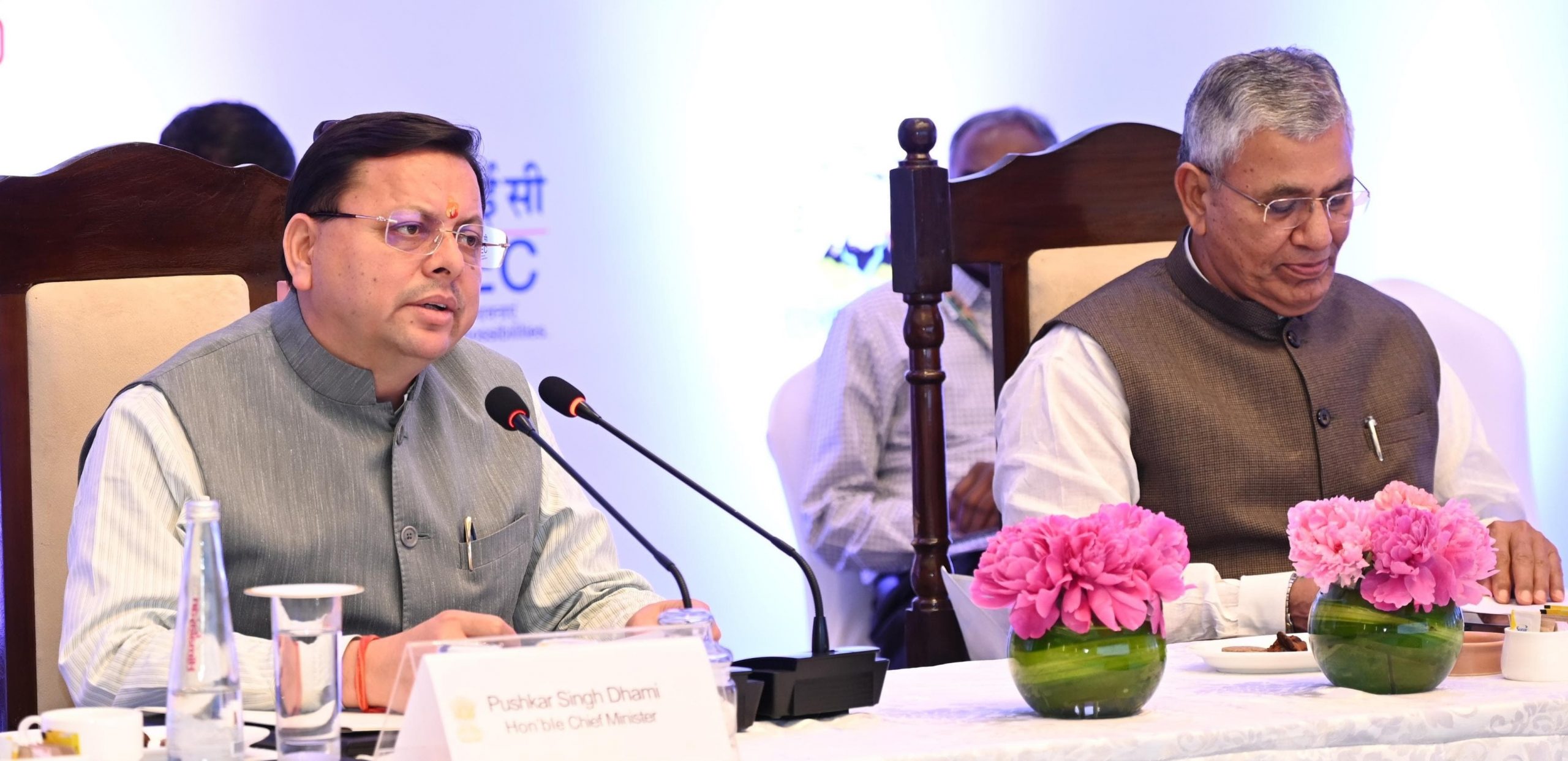
Dehradun, 21 May: Chief Minister Pushkar Singh Dhami participated in an interaction with a Joint Parliamentary Committee on the topic, “One Nation, One Election”, at a hotel on Mussoorie Road here today. On the occasion, he welcomed Chairman of the Joint Parliamentary Committee PP Chaudhary and other committee members.
Speaking on the occasion, the CM asserted ‘One Nation, One Election’ is a significant step towards making democracy stronger, more effective, and inclusive. While India’s electoral system has remained robust despite its diversity, frequent elections lead to repeated enforcement of the model code of conduct, disrupting governance and development. He reminded that a substantial number of personnel are diverted from their primary responsibilities for election duties each time polls are held.
Dhami claimed that, over the past three years, the enforcement of the code of conduct during assembly, Lok Sabha, and civic elections has hindered Uttarakhand’s administrative machinery from making key policy decisions for as long as 175 days. For a small state with limited resources, these 175 days are crucial for governance, he asserted.
Dhami further noted that assembly election expenses are borne by the state government, while Lok Sabha elections are funded by the central government. Conducting both elections simultaneously would significantly reduce financial strain on both entities, cutting overall expenses by nearly 30 to 35 percent. The savings could be redirected to vital sectors such as health, education, infrastructure, water, agriculture, and women empowerment.
The CM also pointed out that Uttarakhand experiences heavy rainfall between June and September alongside the Char Dham Yatra, leading to logistical difficulties during elections. He also suggested that polls should not be scheduled in the last quarter of the financial year, between January and March, as board examinations put additional pressure on administrative resources. For states with tough terrain and scattered populations, a unified election process would be more practical, he claimed.
Dhami also pointed out the challenges of accessing polling booths in Uttarakhand’s remote regions, which increases the logistical demands of election management. He also claimed that holding elections frequently can reduce voter enthusiasm, ultimately affecting turnout rates adversely.