 By Dr Rashi Mishra
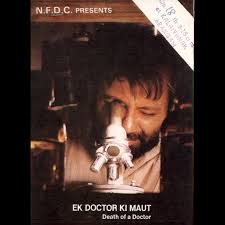
In 1990, when fax machines were still considered cutting-edge, and ‘viral’ referred strictly to pathogens, Ek Doctor Ki Maut quietly diagnosed a chronic national ailment: suffocation of scientific innovation. Directed by Tapan Sinha and inspired by the life of Dr Subhash Mukhopadhyay, the film explored what happens when a scientist’s breakthrough moves faster than the system designed to evaluate it. Today, the system has not slowed down. It has accelerated. It has Wi-Fi.
In the film, Dr Dipankar Roy works in near-solitude. His challenge is not lack of brilliance but lack of amplification. His work exists but without circulation. Now imagine him in 2026. He would not struggle with silence. He would struggle with noise. Artificial Intelligence promises instant dissemination. Upload a preprint, share a summary, convert it into a thread, auto-generate a podcast transcript. Science no longer whispers; it shouts in multiple formats simultaneously. And yet, comprehension remains optional. Earlier, a scientist waited years for acknowledgment. Now, acknowledgment arrives in seconds, measured in views, downloads, impressions.
In Ek Doctor Ki Maut, institutional hesitation forms part of the narrative tension. Evaluation is slow, layered, and cautious. In the AI era, evaluation is swift, data-driven, and metric-oriented. Research is filtered through dashboards. Impact is translated into analytics. Scholarly worth becomes a graph. Dr Roy once waited for committees to respond. Today he might wait for an algorithm to decide whether his abstract is “discoverable enough”. He might receive suggestions like “Consider adding trending keywords for greater outreach”. His vaccine would need branding. His breakthrough would require optimisation. Efficiency has improved. Anxiety has scaled accordingly. The film subtly suggests that discovery alone is insufficient; recognition depends on communication and institutional mediation.
In the AI age, science communication is no longer about explaining complex ideas to the public. It is about competing with AI-generated misinformation that writes faster, louder, and without peer review. The human scientist speaks cautiously; the Chatbot speaks confidently. Guess who trends? Dr Roy once faced journalists who barely understood his work. Today he would face deep fake interviews explaining discoveries he never made.
One of the film’s most painful scenes is when international validation arrives too late. Recognition comes, but dignity has already been bruised. In the AI age, recognition is immediate but fleeting. Citations are counted by bots. Impact is calculated by dashboards. Peer review is expedited by machine summaries. Somewhere, the human scientist refreshes their Google Scholar profile, watching numbers rise while existential clarity falls. If the film were remade today, perhaps the central conflict would not be neglect but misinterpretation. Not silence but saturation. Not delay but distortion. If scientific culture prizes speed over reflection, AI will optimise speed. If visibility becomes the primary currency, algorithms will privilege what circulates, not necessarily what endures. Technology does not silence scientists. But it can surround them with echoes.
The film reminds us that science communication is not merely about broadcasting findings, it is about nurturing ecosystems that recognize, protect, and ethically amplify innovation. Artificial Intelligence may transform communication, accelerate evaluation, and expand outreach. But the ethical core of science communication cannot be automated.
In 1990, a doctor was silenced by silence. In 2026, a scientist risks being drowned out by noise. Either way, the question remains disturbingly unchanged, “Who listens to science, and Why?”
(The writer, an academician at Doon University, was awarded the Governor’s Award in 2023 for her work on the Chipko Movement.)