Through a Festival of Wings
 By Satpal Singh Gandhi
Birdwatching, once considered a quiet pastime of naturalists, has today evolved into a popular hobby, a serious sport, and a meaningful way to reconnect with nature. Across India, birdwatchers — and even more rapidly, bird photographers — are growing in remarkable numbers. The easy availability of cameras and lenses, the rise of internet platforms, mobile apps, and online birding communities have made birdwatching more accessible than ever before.
When I began birdwatching and bird photography in the early 1990s, equipment was scarce and far beyond the reach of an ordinary enthusiast like me. Yet passion has its own wings. My fascination with birds kept the journey alive, and I continued travelling in search of them. In those days, Keoladeo National Park was considered the Mecca of Indian Birdwatching. Later, attending international bird conferences opened new horizons and introduced me to many important birding destinations across the country.
One of my most memorable journeys was a road trip with friends Jaswinder and Bhumesh in 2010, travelling from Delhi through Diu and Gir to Jamnagar for the International Bird Conference. More recently, I travelled to Bhuj in Gujarat for a ten-day Passage Migrant Bird Count organised by local birding groups and the Forest Department. Bird tourism in India is growing rapidly, creating a vibrant community where people connect, share experiences, and celebrate nature together.
In the Doon Valley, winter is traditionally regarded as the finest season for birdwatching. Winter migration, local altitudinal movements, pleasant weather, and leafless trees provide excellent visibility. Summer, however, presents different challenges. The weather becomes harsh and humid, and bird activity reduces during the day. Yet dedicated birders continue exploring forests during early mornings and evenings, when the valley slowly awakens with birdsong.
Though summer birding in Doon may seem quieter, the season brings a special charm with the arrival of colourful migratory visitors. Every summer, the forests and riverbeds of the valley come alive with the arrival of the Indian Pitta, Asian Paradise Flycatcher, Black-naped Monarch, Long-tailed Broadbill, and Jacobin Cuckoo. These birds travel from southern India, Sri Lanka, Northeast India, and even Africa to the cooler Himalayan foothills for breeding.
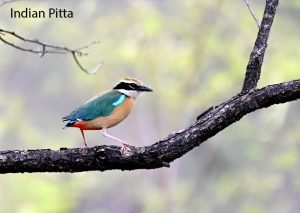
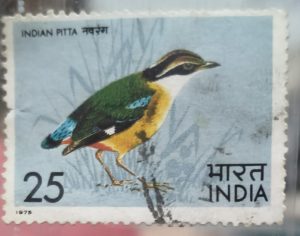
The Indian Pitta, affectionately called the “Navrang” for its many colours, is usually heard before it is seen. Its sharp two-note whistle echoes through shaded forest floors during quiet mornings, almost sounding like it is saying “Thank you.” The bird travels from Sri Lanka and peninsular India to the foothills of the Doon Valley, rarely venturing higher into the Himalayas. Male and female look almost identical, making identification difficult for beginners.
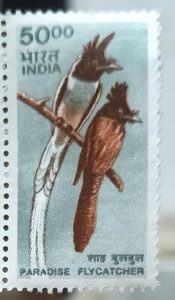
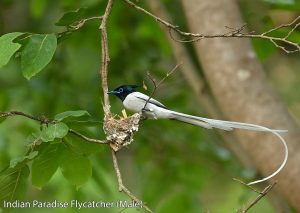
The elegant Asian Paradise Flycatcher adds grace to forest streams and orchards with its flowing ribbon-like tail. White morph males appear almost ethereal in filtered sunlight, while the dark morph males display rich chestnut and smoky brown shades. Females, though shorter-tailed, possess their own striking beauty. Mango and litchi orchards, riverine forests, and wooded foothill trails are ideal habitats for this species.
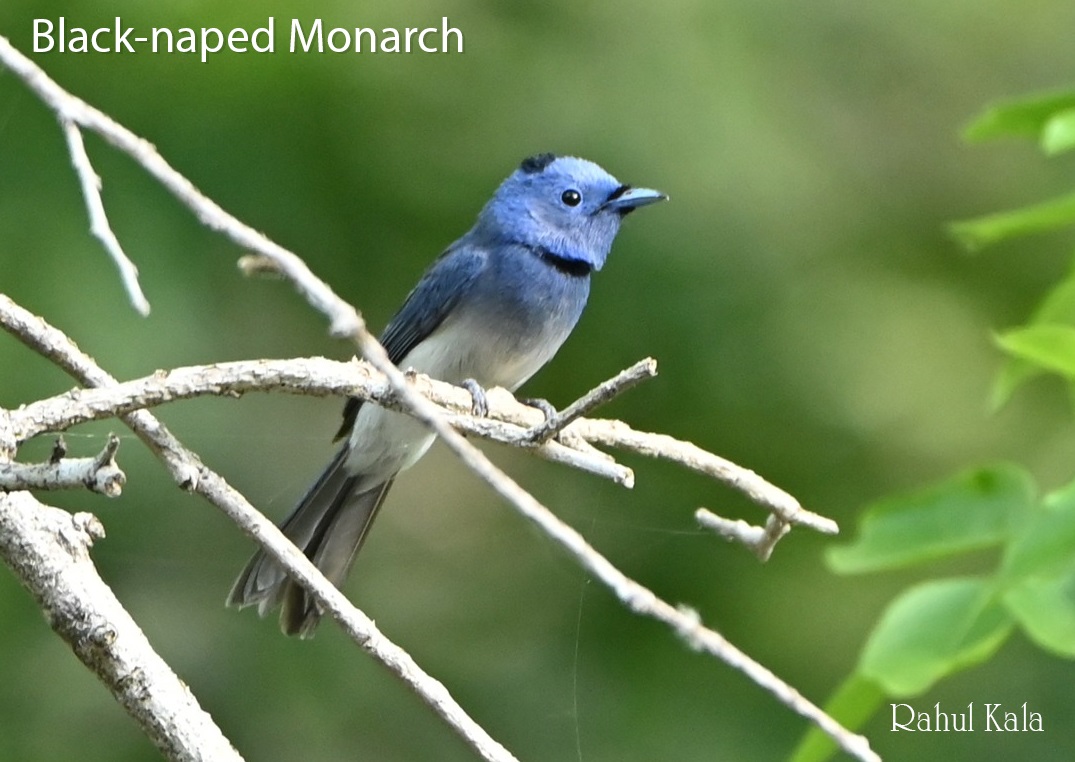
The soft blue Black-naped Monarch prefers dense canopies and moist forests near streams. Though male and female appear similar, the male is brighter and more vividly coloured. Their delicate calls and restless movements through foliage make them a delightful challenge for birdwatchers.
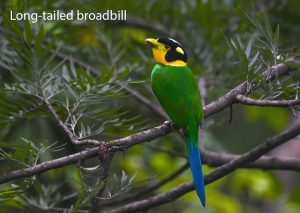
Among the most fascinating summer visitors is the Long-tailed Broadbill, a brilliantly coloured bird often found in dense forests near streams. The forests around Benog Wildlife Sanctuary provide some of the best opportunities to observe this species. It builds remarkable hanging nests suspended from branches and sometimes even electric wires.
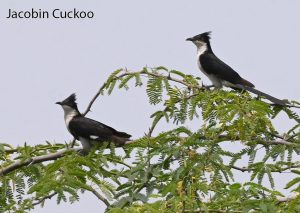
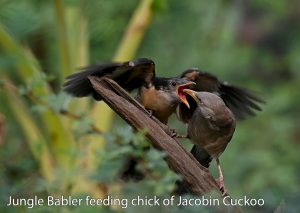
The Jacobin Cuckoo, also known as the Pied Cuckoo or “Chatak”, holds a special place in Indian folklore as the harbinger of the monsoon. Its arrival traditionally signals the advance of rain-bearing winds across the Indian subcontinent. Even more fascinating is its migratory journey from Africa, crossing the Arabian Sea before reaching India. Like many cuckoos, it is a brood parasite, laying eggs in the nests of babblers and allowing foster parents to raise its chicks. Watching Jungle Babblers feeding a young Jacobin Cuckoo remains one of the most remarkable examples of foster parenting in nature that I have witnessed.
Summer also fills the forests with the calls of many cuckoo species including the Asian Koel, Common Hawk-Cuckoo, Plaintive Cuckoo, Large Hawk-Cuckoo, and Grey-bellied Cuckoo. Interestingly, many birds remain silent during winter but become highly vocal in summer, especially cuckoos and barbets whose calls dominate the warm season forests.
These annual migrations transform the Doon Valley into one of northern India’s finest summer birdwatching destinations. The forests become a living sanctuary of colour, movement, and sound.
Summer birdwatching in the Doon Valley is not merely about spotting birds — it is about listening to the forest awaken with life. Every migrant carries a story written across rivers, forests, mountains, and skies. Birdwatching teaches us that the finest journeys often arrive on wings.
“A summer morning in the Doon Valley is best measured not by time, but by bird calls.”
(All bird photographs by the author except the Black-naped Monarch photograph are courtesy Rahul Kala.)