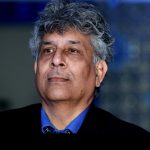
 By Kulbhushan Kain
Every city has a pulse and, every so often, a single idea arrives that changes its rhythm. For a few days each year, Dehradun stops hurrying and starts listening. During those days even the mist seems to arrive with a book under its arm. For Dehradun, that idea is the Valley of Words.
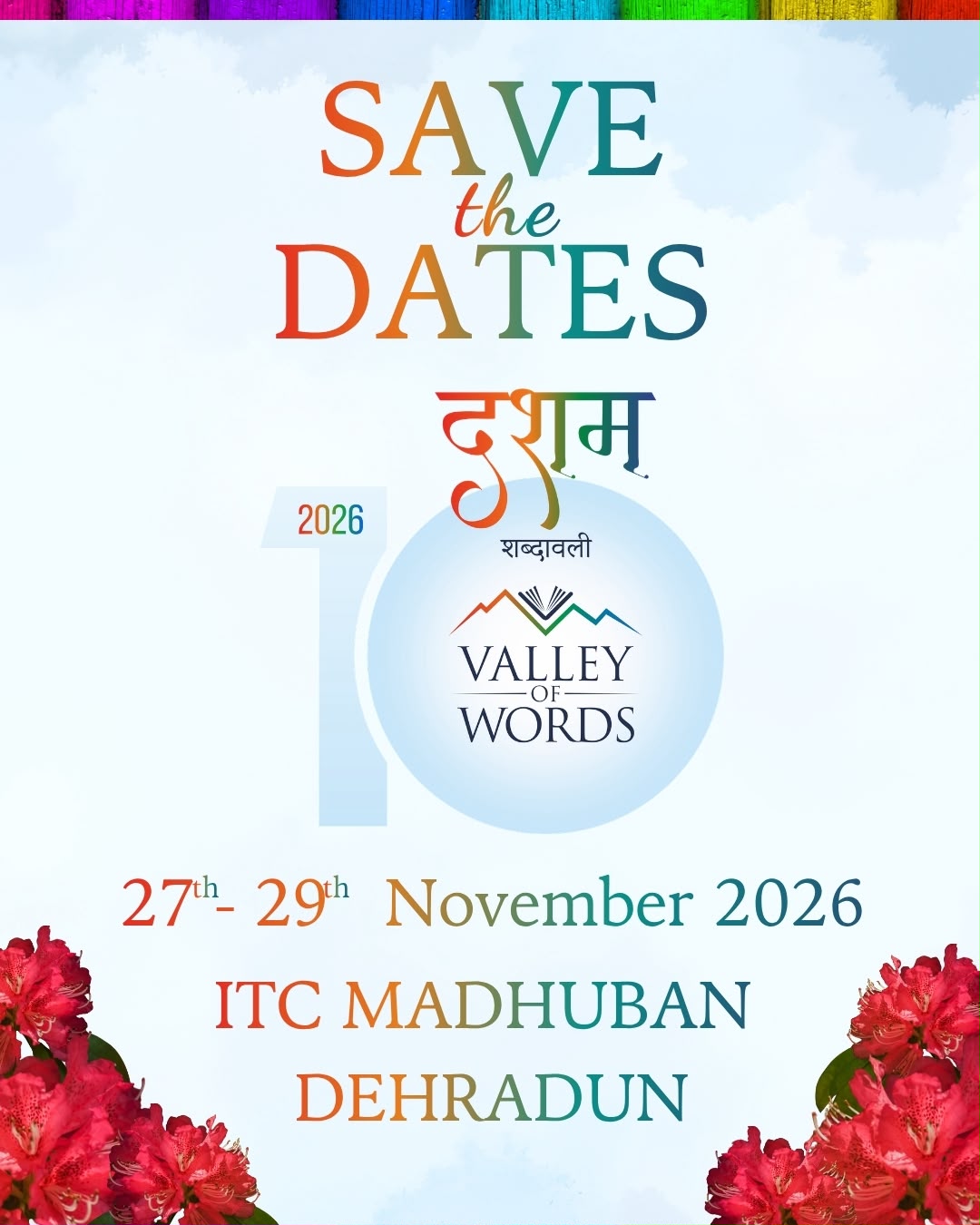
This year the festival turns ten. It is the Dasham, its tenth edition, and it is fitting that the number carries such weight, for it has been a decade of quiet, steady and remarkable growth. Dehradun has many literature festivals today, but the Valley of Words remains the oldest and the most prestigious of them all. It is the festival that others look to, and the one that showed Uttarakhand what was possible.
For me, the Valley of Words will always bring back memories of vigorous minds debating through a lazy, hesitant winter on the lawns of the Madhuban Hotel, and of lovely food and endless cups of coffee and cup-cakes at the Writers’ Enclave. It is a festival where conversation and hospitality have always walked hand in hand.
A Festival with a Vision
Behind every lasting institution there is usually one mind that saw it before anyone else did. For the Valley of Words, that mind is Dr Sanjeev Chopra, who conceived it, and has led it from the first edition to this one.
Dr Chopra is an ex-bureaucrat and a historian, and I count him among the most seminal minds I have met. I found in him a man with a wide vision, thinking ahead of his times. He also has a gift that no degree can confer: the rare ability to turn a collection of individuals into a team, bound by a sense of oneness and a commitment to a cause. That skill is the true engine behind the Valley of Words.
The Writers It Awakened
Ask me what the festival’s greatest contribution is, and I will not point to the celebrated names it has brought to Dehradun, though there have been many. I will not even point to the sessions, the poetry, dances, music or the crafts. I will say that the Valley of Words has encouraged people to write.
Over the years the festival has drawn a large number of writers and celebrities. It showcases books, announces its list of winners, and gives authors a stage. But the effect goes deeper. Writers across the state now write with a hope in their hearts: that their book may one day be showcased at the Valley of Words. That hope is a powerful thing. It has turned an unspoken ambition into a deadline, and a deadline into a book.
I know this because it happened to me.
My Own Story
When I came to Dehradun, I was not writing books. I had always written, of course. Even as a principal and as a director of schools, I wrote pieces for newspapers and more than a thousand blogs. But I was too bogged down with the daily demands of founding, setting up and running institutions, and a book always seemed like something for another day. I had never written one.
Then I settled in Dehradun, and I was invited to the Valley of Words. I had no book to my name at that time. I was asked to join a panel discussion, and I found myself seated beside a heavyweight like Rudrangshu Mukherjee, who was the founding Vice Chancellor of Ashoka University, along with several other distinguished people. It was humbling and exhilarating at once.
After that I took part in the festival regularly. And it was there, in that atmosphere of ideas and encouragement, that I wrote my first book, and then my second. Both were showcased at the Valley of Words. I can say with complete honesty that without this festival, those books might never have been written.
Tapping the Submerged Talent
The festival’s real achievement is that it tapped into submerged talent. Every society has prospective writers, and many who already write, but who lack a platform to air their views. There may be festivals outside Dehradun, but for a writer to be recognised in his own state matters enormously. In a small state like Uttarakhand, it means a great deal when your neighbours read your book and discuss it.
The Valley of Words was the first festival that made people here identify with literature and with the idea of writing a book. It brings together very young authors and old, established ones. It showcases poetry, it showcases crafts, and it brings to life the culture of the state itself. And, importantly, it remembers the contributions of those who wrote and left the world. I remember discussing the contribution of Raj Kanwarji, Pradeep Singh, Sudhir Kishore, Jaskiran Chopra and others. Truly the Valley of Words has brought lot of joy – but it has also brought tears of remembrance .It encapsulates life as such and, it has given Dehradun a remarkable leap as a city of letters.
Beyond the Valley
Today the festival is among the first of its kind to carry its spirit beyond its home city, and it has done so with confidence. The Valley of Words has taken its verticals to Chennai, Indore, Haridwar, Delhi, Kolkata, Sonipat, Bhopal, Jalandhar, Mumbai and Auroville.
Equally close to my heart is the way it has reached into classrooms and campuses. The festival collaborates with schools and colleges, among them Daly College in Indore, South Asian University, Doon University, Graphic Era Deemed to be University, OP Jindal, Welham Girls’ School, Himjyoti School and OMR Shishya School at Old Mahabalipurm Road in Chennai, and many others. Dr Chopra has carried these verticals into schools, which, as an educator, warms my heart more than anything. The festival is therefore not growing only upward. It is also growing outward, reaching deeper into communities and younger minds. That, to my mind, is the sign of an idea built to last.
The Road Ahead
How do I see the future of the festival? Very big indeed. I do not say this out of mere optimism. I say it because I have watched it grow. I have been associated with the Valley of Words for six years now, and in every one of those years something new has happened. As Sanjeev Chopra told me over a cup of coffee, “Every Cola has a fizz. I try to create something new. It can’t be just another form of Cola.” That nailed it.
I do not know whether I shall be alive to see the day it reaches the international stage. But I hope I shall be. Given the speed at which it is moving, I rather think I will be. I wait for that day with optimism and with care.
Until then, my gratitude and my congratulations go to Dr Sanjeev Chopra, and to the whole team that made the Valley of Words what it is. Ten years on, you have given Dehradun a voice, and given its writers the courage to use it, because as Franz Kafka said, “A book must be the axe for the frozen sea within us. It’s sharper and works well if your piece is about ideas.”
Here’s to the Dasham, and to many more for giving us that axe!!!