Around the World with the Most Travelled Indian
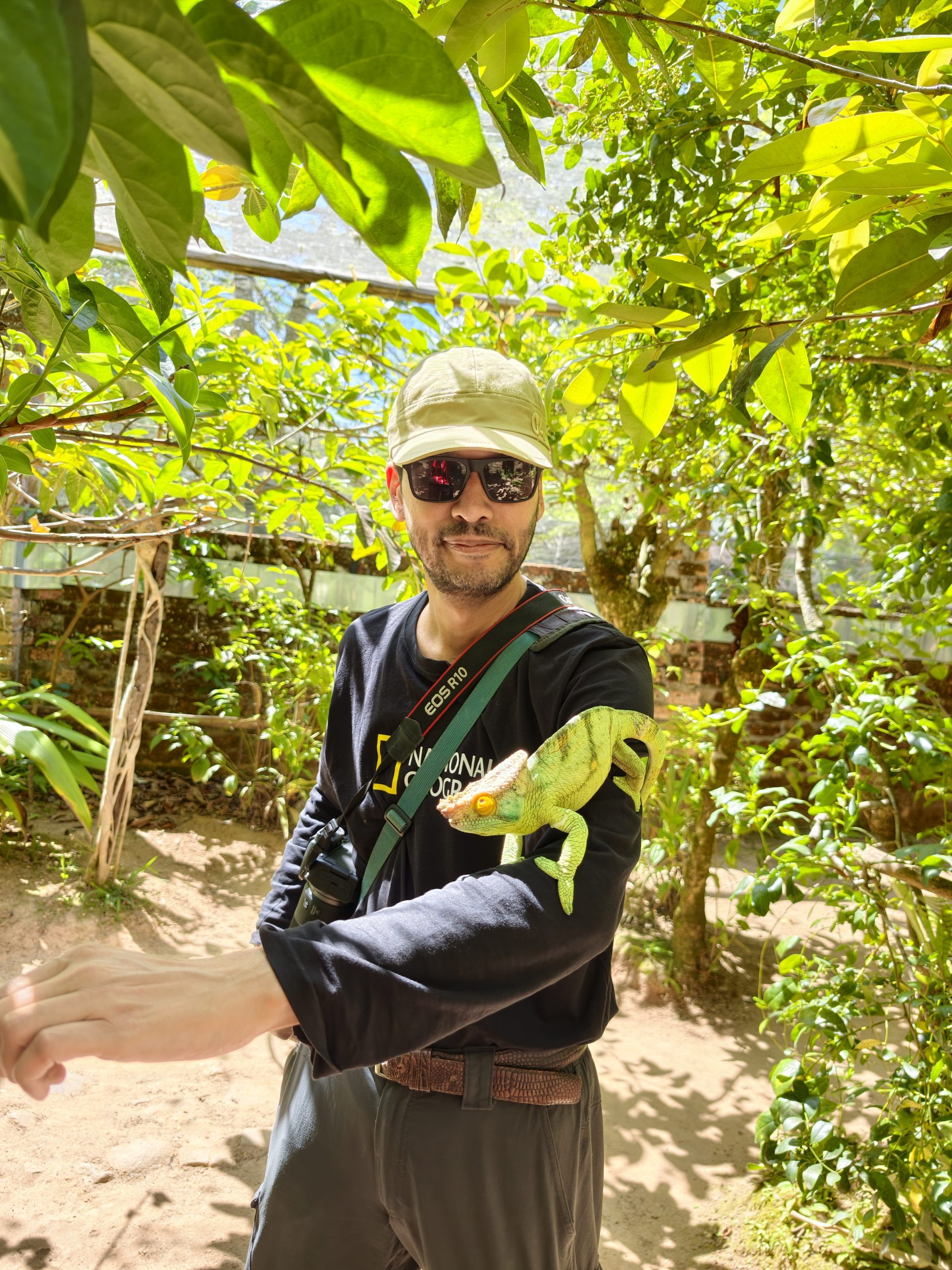
 By Nitin Gairola
The dart was shot at the world map and it hit Madagascar this time. The travel decision making framework these days is rather simple – every white space on the world map is bullseye since I anyway have to visit every country on Earth, besides all the other places of the natural world I have written far too often about. The white spaces are getting lesser and lesser though but don’t be fooled when someone tells you ‘the world is much smaller now’. What you end up hearing is that ‘the world is small’ when all they said was ‘smaller’. It is a subtle difference, but a ‘small world’ is really the biggest delusion out there, unless you get out there and see the world for yourself.
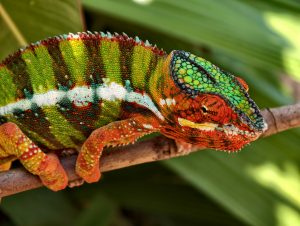
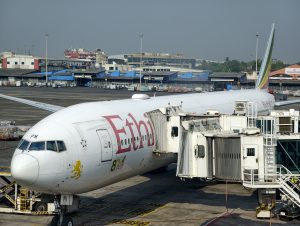
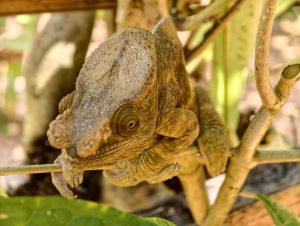
And just like that, the flight tickets were booked and I was going back to my favourite continent again – however this time not to the mainland but a very large island off the east coast of Mozambique and South Africa. I just can’t begin to tell you how I feel when I start entering the African airspace. For me it is indeed the ‘place of origins’ (as the latest Ethiopian tourism tag line goes) and Madagascar is a major piece in the world wildlife puzzle. It happens to house thousands & thousands of endemic species found nowhere else on Earth, and many yet waiting to be found by humans. And if that’s not a good enough reason to visit, then I don’t know what is. Besides, being as fond of primates as I am, I was giddy with excitement at the prospect of seeing all the lemurs and capturing them through my lens.
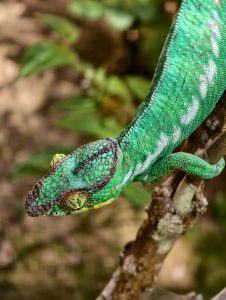
Just to explain that in terms of taxonomic classification, lemurs are primates (just like monkeys) but they are obviously not like monkeys which are part of a separate taxonomic ‘family’. That monkey ‘family’ (taxonomically speaking) is different from the ‘family’ of Lemurs. Lemurs are also definitely not one specific species, as is commonly misunderstood, since there over 100 species of lemurs (all in Madagascar). The Lemur ‘family’ along with those of Apes, Monkeys, Tarsiers and Lorries and a few others, make up the taxonomic ‘order’ of primates. And given that I had thus far seen all primates in the wild (except Bonobos, Gibbons & Lemurs), this was a good chance to further understand and piece together my personal ‘primate puzzle’. Why call it the ‘primate puzzle’ you may ask and my answer is that this is how we can go back into deep time to understand human origins. As all know, Humans (or the current sole surviving species – the Homo Sapiens) fall under the ‘Great Apes’ and all the fossils I have been shown in the field or in museums, just helps me understand a little more of what this human story is all about. You see for paleo-anthropology, there is no place quite like East Africa (but that is limited to mainland Africa). Naturally when it comes to fossils of hominids or precursors to the ‘homo’ genus, Madagascar was given a miss since it split from mainland Africa around 160 million years ago and then the Indian subcontinent split from Madagascar itself around 88-90 million years ago and moved to its position in South Asia as we have today, and that is the reason we have the mighty and young Himalayas on our north.
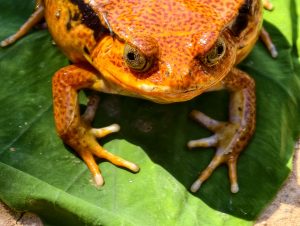
Just for some perspective on human evolution, our earliest primate hominid ancestors entered the scene around 3-4 million years ago only and that’s why Madagascar doesn’t have any hominid fossils, but a lot of living lemurs. So basically, the mega island of Madagascar is a few steps further back into our shared story, when lemurs started evolving on this island from around 65 million years ago after the rule of Dinosaurs ended, globally and in Madagascar. But it is only in Madagascar that the Lemurs evolved and that is what makes them absolutely unique and found nowhere else on our blue-green Earth, but here. I sure am glad the dart fell on this white space.
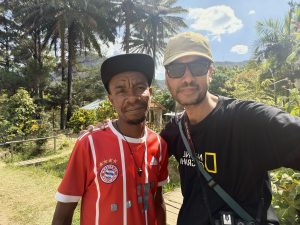
And it would have been really funny if Ethiopian Airlines (my flight to Antananarivo via Addis Ababa) had Hollywood’s Madagascar on their in-flight TV menu. I happen to be one of the few who has never seen this animated blockbuster but I am well aware that the story has a lion, zebra, giraffe and a hippo getting accidentally ‘transported’ to Madagascar, which was appropriately ruled by Lemurs (it’s another thing that they go totally wrong with the local wildlife, but they can be pardoned as it’s Hollywood after all). And so, thanks to LA’s tinsel town, the world is largely aware of a ‘thing’ called ‘Lemur’ but not really aware that there are over 100 species of them or that they are not exactly ‘monkeys’. They are a world unto themselves and so is Madagascar. It is a natural world lost in time, and today loosely connected economically with the rest of us. And that’s why it is also struggling to save its fragile ecosystem thanks to the merciless march of mankind. But here I hope they don’t make all the mistakes that we have made elsewhere in the world and use the path of nature & wildlife tourism to save their wild and to ensure locals get employment as well. I am glad that in the smallest of ways, I contributed to their tourism kitty and supported the locals, and some of them were the friendliest I have met (despite the language barrier).
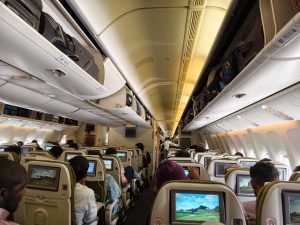
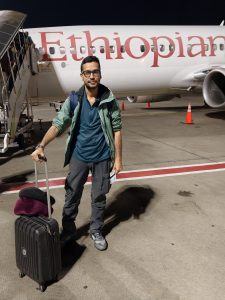
And so, the first Ethiopian Airlines flight was the usual as I have flown this route quite a few times and there were lots of Indians on this leg of the journey. But the second flight was ‘packed’ with all of 30 people in a 180-seater Boeing 737 and there was no one from India. I felt particularly lonely since Richa was not on this adventure either as this was a solo trip. I look row 31 (3rd from the last) and took all 3 seats to lie down and to get some sleep, since it was a ‘red-eye’ (as you know, night flights are called red-eyes). So, for the price of 1 economy ticket (which wasn’t cheap) I made my own little business class and went into dreamland at 36,000 feet, with the storm season approaching fast in November. I wanted to ensure I beat it and was praying to get some sunny days ahead which was critical to view the endemic wildlife here. That’s why travellers generally avoid the storm and rainy season from November to April (which is also summers in the southern hemisphere). So, I took a chance with the season but was fully prepared for the rains and the rainforests when it came to packing the right travel gear. And so why Madagascar? Well, why not indeed. More on it next Sunday.
Nitin Gairola is an extreme world traveller who has been to every major desert & forest ecoregion on Earth and to around 150 countries & autonomous territories. He is unofficially known as the ‘most travelled Indian’ and this multi-decade exploration program to witness the entire world is named ‘Borderless Planet’. Nitin is a published travel writer & poet too. Join him @ www.instagram.com/MostTravelledIndian/