By Arun Pratap Singh
Garhwal Post Bureau
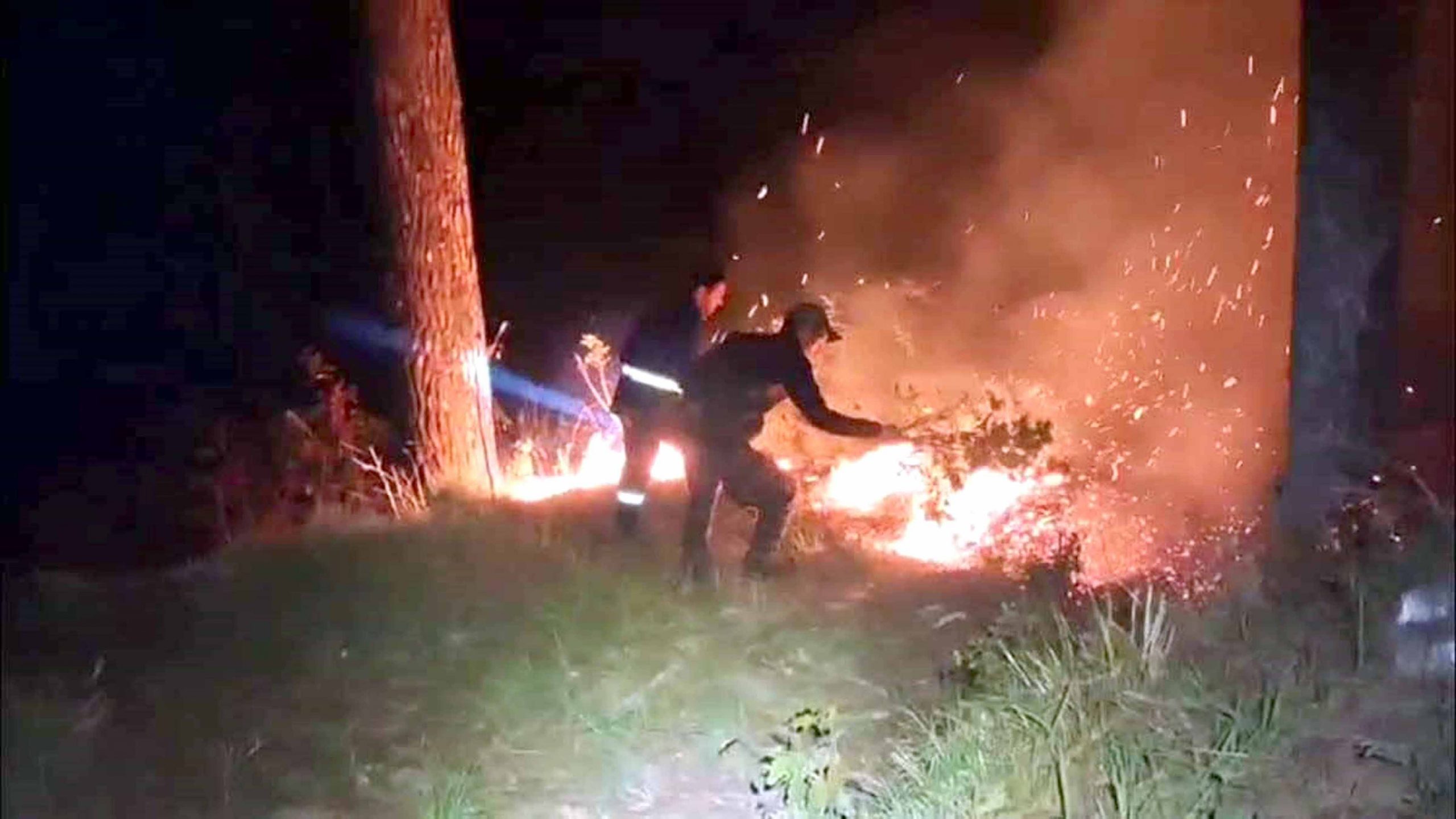
Dehradun, 1 May: Forest fires in Uttarakhand’s Garhwal division have assumed an alarming scale much earlier than expected this year, with incidents already surpassing trends observed in previous years by the third week of April itself. The emerging situation has raised serious concerns about the growing vulnerability of forest ecosystems in the Himalayan region. According to the Forest Department, more than 145 incidents of forest fires have been recorded in the division till 30 April, indicating a sharp escalation in the crisis even before the peak summer period has fully set in.
Of course, widespread rain yesterday is expected to control fires in the forest for some time but the spate of fires so far has affected both reserved and civil forest areas, causing extensive damage to valuable forest resources. Official estimates suggest that nearly 96.08 hectares of forest land have already been reduced to ashes. Compared to last year, this represents an increase of nearly 40 per cent in the extent of damage, pointing towards the increasingly visible impact of climate change as well as human activities. Dry foliage on the forest floor, coupled with rising temperatures and prolonged dry spells, has created conditions conducive to the rapid spread of fire. Notably, these developments have unfolded within the month of April itself, while a significant portion of the summer season still lies ahead. This also indicates that the forests are not being cleared effectively of the dry foliage and inflammable material before the and during the fire season which typically begins in February itself.
The Garhwal region has emerged as the worst-affected zone, with several forest divisions turning into hotspots of fire activity. By the third week of April, more than 100 incidents had already been reported from this region alone. The Badrinath Forest Division has recorded the highest number of fire incidents, while areas such as Rudraprayag have also witnessed large-scale damage. Both reserved and civil forest areas in these regions have been severely impacted, leading to adverse consequences for the local ecology. The destruction of forest cover has disrupted natural habitats of wildlife, forcing animals to move towards human settlements in search of safety, thereby increasing the risk of human-wildlife conflict. The unusual rise in temperatures till a couple of days ago, lack of moisture, and instances of human negligence had further aggravated the situation, affecting not only the green cover but also the livelihoods of people dependent on forest resources in the hill districts.
Data compiled by the Forest Department reveals that out of the 145 fire incidents recorded till 30 April, as many as 81 occurred in reserved forest areas, while 64 incidents were reported from civil forests. A total of 96.08 hectares of forest area has been affected by these fires. Significantly, after April 15 alone, 110 incidents were reported in the Garhwal region, underlining the rapid escalation of the crisis within a short span. In the Rudraprayag Forest Division, a total of 30 fire incidents have been recorded, including 10 in reserved forests and 20 in civil forest areas. The Badrinath Forest Division has witnessed the highest number of incidents at 41, resulting in damage to nearly 65 hectares of forest land.
The forest fire season in Uttarakhand typically extends from February 15 to June 15, but the intensity witnessed this year at an early stage has added to the concerns of authorities and environmental experts alike. The impact of forest fires is no longer confined to forest areas alone, as its effects on air quality have also begun to manifest clearly. The otherwise pristine air of the Himalayan region is increasingly being affected by smoke and pollutants, with the Air Quality Index in several locations reaching worrying levels. Emissions from forest fires, particularly black carbon, are contributing to a rise in atmospheric temperatures, thereby intensifying the heat. This, in turn, poses serious health risks, including respiratory ailments among the local population.
Scientists have also warned that black carbon deposits can adversely affect Himalayan glaciers by accelerating the melting of snow and ice, thereby posing long-term environmental risks. If timely and effective measures are not implemented, the situation could assume even more severe proportions in the coming years, with cascading impacts on water resources and ecological balance.
Meanwhile, rainfall in several parts of the state yesterday and today in parts of the state has provided temporary relief from the ongoing forest fire incidents. Light to moderate showers have helped in reducing the spread of fire and have also led to a dip in temperatures. The Meteorological Department has indicated that intermittent rainfall may continue across different districts over the next few days, which could further aid in controlling the fires. However, officials caution that this relief is unlikely to be permanent, as the risk of fire resurgence remains high once dry conditions return. In view of this, the administration and the Forest Department are maintaining continuous vigilance and preparedness.
Chief Conservator of Forests (Forest Fire) Sushant Patnaik has stated that the sharp rise in temperature and prolonged dry weather conditions this year have led to an increase in forest fire incidents. He said that the department is maintaining constant surveillance and has deployed special teams in sensitive areas to tackle the situation. He further noted that all the major fire incidents reported in the state have been brought under control in record time. Patnaik added that while the recent rainfall would provide some relief, the department remains on alert, with teams responding promptly to alerts as they are received. He also appealed to the public to cooperate in preventing forest fires and to avoid any activities that could trigger such incidents in forest areas.