Garhwal Post Bureau
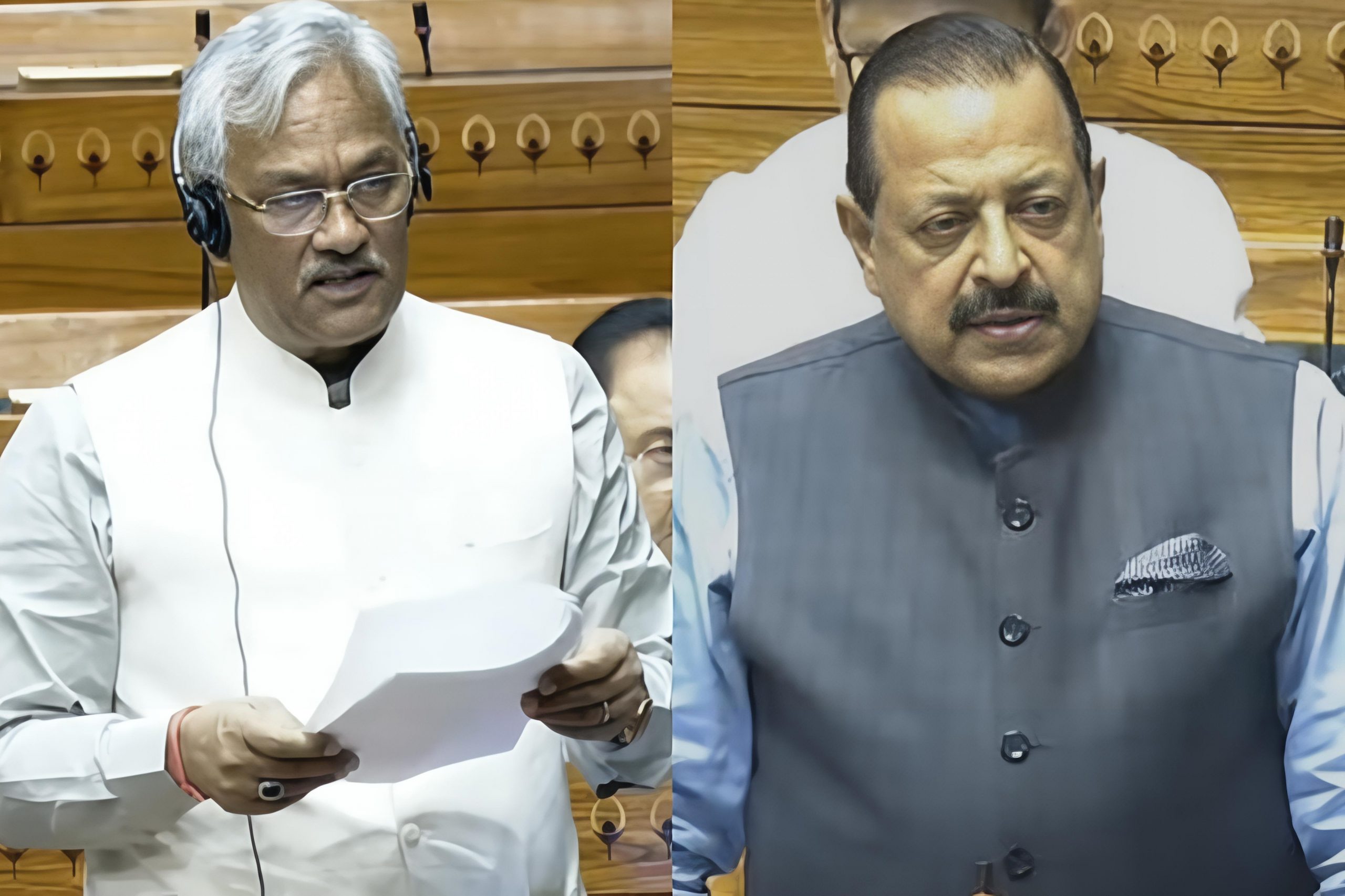
Dehradun / New Delhi: Haridwar MP and former Chief Minister of Uttarakhand, Trivendra Singh Rawat raised a question regarding early warning systems for disasters such as floods, landslides, and glacier melt in Himalayan states, particularly Uttarakhand, in the Lok Sabha.
In a written reply, today, Union Minister of State (Independent Charge) for Earth Sciences and Science & Technology, Dr Jitendra Singh provided detailed information on the subject.
He informed the House that the Ministry of Earth Sciences has developed a comprehensive Multi-Hazard Early Warning System, which includes observation networks, advanced forecasting models, and GIS-based decision support systems. This system enables timely identification and effective monitoring of weather-related hazards such as cyclones and heavy rainfall, while also ensuring rapid dissemination of information through modern communication channels.
He further stated that the Central Water Commission, under the Ministry of Jal Shakti, issues short-term flood forecasts for Himalayan states with a lead time of up to 24 hours. Additionally, digital platforms such as FloodWatch India 2.0 and C-FLOOD are being used to provide flood-related information down to the village level. The South Asia Flash Flood Guidance System is also being used to issue flash flood warnings 6 to 24 hours in advance.
Regarding landslides, the minister noted that the Geological Survey of India releases daily landslide forecast bulletins during the monsoon season for Himalayan states, including Uttarakhand, with predictions covering up to 48 hours ahead.
Significant progress has been made over the past three years in strengthening weather-related infrastructure in Uttarakhand. With the installation of a new X-band Doppler Weather Radar in Lansdowne, the total number of operational Doppler radars in the state has increased to three. Additionally, the number of automatic weather stations has been expanded to 31, along with the augmentation of rain gauge and monitoring stations. A high-altitude automatic weather observation system has also been established in Kedarnath, improving weather monitoring in remote regions.
On glacier monitoring, the minister highlighted that the Indian Space Research Organisation (ISRO) is using satellite-based remote sensing and GIS technologies to regularly track the size, extent, and movement of Himalayan glaciers. This helps in assessing risks such as Glacial Lake Outburst Floods (GLOF) and understanding the impacts of climate change.
To strengthen disaster management, the India Meteorological Department (IMD) provides states with rainfall forecasts up to seven days in advance, high-resolution weather data, agro-meteorological advisory services, and alerts related to lightning, heavy rainfall, and other extreme weather events. District-level climate risk and vulnerability atlases have also been prepared to support planning and disaster risk reduction efforts by state governments.
Expressing his views, MP Trivendra Singh Rawat stated that the Himalayan region is extremely sensitive and strengthening early warning systems is crucial for safeguarding lives. He emphasised the need for effective implementation of these systems at the grassroots level so that local communities can respond in time and minimise disaster risks.
He also expressed gratitude to the Ministry of Earth Sciences and Science & Technology for providing detailed information and said that the steps taken by the Central Government will significantly strengthen disaster management systems in Himalayan states.