Around the World with the Most Travelled Indian
 By Nitin Gairola
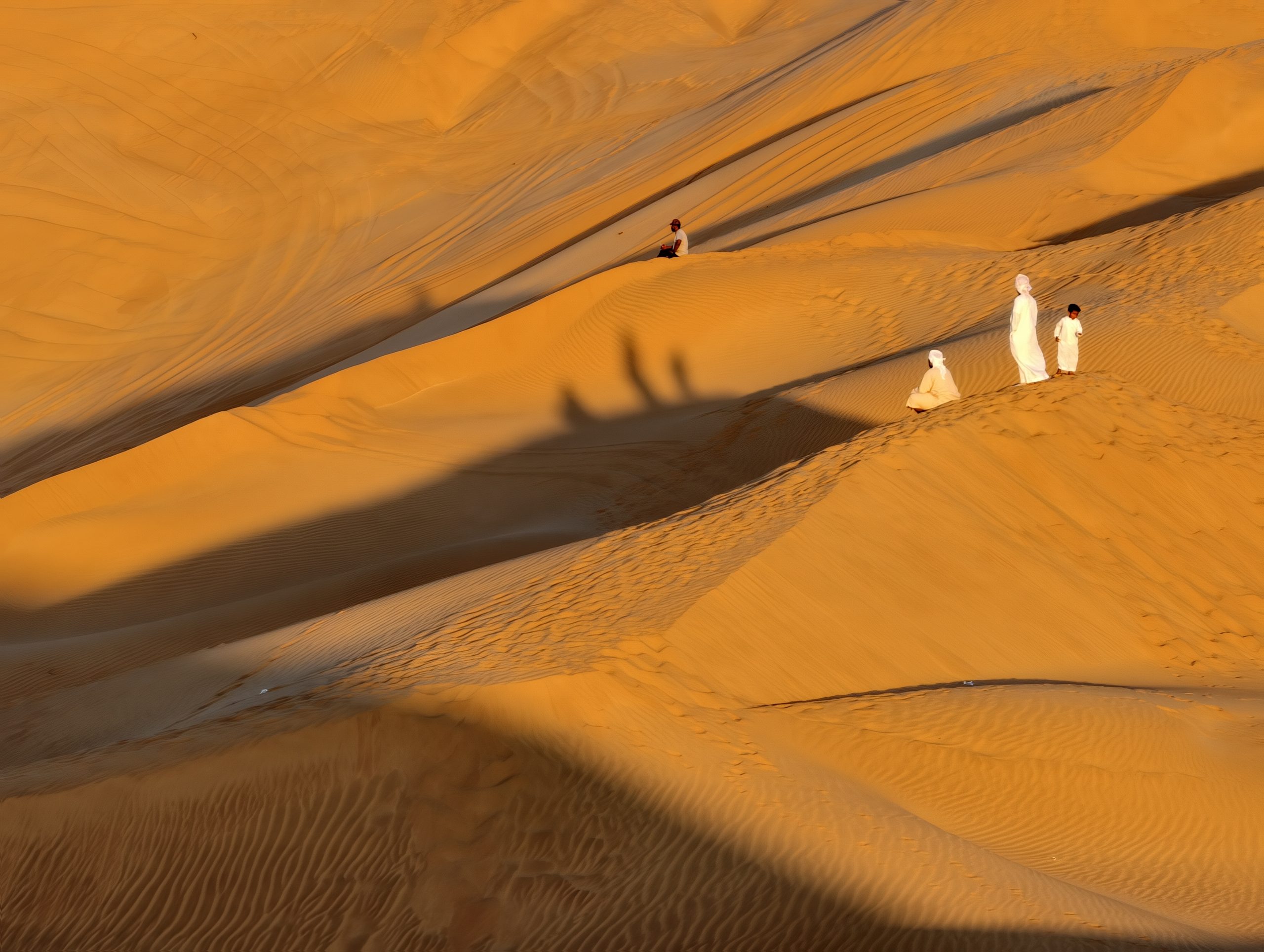
In my previous Sunday feature I had mentioned about my own travels to Rub’-al-Khali recently and how this famed portion of the Arabian Desert has attracted ‘western’ (i.e. European) explorers and adventurers over the past 200 years. And yes, you read that right, the past 200 years only. While one may say that Alexander crossed this part in around 330 BCE i.e. over 2,300 years ago and then much later Marco Polo & Ibn Battuta did so around 700-800 years ago, but their objectives were not purely exploration of the deserts. They were en-route to somewhere else and for something else. That’s why I say that pure desert exploration or adventurism in Arabia is a very recent phenomenon that gathered further momentum in the early 20th century, thanks in large part to the Brits during World War-1 (who wanted to be everywhere). Does anyone recollect the Hollywood classic, Lawrence of Arabia: the overly-dramatised life story of the overly-dramatic Brit explorer, military officer and academic, TE Lawrence?
While all other deserts around the ‘new world’ were being fervently explored by ‘men’ around 300-400 years ago (yes, unfortunately women ventured out much later), the ones on the Arabian Peninsula had yet remained a mystery to the western world. The so-called ‘western world’ represented the part of Earth most known for scientific exploration at that time, and hence it should not be lost on us that many local Arabs would have lived in these lands or be aware of them from long, long before they were claimed to be ‘discovered’, but somehow the locals just didn’t feel the urge to travel to or to document it ‘scientifically’ for others.
The restless Europeans were in North America first in the 1600 CEs but the deserts of the American west were explored many years after the coastline of the east was occupied. In South America, the Peruvian, Atacama and the Patagonian deserts were in the far west of the continental landmass as well and the flags were planted (if at all) much after the ‘golden’ Spanish reign of blood and terror across the Incan lands. Australia was reached 300 years ago and since everyone wanted to be the first to cross Australia north to south, they automatically became some of the most famous desert explorers and the heroics from that time and place are spoken till this day (by some, in some parts).
Africa, though a portion of the ‘old world’ of Afro-Eurasia, was always the ‘dark continent’ in the less racial sense (which I am not sure prevailed then). The dark continent part for me refers to the fact that it was shrouded in dark mystery and was waiting to be explored by the intrepid explorers of Europe. And just as its dense forests and grasslands teeming with wildlife were a mystery to the outside world, so were its deserts. And we humans don’t like mysteries to remain mysteries and so we did go into the mighty Sahara and its various sub-sections such as the Libyan Desert, Tanezrouft Basin, the White Desert, Tenere Desert and the Adar des Ifoghas plateau. Then there were 4 major deserts in the Horn of Africa and 1 even in East Africa, not to mention the handful in the southern part of the continent. The 2 biggest being the Kalahari and the Namib, which is my last one left to visit. Even the deserts of Central Asia, China and Mongolia were not spared nor the ones in present day Afghanistan, Iran, Iraq and Syria. But for some reason, for some very strange reason, Arabia was missed out. How could this happen and the ones who wanted fame (or fortune), had found their white space in this dark spot on the world map of the 1800s.
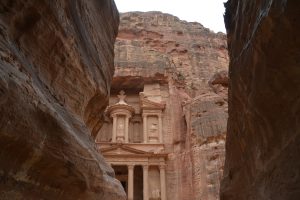
There was one Johann Ludwig Burckhardt who was the first westerner to see the rose-walled city of Petra in 1812. In his wake followed Richard Burton and Charles Doughty who for many years lived with the Bedouins of Arabia and was the inspiration for TE Lawrence in the 1920s. Doughty’s book called ‘Travels in Arabia Deserta’ was what triggered the young Lawrence into becoming who he became in Arabia. Coming specifically to Rub’-al-Khali or the Empty Quarter, Bertram Thomas was the first to cross it in 1931 and he describes his adventure and experiences with the Bedouins in his 1932 book called Arabia Felix. He was followed by Harry St John in 1932 and then Wilfred Thesiger went a step further and mapped the entire Empty Quarter between 1945-49 post the end of the 2nd World War.
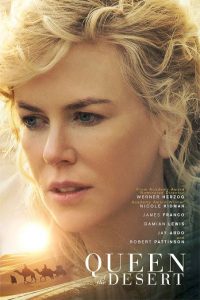
And recall that I mentioned that most of the desert explorers were men. Well, not after the end of the 19th century as Gertrude Bell (watch Hollywood’s ‘Queen of the Desert’) mapped out Syria, Iraq and Arabia and was very much part of the geo-politics that shaped some of the modern-day countries here. She directly helped in the creation of ‘Iraq’ over a decade that ended around the mid-1920s (it was referred to as Mesopotamia back then). Bell and Lawrence’s paths did cross briefly and just how mesmerising that conversation must have been one can only imagine – Although Hollywood didn’t do it justice in ‘Queen of the Desert’. This 2015 movie is no patch on the drama of ‘Lawrence of Arabia’ (1962) which is, of course, an all-time classic. Another woman desert explorer and writer, possibly inspired by Bell, was Freya Stark who travelled through Arabia between 1927 and 1939 i.e. till the start of the 2nd World War.
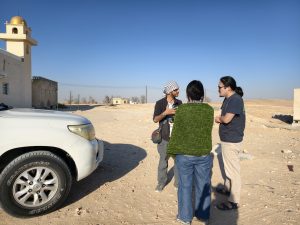
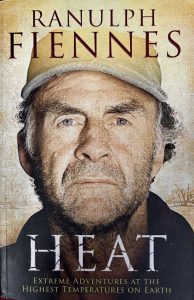
Today modern-day adventurers are keeping the desert mystery and adventure alive with their daring expeditions, such as Mark Evans’ 1,200 km trek across the Empty Quarter (Salalah to Doha), and Max Calderan’s solo and non-stop crossing of the Empty Quarter. He’s been aptly nicknamed ‘son of the desert’. There is also Muzafer Ahamed and Reza Pakravan besides my favourite ‘living’ explorer, Sir Ranulph Fiennes, who found the lost City of Ubar or the ‘Atlantis of the Sands’ in Southern Oman at the far edge of the Rub’-al-Khali. After penning down so many great names, I can only say it was a privilege to go on a pilgrimage to a place where their presence once was. Footsteps in the desert disappear with the shifting sands, but their legend is still spoken of.
Nitin Gairola is from Dehradun and is an extreme world traveller who has seen the natural world extensively and is often referred to as the ‘Most Travelled Indian’. He is on a quest to become the first person to travel to every major desert, forest, grassland, tundra & ice biome on Earth, besides every country. Nitin has set world travel records certified by India Book of Records, has written for Lonely Planet, holds National Geographic conservation certifications and loves Bio-Geography. He is also a senior corporate executive in an MNC and in his early days, used to be a published poet as well. Join him @ www.instagram.com/MostTravelledIndian/