Garhwal Post Bureau
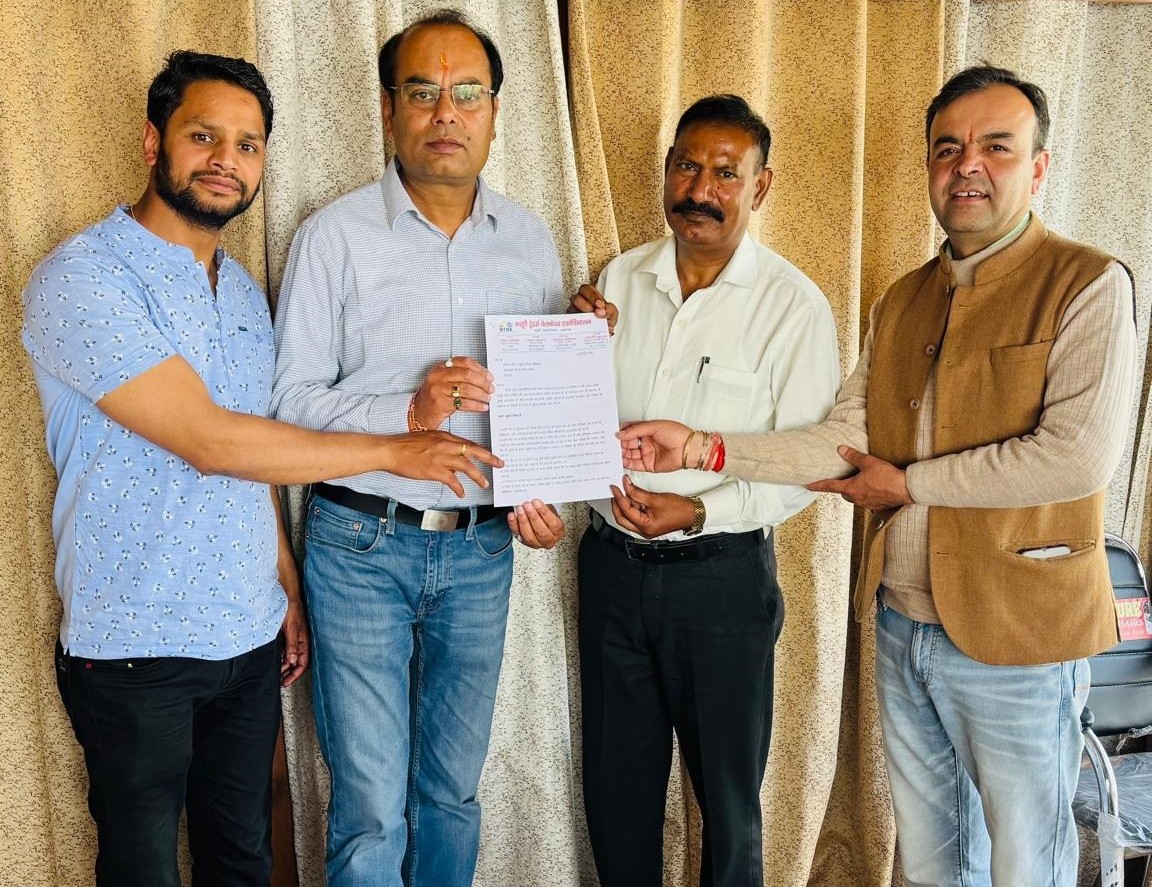
Mussoorie, 14 May: Amidst the continuously mounting traffic pressure and the acute parking crisis in the tourist town of Mussoorie, local traders and social organisations have now begun to come forward openly to voice their concerns. The Mussoorie Traders’ Welfare Association has expressed deep concern over the city’s deteriorating traffic management system by submitting a detailed letter of suggestions to the Uttarakhand Tourism Development Board. The organisation has warned that, if concrete measures are not taken in a timely manner, Mussoorie’s entire tourism ecosystem could be severely disrupted in the near future.
In a letter addressed to the Secretary of Tourism and the Chief Tourism Officer, the Association stated that while the influx of tourists—particularly in the Landour area—is increasing rapidly every year, the development of road and parking infrastructure has failed to keep pace. Consequently, the city’s traffic management system completely collapses during the peak tourist season. The Association identified the widening of roads in the Landour Cantonment area—specifically the stretch extending from Lal Tibba, Sister’s Bazaar, and Char Dukan up to Mullingar—as an absolute necessity. They argued that this region attracts the highest volume of tourists; however, due to the extreme narrowness of the roads, persistent traffic congestion remains a chronic issue. The Association further highlighted a severe shortage of parking space in the Landour area, noting that the majority of vehicles are parked along the roadside, thereby obstructing the flow of traffic. They demanded the construction of a new parking facility on government land with a capacity to accommodate at least 300 vehicles. The Association also pointed out that the problem has been further exacerbated by the recent conversion of an existing parking area—which previously accommodated 15 vehicles—into a public park. Additionally, the traders proposed the implementation of a one-way traffic system within the Landour area. To facilitate this, they demanded the construction of an additional link road connecting Sister’s Bazaar to Jabarkhet Road—a project that, they noted, had reportedly been proposed in the past as well. Finally, the Association suggested the development of new parking facilities at several key locations, including Mullingar, South Road, North Road, the Civil Hospital, and Bakery Hill. In addition to this, a proposal was put forward to construct a parking facility with a capacity for hundreds of vehicles on the vacant land situated near Hotel Himalaya Castle and Jain Dharamshala. The Association stated that neighbourhood parking zones and multi-level parking complexes should be constructed at various locations across Mussoorie, modelled after the system implemented in Dehradun. They specifically highlighted the need to construct a dedicated multi-level parking facility for approximately 2,000 taxi vehicles, ensuring that taxis do not remain parked along the roadside, thereby helping to alleviate traffic congestion. The memorandum of suggestions also included a demand for a complete ban on roadside parking.
The organisation asserted that vehicles parked along the roadsides on Mall Road and other major thoroughfares constitute the primary cause of traffic jams. Furthermore, noting that the Silverton parking facility and its surrounding areas have a combined capacity of approximately 300 vehicles, they demanded that vehicles bound for this location be granted unrestricted access to enter directly from Mall Road. The Association also raised a demand for the implementation of a ‘Smart Parking System’ and the development of a digital parking management framework in Mussoorie. They argued that such measures would provide significant relief to both tourists and local residents. Additionally, a demand was put forth to formulate a distinct policy specifically for rental two-wheeler vehicles. The organisation pointed out that the lack of a clear and well-defined parking system currently causes inconvenience to both local youth and visiting tourists. The Association proposed the formation of a joint committee comprising representatives from the District Administration, the Municipal Council, and local citizens; this committee would convene monthly to deliberate upon traffic and parking-related issues and devise effective solutions. The Association emphasised that merely relying on temporary arrangements would not resolve the problem; rather, a long-term strategic plan must be formulated and implemented to address these challenges effectively.
Present on this occasion were Rajat Agarwal, Jagjit Kukreja, Nagendra Uniyal, Atul Agarwal, and Salim Ahmed.