Garhwal Post Bureau
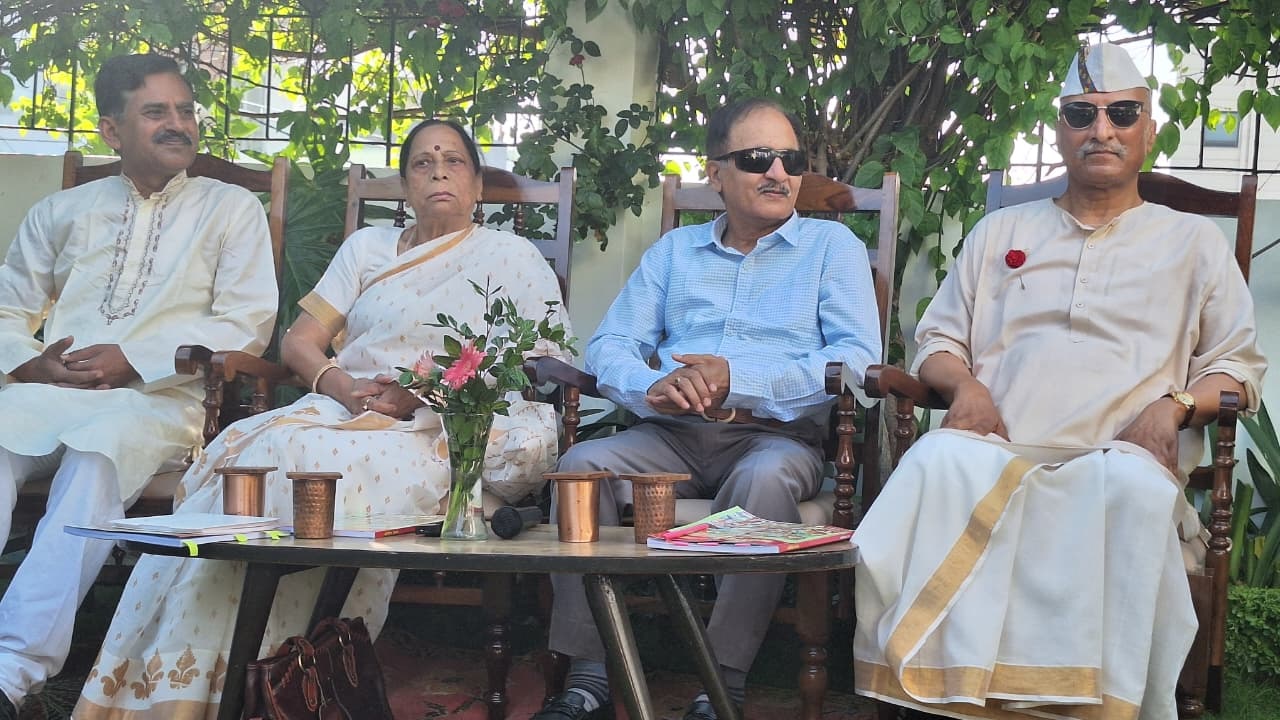
Dehradun, 18 May: On the evening of 17 May 2026, a literary forum called ‘Phulwari Mein Charcha’ – hosted by Anil Raturi, former DGP of Uttarakhand, and Radha Raturi, former Chief Secretary – marked its 25th session. This may sound like a routine milestone. But it wasn’t. What happened that evening in Dehradun tells us something important about how knowledge survives in our time.
Phulwari Mein Charcha began in February 2023 with a simple idea: gather thoughtful people to discuss serious books. Since then, it has held 24 sessions. The latest session focused on a special edition of Navodit Pravah magazine devoted to folk culture across India.
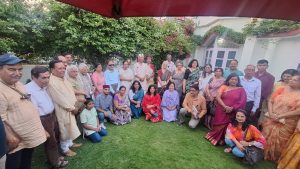
The structure was democratic. Twelve writers—whose articles appeared in the magazine—spoke for three minutes each. They came from different regions: Kumaon, Garhwal, Jaunsar, Jharkhand, and Punjab. Each shared insights into their local folk traditions. Sachin Chauhan highlighted Jaunsar culture—the Mahasu Deity, the Jakgdea, Pandav nritya and Bissu festivals. Kuldip Channi spoke of Punjabi folk music. Chandrashekar Tiwari discussed Kumaoni wedding songs. Not grand speeches. Just voices carrying the memory of their worlds. Shraddha Mishra Baxhi, Bharati Mishra, Sarojini Nautiyal, Sunita Chauhan, Someshwar Pandey, Satyanand Badoni, and Dolly Dabral also spoke on the subject. Anil Bharati and Sushil Upadhyay were present on the occasion.
After these presentations, Anil Raturi, Prof Sudharini Pandey, Prof Ram Vinay Singh, and Rajneesh Trivedi—editor of Navodit Pravah—sat together in dialogue. They debated what folk culture actually means. Raturi offered a key insight: “Geography and the struggle of living shape generations. Culture is born from the inseparable bond between humans and nature.”
Why does this matter? Because literary magazines are vanishing. Public forums for serious conversation are shrinking. Against this tide, Phulwari has persisted. It asks: What do we remember? What do we lose if we forget our roots?
The silver jubilee was not a celebration of reaching 25 sessions. It was something quieter and more significant: a proof that when a few people commit to thinking deeply together, ideas don’t die. They live. They find new voices.