Funeral in Haridwar today
By Arun Pratap Singh
Garhwal Post Bureau
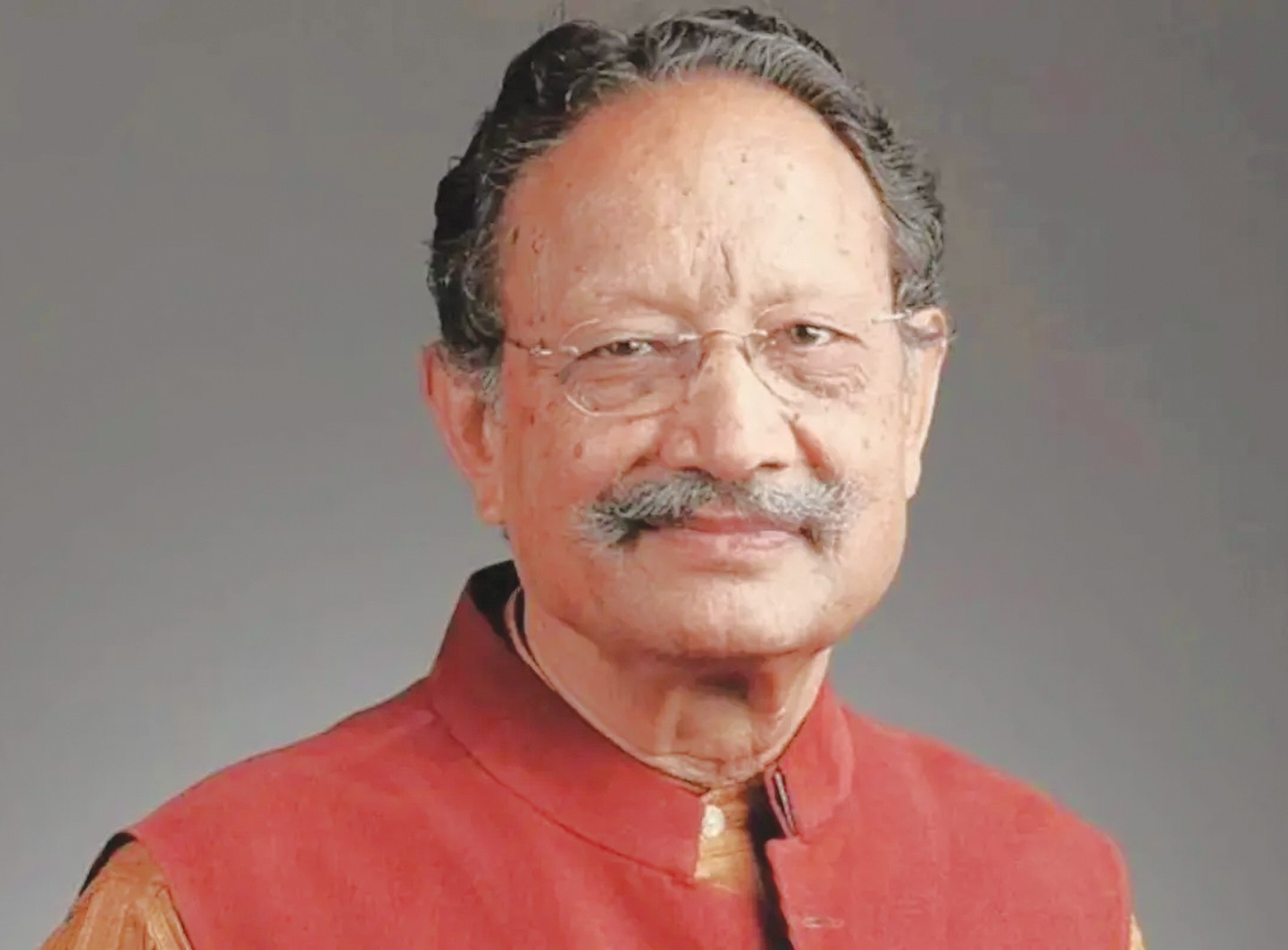
Dehradun, 19 May: Veteran politician and former Uttarakhand Chief Minister Major General Bhuwan Chandra Khanduri (Retd), regarded as one of the strictest leaders, a man of high integrity and discipline shaped by decades of service in the Army, passed away at Max Hospital here today after prolonged illness. With his demise, an era in the state’s political history has come to an end. From wearing the uniform of the Indian Army to occupying the Chief Minister’s chair, Khanduri’s journey was widely seen as an example of integrity, discipline and public service not only in Uttarakhand but also in national politics. The Uttarakhand Government has declared three days of official mourning on the passing away of Khanduri.
Khanduri had been unwell for a long time and was undergoing treatment for heart-related ailments at Max Hospital in Dehradun for several months. He breathed his last at the age of 91 this morning. Following his death, a sombre silence descended across Uttarakhand, from the hill villages to the plains, as people mourned the loss of a leader who was widely regarded as a hero of the common people.
His mortal remains were taken from Max Hospital for further examination at the Military Hospital before being shifted to his residence at Vasant Vihar in Dehradun. His final rites are expected to be performed in Haridwar tomorrow. The funeral procession is scheduled to begin from his residence at 10 a.m..
Khanduri’s passing away has been mourned by a large number of dignitaries including President Droupadi Murmu, Prime Minister Narendra Modi, a large number of Union Ministers, Governor Lt Gen Gurmit Singh (Retd), Chief Minister Pushkar Singh Dhami, state cabinet ministers, Speaker Ritu Khanduri Bhushan, who is his daughter. Khanduri is survived by his wife, a son, a daughter and grandchildren.
Known for his spotless public image and uncompromising administrative style, BC Khanduri occupies a unique place in Uttarakhand politics. In a state often described as a land of soldiers, he was considered one of its tallest icons. His simplicity, discipline and personal honesty distinguished him from many contemporary politicians. He first served the nation in uniform by protecting the country’s borders and later entered public life with a commitment to addressing the problems of ordinary citizens. Even political opponents rarely questioned his integrity.
Born on October 1, 1934 in Dehradun, Bhuwan Chandra Khanduri served for decades in the Indian Army before entering politics. He was an officer in the Corps of Engineers and was awarded the Ati Vishisht Seva Medal in 1982 for his distinguished service. After retiring as a Major General, he chose the path of public life and entered active politics during the early 1990s. Former Prime Minister and BJP leader Atal Bihari Vajpayee is widely credited with bringing him into active politics and he won the Parliamentary election from Garhwal seat for the first time in 1991 and went on to become Union Minister of State and then Union Cabinet Minister in Vajpayee Govt in 1999.
Such was Vajpayee’s trust in Khanduri that within two years of entering Parliament he was made the party’s chief whip. Though he suffered defeat in the 1996 Lok Sabha election, he returned strongly and in 1999 was inducted into the Vajpayee government as Union Minister for Road Transport and Highways. His tenure is remembered as a transformative phase in India’s road infrastructure development. He played a key role in implementing the Pradhan Mantri Gram Sadak Yojana (PMGSY) and in expanding the national highway network across the country. His administrative vision and strict working style in connecting remote villages through roads continue to be remembered with admiration.
After the formation of Uttarakhand, factionalism within the BJP remained intense for years. By 2007, the party leadership once again felt the need to send BC Khanduri to Dehradun to stabilise governance in the state. Despite competing power centres within the party, the command of the state was eventually handed over to him and he became Chief Minister for the first time in 2007.
His tenure from 2007 to 2009 became synonymous with strict governance and a “zero tolerance” approach towards corruption. His name came to symbolise discipline within the government machinery itself. However, his uncompromising style also made several politicians and legislators uncomfortable. Following the BJP’s poor performance in the 2009 Lok Sabha elections, when the BJP lost all the 5 Lok Sabha seats from Uttarakhand, he accepted moral responsibility and resigned from the post of Chief Minister.
During the subsequent tenure of Ramesh Pokhriyal ‘Nishank’, several allegations of corruption surfaced in the state, prompting the BJP’s central leadership to once again repose faith in BC Khanduri. In 2011, he returned as Chief Minister for a second term and attempted to restore administrative discipline and transparency in governance. However, the BJP under him narrowly lost to Congress which won the assembly elections by a wafer-thin majority of one seat.
In the 2012 Assembly elections, he suffered defeat from the Kotdwar constituency, yet his stature and public respect remained intact. In 2014, amid the Narendra Modi wave, he once again won the Garhwal Lok Sabha seat. Later, he was appointed Chairman of the Parliamentary Standing Committee on Defence. Advancing age and deteriorating health eventually led him to withdraw gradually from active politics. BC Khanduri’s political identity remains rooted in simplicity, transparency and administrative firmness. He was known for keeping a tight control over bureaucracy and insisting on quality and accountability in development works. At a time when politics was increasingly associated with compromise and opportunism, Khanduri stood apart because of his clean public life and principled politics.
The death of BC Khanduri is being viewed not merely as the passing of a former Chief Minister, but as the end of a distinct chapter in Uttarakhand’s political culture. He represented a style of leadership marked by discipline, honesty, simplicity and administrative resolve. In the political history of post-statehood Uttarakhand, his contribution will always be regarded as decisive. With his passing, Uttarakhand has lost a leader whose identity rested more on principles and discipline than on power and political position.