All Around the World with the Most Travelled Indian
 By Nitin Gairola
Nakuru National Park is essentially a lake surrounded by lush vegetation and in it are the homes of countless animals, with its most famous residents being the 2 species of the flamboyant flamingos – the Lesser and the Greater Flamingo – and they can paint the sky or the lake red with their plumage. All you have to do is watch the Hollywood classic called ‘Out of Africa’ to get a sense of the sight you can witness, and the months of January and February are considered the best of it, not necessarily syncing with the peak migration season of July to September when we went. But February seems to be a sweet spot if you want to see the calving season in both Masai Mara of Kenya and Serengeti of Tanzania. This is when hungry predators come searching for the new-borns of the grazers and the action is really wild and untamed and not for the faint of heart.
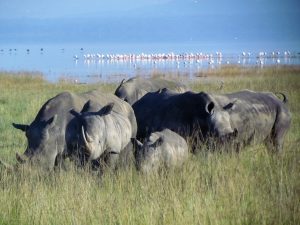
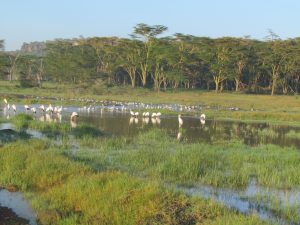
In our case, we entered thinking we will have flamingos everywhere (oh the expectations these Hollywood movies set). But it had rained the previous night and August wasn’t the best season anyway, so we did see flamingos in the wild but the numbers were probably what you can see in Navi Mumbai’s creeks as well (having said that, Navi Mumbai has buildings in the background and it’s just not the same thing).
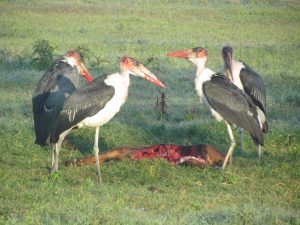
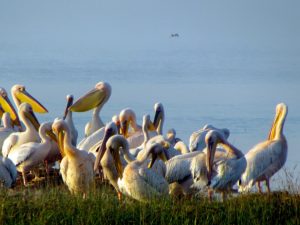
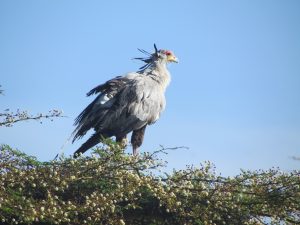
But leave aside the flamingo disappointment, the rest of the bird and animal life at the lake was rather phenomenal and unique. Since the lake is primarily known as a bird lovers’ paradise and for me the one that stole the show were the peculiar, large yellow-beaked pelicans. There are 2 species of pelicans at Nakuru – the Great White Pelican and the Pink-backed Pelican. There were a lot of big menacing looking storks, too, one of which was gorging on the leg of a large mammal. I wasn’t too sure where the rest of that mammal was – probably inside a happy belly.
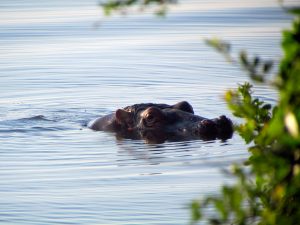
We also saw a lot of hippos in the water and a lady in our jeep asked her husband – ‘Is the hippo vegetarian?’ The embarrassed hubby said, ‘Yes, he is a herbivore’ (just loudly enough to ensure we heard and didn’t judge him). But this herbivore it must be known is considered as the most dangerous animal for humans in the African Savannah, far ahead of the lion and even the Cape Buffalo. The hippos are known to be ill tempered and are the leading cause of human deaths by a mammal in Africa. Some place this at around 500 human deaths each year from the hands (and teeth) of hippos.
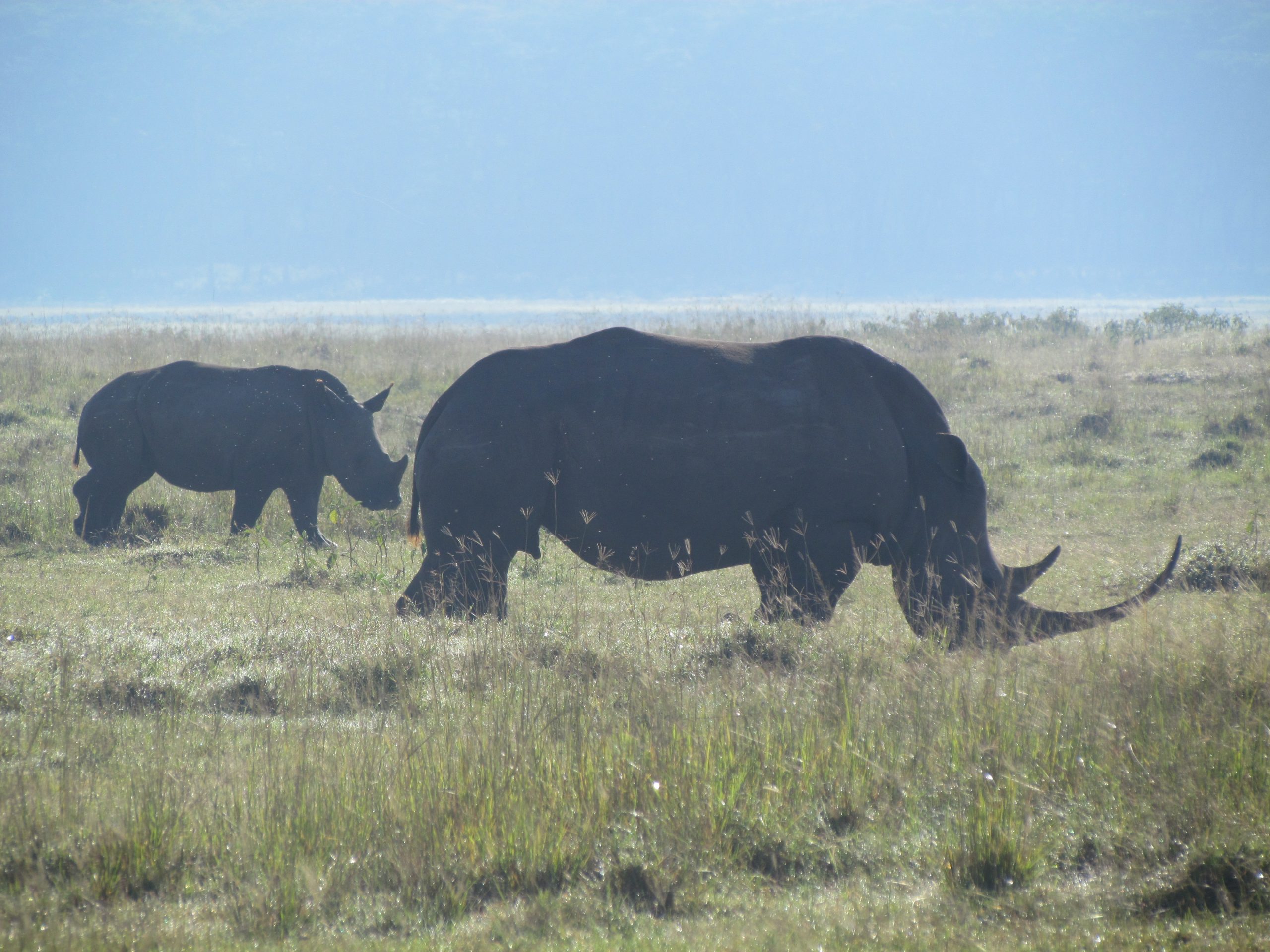
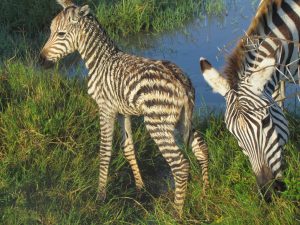
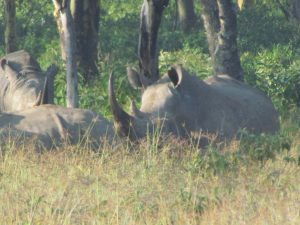
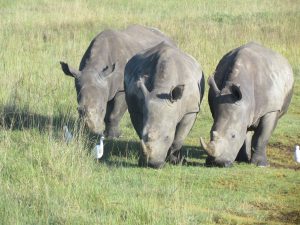
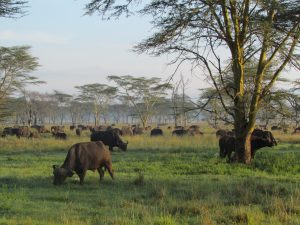
Besides the hyper hippopotamus, we saw the other large ungulates (hoofed mammals) such as giraffes, zebras and elephants but this place wasn’t for the wildebeest that were so ubiquitous in ‘The Mara’. And with lesser wildebeest there were lesser big cats, who simply love the wildebeest (on their plates). We just saw a lone lion in the distance which was a disappointment compared to the Mara, but my highlight in Nakuru has to be spotting the rhinos – in big numbers. And not just the more common ‘white rhino’ but also the very rare and heavily poached ‘black rhino’. The black and white specie names has nothing to do with colour but simply the fact that the white rhino has a ‘wide’ mouth and so thanks to the local accent it became ‘white’ and the other one doesn’t have a ‘wide’ mouth so it became ‘black’. Calling it the ‘non-white’ rhino would not have been as appealing.
And that black rhino, so heavily poached, was seen by us with its calf next to her, peacefully grazing on the grass, glad to be in the protection of a forest reserve. It’s one of my favourite images and I will never forget that moment. We have never seen a black rhino since and I sometimes wonder what has become of that mother and baby now. I believe the calf has grown and they are still peacefully munching on the abundant grass together.
After the safaris at Lake Nakuru, it was time to bid adieu to this wildlife wonderland as well. It didn’t give us what we originally came for but gave us something we will never forget. Looking at that prehistoric beast truly feels like you have crossed a portal into the primordial past. Nakuru felt like the primordial past.
Nitin Gairola is from Dehradun and has travelled the natural world more than almost any Indian ever. He has set world travel records certified by India Book of Records, has written for Lonely Planet, and holds National Geographic conservation certifications. He is also a senior corporate executive in an MNC and in his early days, used to be a published poet as well. More than anything else, he loves his Himalayan home.