 By KULBHUSHAN KAIN
“This bloody Gen Z lot needs to be fixed. They held the nation to ransom.”
I received this message today in a chat group, reflecting the raw anger and frustration many are feeling right now. And while it might be true that the recent unrest felt like a nation being held to ransom, I strongly disagree with the conclusion.
The youth don’t need to be “fixed”. What actually needs to be fixed is something far deeper.
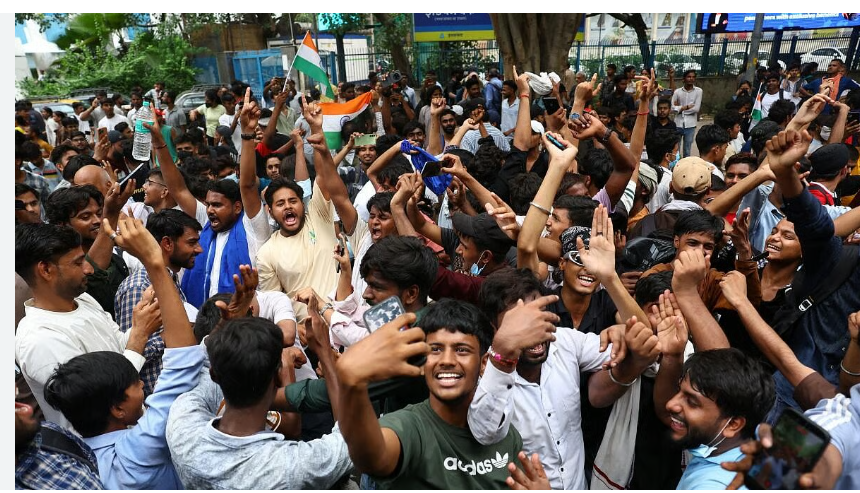
In recent days, public discourse – especially across social media – has reached a fever pitch. Much has been said about the crude language, explicit gestures, and alarming lack of restraint witnessed during recent political protests. People across generations have expressed genuine shock and discomfort at the nature of the rhetoric, particularly when directed at high constitutional offices like that of the Prime Minister. When public behaviour devolves into explicit vulgarity, it naturally invites widespread condemnation.
But while it is easy to express outrage over the symptoms, we must ask ourselves a harder question: Where is this rot actually starting?
If we look past the immediate anger, it becomes clear that this is not an isolated incident of bad behaviour. It is the visible breakdown of a foundational framework that used to shape character, discipline, and respect. Young people do not adopt explicit language and provocative behaviour in a vacuum. They pick it up from their surroundings – from peer pressure, from the coarsening tone of mainstream political debate, and heavily from popular entertainment.
We have a history of accepting the gradual lowering of cultural standards. Songs and media that rely on heavy double entendre or crude themes were once debated, then normalised, and eventually celebrated as popular hits. How many of us would like the women in our house to dance to one of the most popular songs in Indian cinema, “Choli ke peeche kya hai”? And please don’t think I am picking on women. It is not only the dance – but its acceptance by a majority in our society. If it was not appreciated, it would not have become such a runaway hit. And it was accepted way back in 1993! When popular culture consistently equates shock value with engagement, society quietly absorbs the message that decorum is optional.
While media and the social environment play a massive role, the core anchor of any civil society has always been its school system. And it is precisely at the school level where a deep, structural crisis has taken root.
Character building requires institutional stability. A child’s moral and intellectual foundation cannot be built in an environment defined by constant turnover. Today, it is not uncommon to see schools change multiple principals over a single decade. When leadership changes every few years – often dictated by administrative or managerial pressures rather than educational vision – the ethos of the institution collapses.
When a school sees dozens of teachers revolving through its doors year after year, continuity is destroyed. A teacher who is only around for a term or two cannot mentor a child, shape their values, or instil lasting discipline. They become mere deliverers of a syllabus, not builders of character. You reduce a school to a coaching institution.
Historically, the best schools were defined by long-tenured principals and dedicated faculty who stayed for decades. They knew the families, understood the students, and provided a steady, unshakeable moral compass. They were not only teachers – they became the repository of school culture and its history. Furthermore, too many laws have completely defanged school administrators and teachers. We cannot blame schools for going soft on issues of discipline when strict action is required. One cannot fight a war with your hands tied.
Decades ago, career pathways were relatively linear. Academically brilliant individuals who did not enter civil services or technical fields frequently brought their intellect and passion into education. Teaching was seen as a noble, respected, and fulfilling lifelong calling.
Today, the economic and professional landscape is vastly different. Talented graduates now have an array of emerging fields – from content strategy and corporate communications to specialised management, sports sciences, disaster management…. Teaching often fails to offer competitive financial security or professional prestige compared to modern corporate alternatives.
As a result, education struggles to attract or retain top-tier talent driven purely by a passion for pedagogy. And even when passionate educators do enter the system, institutional pressures and low retention incentives frequently drive them away.
When we see young people taking to the streets and resorting to extreme, explicit rhetoric, condemning their language is only the first step. The deeper task is recognising that a child exposed to constant institutional uncertainty, hyper-commercialised culture, and transient mentorship, the inability to enforce what is right – will naturally lack the grounding that previous generations took for granted.
If we want to restore decency, respect, and constructive debate in our public life, we cannot simply lecture the youth on bad manners. We have to fix the foundation:
We need to stabilise our educational institutions so schools are run by educators, not transient managers. We need to value and retain teachers as essential character-builders, giving them the dignity, pay, and stability they deserve. We need to reclaim a culture of mentorship, where young people learn how to disagree passionately without descending into vulgarity.
Until we fix the structural stability of our schools and society’s broader moral anchors, we will continue to be shocked by the symptoms while ignoring the cause. If we don’t, be prepared for the worst. Artificial intelligence without values is a tiger we are about to ride—and won’t be able to dismount.
Jantar Mantar is only the first sign. But it is never too late to make amends.
(Kulbhushan Kain is an award winning educationist with more than 4 decades of working in schools in India and abroad. He is a prolific writer who loves cricket, travelling and cooking. He can be reached at kulbhushan.kain@gmail.com)