Govt approves transfer of 30 acres land for construction of new HC complex in Haldwani
By Arun Pratap Singh
Garhwal Post Bureau
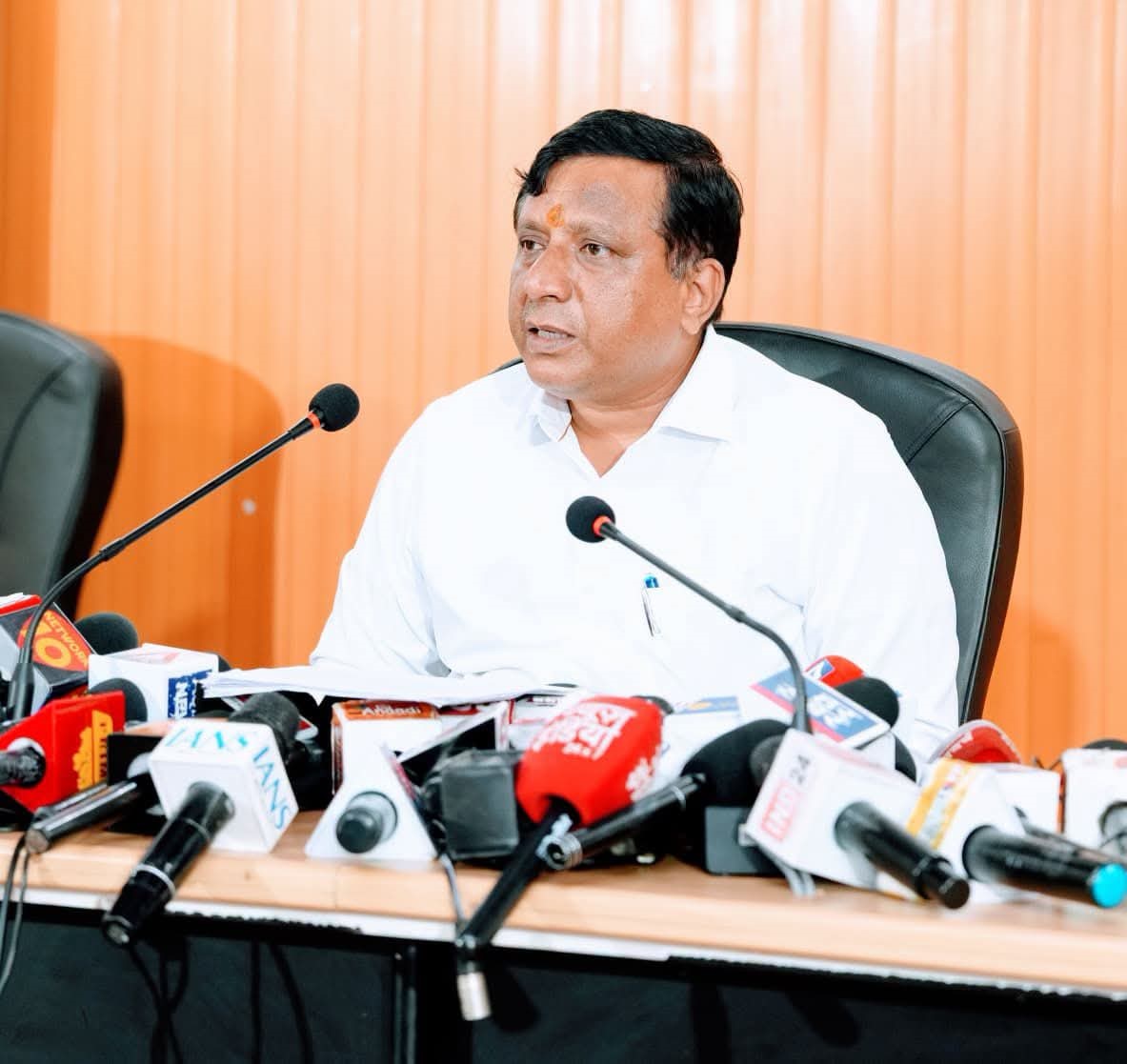
Dehradun, 7 Aug: A cabinet meeting was held at the Secretariat here today under the chairmanship of Chief Minister Pushkar Singh Dhami. Fifteen key proposals were approved during the meeting. Additional Secretary to the Chief Minister and Director General of Information Banshidhar Tiwari briefed the media later about the major decisions taken by the Uttarakhand Cabinet.
The Cabinet approved 15 important proposals covering public welfare, rural economy, employment, labour welfare, education, judicial infrastructure, sports, tourism, drinking water, industrial development and taxation.
Among the key decisions were the approval of the extension of the State’s cattle rearing subsidy scheme to the general category farmers, approval of the Uttarakhand Wage Code Rules, 2026 to safeguard workers’ interests, sanction for a new High Court complex at Haldwani, creation of 122 posts for the State Sports University, approval for the extension of the Ganga Expressway to Haridwar through an agreement with Uttar Pradesh, amendments to the State GST law, revised eco-tourism policy, implementation of Jal Jeevan Mission transfer protocols and approval of the Uttarakhand Industrial Relations Rules, 2026.
One of the Cabinet’s most significant decisions is to expand the scope of the State Sector Cattle Rearing Scheme by extending its benefits also to the livestock owners belonging to the general category. Beneficiaries will now have the option of purchasing either cows or buffaloes under the scheme. The unit cost of each animal has been enhanced from Rs 40,000 to Rs 60,000. Scheduled Caste and Scheduled Tribe beneficiaries will receive a subsidy of up to 90 percent, while the subsidy for the general category will be limited to 60 percent. The beneficiaries will be eligible to purchase a maximum of two animals under the scheme. The government expects nearly 2,128 livestock owners to benefit during the first year, providing a significant boost to the rural economy, self-employment and efforts to check migration from villages.
The Cabinet also approved the Uttarakhand Wage Code Rules, 2026 under the Code on Wages, 2019. The government has claimed that the new rules aim to protect the interests of workers in both the organised and unorganised sectors by ensuring payment of minimum wages, double wages for overtime work, mandatory payment of salaries by the seventh day of every month and greater use of digital payment systems. The rules also make it mandatory for employers to provide equal wages to men and women performing the same work, thereby reinforcing the principle of equal pay for equal work.
Another important decision was the approval of the Hostel Operation Rules, 2026 for the hostels run by the Social Welfare Department for Scheduled Caste and Scheduled Tribe students. The new rules are intended to provide meritorious students with improved educational facilities, better accommodation, nutritious food and an environment conducive to their overall development.
To strengthen eco-tourism, the Cabinet approved the proposals for amendments to the composition of the High Powered Committee constituted for promoting eco-tourism in the State. The restructured committee, headed by the Chief Secretary, will include senior Forest Department officials and focus on environmental conservation, management of medicinal herbs, waste management, better coordination with local communities and the development of new eco-tourism hubs on the lines of successful models such as Jabar Khet. The committee will also work towards preparing an integrated trekking and mountaineering policy.
The Cabinet also approved promulgation of an ordinance to amend the Uttarakhand Goods and Services Tax Act, 2017 (UKGST) in line with changes introduced by the Central Government. The amendment is aimed at keeping the State’s GST framework aligned with national legislation while strengthening revenue administration and ensuring smoother implementation of the revised GST provisions.
In a major step towards establishing a permanent High Court complex in the Kumaon region, the Cabinet approved the transfer of around 30 hectares of land, from the larger forest land available in the Lamachaur-Gaulapar area of Haldwani, for construction of the new High Court campus. The proposed complex will include the main court building, judges’ residences, advocates’ chambers, administrative offices and parking facilities. It may be recalled that the Supreme Court had recently cleared the way for shifting of Nainital High Court to Haldwani in view of lack of adequate space in Nainital.
The Cabinet also sanctioned the creation of 122 regular posts for the smooth functioning of the Uttarakhand State Sports University at Gaulapar in Haldwani. Additional technical and support staff will also be engaged through outsourcing arrangements. Spread over nearly 90 acres, the Sports University is expected to play a key role in producing world-class athletes in line with the Mission Olympic 2036 vision while providing modern sports infrastructure and quality coaching facilities.
A proposal concerning the Bengali-origin Scheduled Caste community residing in Dineshpur and Shaktifarm was also approved. The Cabinet amended the rules governing the Assistance Fund Management Committee to provide that the Vice-Chairperson and member positions in the committee will henceforth be filled by nominees belonging to the Bengali Scheduled Caste community itself. It may be recalled that though the Bengali SC community has been living in Udham Singh Nagar district almost since independence, it had not been granted the status of SC.
In compliance with directions of the Supreme Court, the Cabinet approved amendments to the Uttarakhand Cooperative Societies Rules, 2004 by removing discriminatory provisions relating to persons suffering from leprosy. The revised rules will permit persons affected by leprosy to become members of cooperative societies, while replacing the earlier provision with one relating to mental incapacity declared by a competent court.
The Cabinet also approved implementation of the protocol prescribed by the Government of India under the Jal Jeevan Mission for commissioning rural drinking water schemes and transferring them to Gram Panchayats and Village Water and Sanitation Committees. The move is expected to strengthen community participation and improve long-term management of rural drinking water infrastructure.
Another important decision related to the Uttarakhand Forest Development Corporation Service (Amendment) Regulations, 2026. The Cabinet approved the introduction of a 100-mark written examination for recruitment to the post of Scaler, making the selection process more transparent and in line with the recruitment standards followed by the State Public Service Commission.
The Cabinet also approved signing of a Memorandum of Understanding between the Governments of Uttarakhand and Uttar Pradesh for extending the Ganga Expressway from Meerut to Haridwar. The proposed extension is expected to provide a major fillip to religious tourism, industrial investment, trade and employment while significantly improving road connectivity between Haridwar, Prayagraj and other important cities of Uttar Pradesh, reducing travel time and easing traffic congestion.
The Uttarakhand Industrial Relations Rules, 2026 were also approved under the Industrial Relations Code, 2020. According to the government, the new rules seek to modernise labour and industrial relations in the State by providing for time-bound settlement of industrial disputes, recognition of trade unions, constitution of grievance redressal committees, clearly defined procedures for strikes and lockouts, establishment of a workers’ re-skilling fund and provisions enabling retrenched employees to receive fresh opportunities for employment wherever applicable.