Garhwal Post Bureau
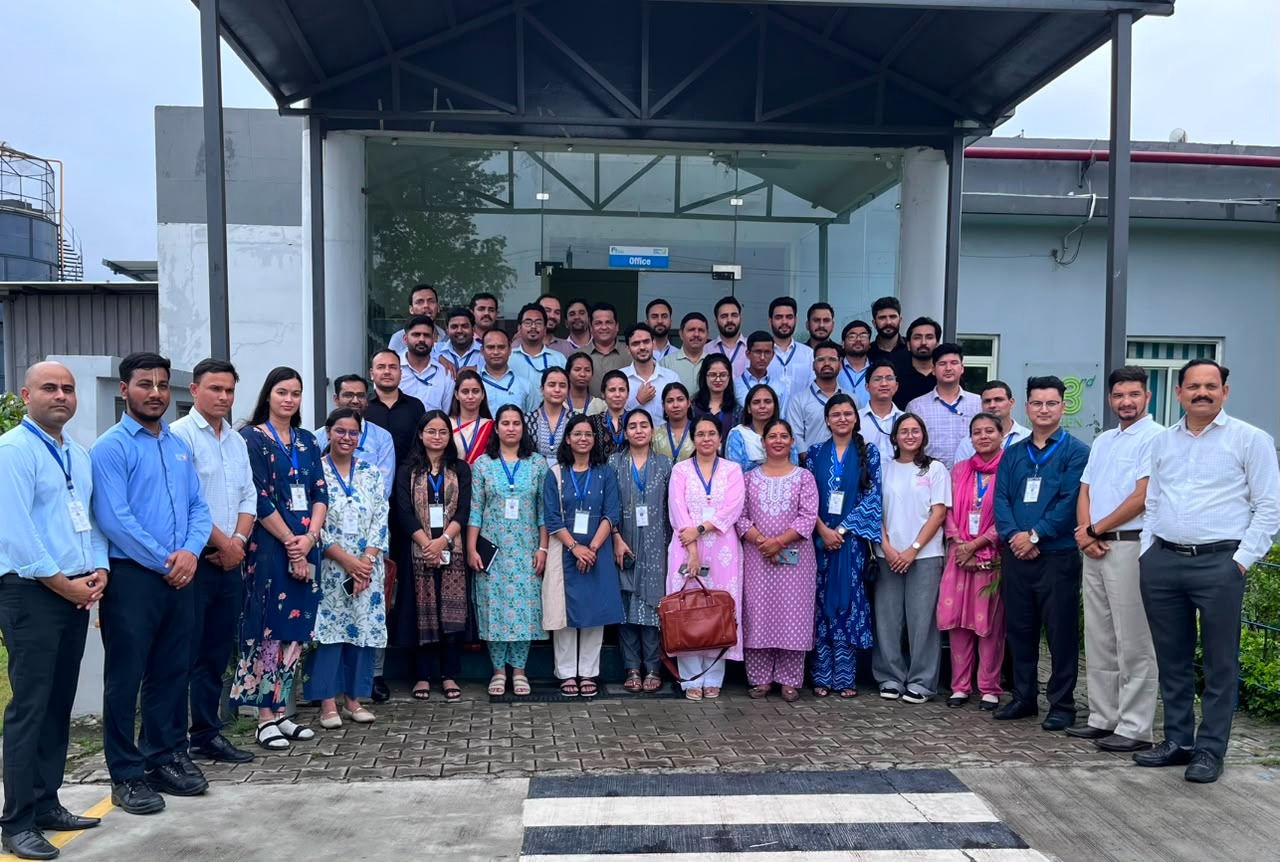
Dehradun, 17 Aug: To understand the implementation of government welfare schemes at the grassroots level, 49 newly recruited PCS officers of the Education Department, Uttarakhand, accompanied by Deputy Commissioner (FOA) Ganesh Khandwal, visited The Akshaya Patra Foundation’s centralised kitchen at Suddhowala, Dehradun.
The visit was organised as part of the officers’ Foundation Training Programme and provided them an opportunity to witness the on-ground implementation of the PM POSHAN Scheme. During the visit, the officers observed the complete meal preparation and distribution process, including cooking, food safety, quality checks, hygiene, packaging and timely transportation of meals to schools.
The automated and modern cooking system at the centralised kitchen was among the key highlights of the visit. The officers were briefed on the systems followed to prepare meals according to prescribed standards and maintain food safety and quality throughout the process.
They also learned about the role of the Public–Private Partnership (PPP) model in implementing large-scale public welfare programmes. The visit showcased how government policy, administrative coordination and the efforts of organisations such as Akshaya Patra can work together to deliver services effectively at the grassroots level.
The Akshaya Patra Foundation currently serves approximately 2.35 million meals every day through 83 centralised kitchens across India. In Uttarakhand, the Foundation provides meals to around 61,000 children across 650 schools, while its Dehradun centralised kitchen serves nearly 41,000 meals every day across 443 schools.
The visiting officers also observed the systems adopted by the Foundation to ensure that children receive hot, nutritious and hygienic food while maintaining food safety and quality standards.
Speaking on the occasion, Deputy Commissioner (FOA) Ganesh Khandwal appreciated the initiative, describing it as an “incredible initiative with a great motive”. He also stressed the importance of strengthening a food-safety culture and ensuring that children are provided with safe and nutritious meals.
The visit gave the newly recruited officers an opportunity to connect administrative policy with its practical implementation and understand the operational challenges involved in delivering a large-scale welfare service.
The programme highlighted how policy, partnership and effective execution can collectively address grassroots challenges, with the larger objective of ensuring that hunger does not become a barrier to a child’s education.