Congress Election Manifesto Committee holds meet in Dehradun
Garhwal Post Bureau
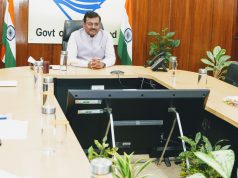
Dehradun, 18 Aug: A meeting of the Election Manifesto Committee of Congress was held today at Congress Bhawan. During the meeting, Uttarakhand Pradesh Congress manifesto committee chairman and deputy leader of opposition in the Assembly Bhuvan Kapri stated that the state has witnessed a complete absence of government over the past decade. He claimed that those claiming to govern have in reality reduced themselves to mere managers, and are insensitive and detached from the people. He emphasised that in a democracy government is not simply the administrative machinery or those in power, but a system chosen by the people, for the people and accountable to them. He said the Congress manifesto would be a pledge to restore such a government in Uttarakhand.
Kapri outlined five principal commitments of the manifesto. He said that first is the restoration of a government accountable to the people and guided by their participation. The second is the preparation of the manifesto itself as a document of aspirations, problems and suggestions of the people rather than a list of electoral promises, ensuring participation of every section of society. The third is democratic accountability and dialogue, making the future Congress government politically and democratically answerable to the people and basing governance on sensitivity and participation. The fourth is the revival of Nehruvian socialism and public institutions, reinstating education, health and social security as core responsibilities of the state. The fifth is the re‑establishment of the Gandhian‑Sarvodaya rural development model, placing villages, rural economy and the last person at the centre of development, expanding employment opportunities based on local resources.
Coordinator of the manifesto committee Prem Bahukhandi said the revival of Nehruvian socialism and public institutions would be the guiding principle of the Congress manifesto. He added that weakening public institutions in the hill areas and closing schools and health centres reflected the failure of the present government. He stressed that Congress would restore the Gandhian‑Sarvodaya model by strengthening gram sabhas and promoting agriculture, horticulture, animal husbandry, forest produce, cottage industries and local enterprises to generate employment in villages and check migration.
Senior Congress leader Suryakant Dhasmana observed that it is ironic that in the very state created through mass movements, agitators today are compelled to struggle for their demands. He questioned whether dialogue between government and people has completely ceased and said the process of preparing the Congress manifesto would itself take the shape of a people’s movement, engaging farmers, labourers, youth, women, employees, traders, teachers, health workers, entrepreneurs, social activists, rural residents and migrants in Uttarakhand.
Committee member and senior leader Sujata Paul expressed concern over the government’s insensitive approach towards the problems of people in Joshimath and Helang and the use of force against unemployed youth demanding jobs. She said demonstrations, protests and hunger strikes are not weaknesses of democracy but its strength, and it is the duty of government to resolve issues through sensitivity and dialogue.