Garhwal Post Bureau
Purola, 27 Aug: High in the Himalayas, Doon University’s Dr Ambedkar Chair has launched targeted capacity-building initiatives in remote Uttarkashi to ensure geography does not limit student ambition. By taking practical training deep into high-altitude villages, the initiative actively empowers students from marginalised communities.
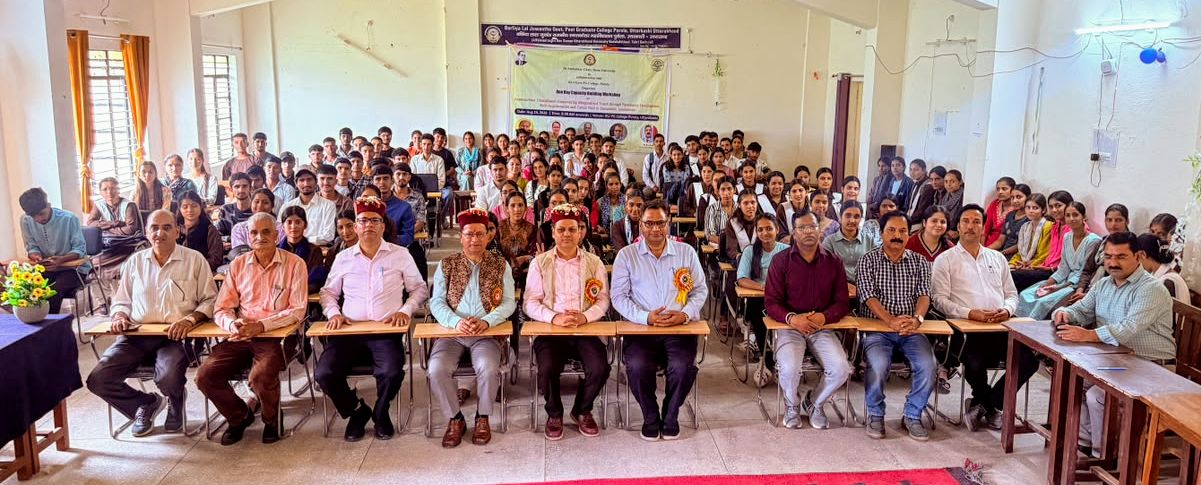
The drive delivered hands-on workshops across two Purola institutions: Barfiya Lal Juwantha Government Post Graduate College and Atal Utkrisht Government Inter College. Specially tailored for Scheduled Caste (SC), Scheduled Tribe (ST), and Other Backward Class (OBC) students, the sessions provided academic guidance, career counselling, personality development, and soft-skills training.
Doon University Vice-Chancellor Prof Surekha Dangwal commended the outreach, emphasising that reaching isolated mountain communities reflects the institution’s commitment to constitutional values of social justice and quality education for the last student in line.
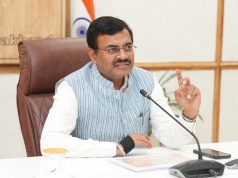
Addressing the gathering, Chair Professor Harsh Dobhal detailed Dr BR Ambedkar’s cornerstone contributions to nation-building, emphasising that his enduring vision must be translated into direct field-level action. Noting that nearly 95% of participating students belonged to SC, ST, and OBC communities, he stressed that education remains the most potent instrument for socio-economic transformation among rural mountain youth, bridging historical regional and social divides.
To turn these principles into personal success, Prof Dobhal offered practical guidance on personal growth, urging students to view confidence, active daily reading, and public speaking as essential tools for self-reliance. By mastering articulate expression in both regional and national languages and overcoming hesitation, he noted, youth from the Himalayan hinterland can effectively project self-assurance, present their ideas, and claim their rightful space in higher education and professional spheres.
Extending the discussion into economic self-reliance, Prof RP Mamgain, Dean of the School of Social Sciences, emphasised the vital role of local economic development in reversing youth migration and building resilient mountain communities. He encouraged students to look beyond traditional employment paths, identify untapped regional possibilities, and leverage targeted skill training.
Highlighting the unique strengths of the high-altitude ecosystem, Prof Mamgain urged youth to harness local resources through eco-tourism, organic agriculture, processing non-timber forest produce, and traditional crafts to establish sustainable, community-driven enterprises. Furthermore, he highlighted that blending traditional Himalayan knowledge with modern entrepreneurial skills is key to opening new economic horizons. Ultimately, Prof Mamgain noted, empowering mountain youth to become self-reliant job creators rather than job seekers is essential for preserving both the socio-cultural fabric and ecological balance of the region.
Addressing the critical psychological dimensions of student growth, Dr Rajesh Bhatt, Head of the Department of Psychology, offered practical strategies for navigating academic pressure and examination stress. He guided students through structured study routines, mindfulness techniques, and effective coping mechanisms, advising them to view exams as manageable learning milestones.
Building on stress management, Dr Bhatt stressed the importance of cultivating emotional strength, framing setbacks as learning opportunities, and maintaining a resilient mindset to navigate competitive career paths with confidence.
College Principal Prof AK Tiwari highlighted that expert-led interventions successfully bridge severe gaps caused by geographical isolation, harsh weather, and limited regional mentorship. Outreach extended to school-level youth through the dedicated “UDAAN” workshop on soft skills and career paths, welcomed by Chatar Singh Chauhan and moderated with a vote of thanks by Ravindra Singh Rana. Concluding the proceedings, Rajesh Lal Arya expressed sincere gratitude to the resource persons, noting that strong student turnout reaffirmed the urgent need for ongoing collaborative initiatives.
Established under the Dr Ambedkar Foundation (Ministry of Social Justice and Empowerment, Government of India), the Dr Ambedkar Chair at Doon University serves as a premier centre for research, education, and community outreach. Dedicated to social inclusion, it advances empirical studies, capacity-building workshops, and field-level empowerment for SC/ST, OBC, and women across the Himalayan region.