Culinary Chronicles
 By Yasmin Rahul Bakshi
How Dal Makhni turned into Dal Makhaani –
Being married to an Army officer meant that a large part of my life had unfolded around cantonments, Messes, dinner nights and those wonderful Army tables where food somehow carried stories from every corner of India.
Tiger and I had eaten dal makhani countless times in Officers’ Messes and there was one little addition that always caught my attention.
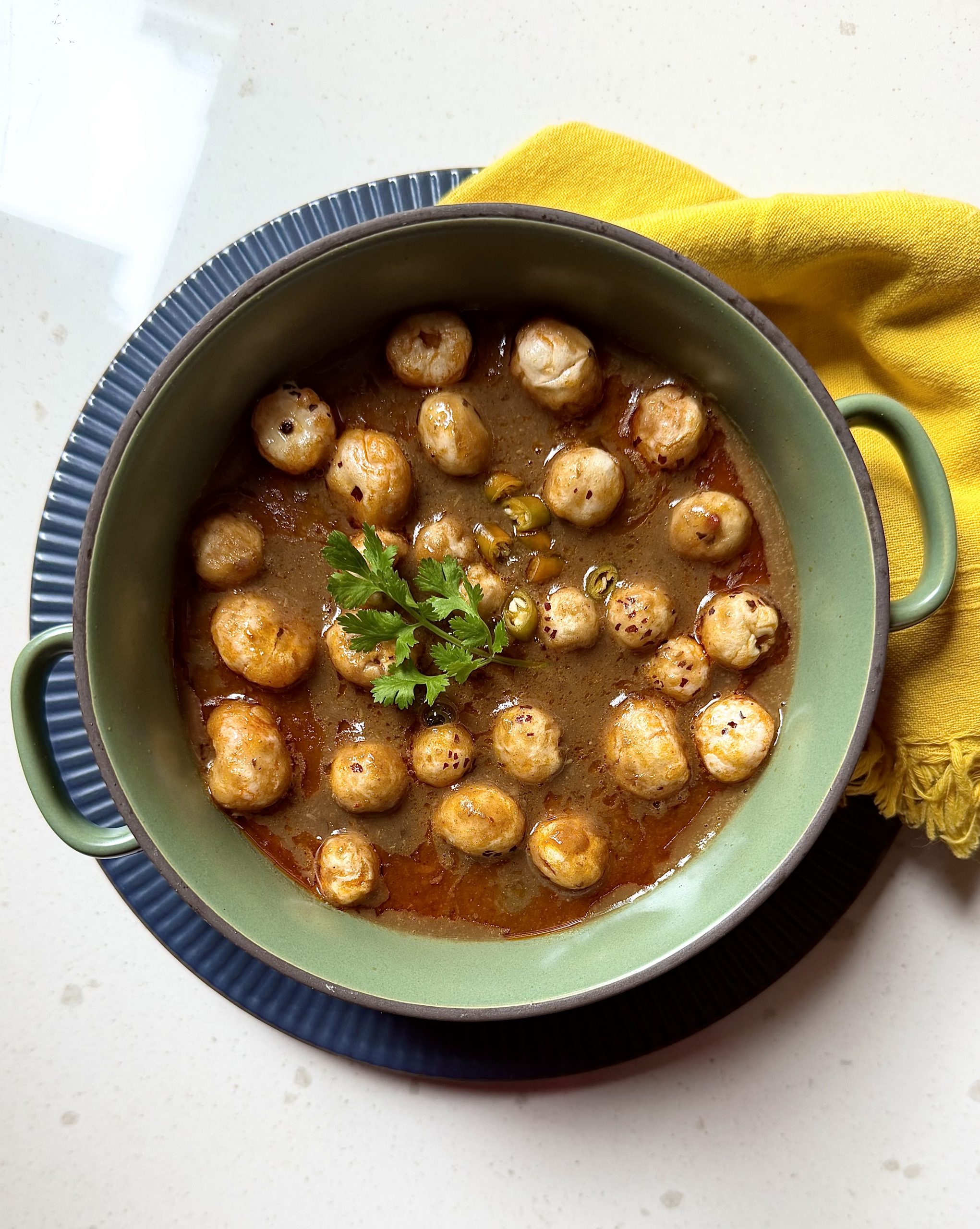
Makhana!
Those plump little fox nuts would sit happily in the rich black dal as though they had been born there.
Tiger never found this remotely unusual. To him it was familiar Mess food, something he had probably encountered so often that makhana and dal makhani belonged together rather naturally.
I, on the other hand, had the occupational hazard of being curious about everything on my plate.
“Why do Army Messes put makhana in dal makhani?”
Tiger thought about it.
“Because it tastes good.”
Fair enough.
But a food historian cannot possibly leave such a sensible answer alone.
So began my investigation into the mysterious relationship between makhan and makhana.
Traditional Punjabi dal makhani is built around whole urad, some rajma and long, patient cooking enriched with butter. Makhana is not essential to it. Yet there was something wonderfully familiar about seeing it in Mess versions.
Then I came across an intriguing clue.
In Bihar and Mithila, makhana has long had a place in regional cooking and has also been cooked with dal. There are references to dal makhani where the name is associated with makhana, the fox nut, rather than makhan, the butter of the Punjabi dish.
And suddenly my imagination travelled straight into an old Army kitchen.
Perhaps many years ago, somewhere in a cantonment, a cook familiar with makhana looked at a slowly simmering pot of Punjabi black dal and decided that the two deserved an introduction.
A handful of makhana went in.
Someone tasted it.
Someone asked for a second helping.
And perhaps that was all the encouragement the recipe needed.
Because this was one of the loveliest things about Army life. People came from everywhere and so did their food. A cook brought an idea from Bihar. Another brought a technique from Punjab. Someone carried a flavour from Rajasthan, Kashmir or the hills. Officers and families moved from station to station and recipes travelled quietly with them.
The Mess kitchen became, without anybody formally planning it, a rather splendid culinary exchange programme.
Makhana would have fitted into this world beautifully. It stored well, travelled easily and when lightly roasted in ghee and added to a rich dal, absorbed all that wonderful flavour while giving the dish an unmistakably festive touch.
Do I have an old Army document proving that this was exactly how makhana entered Mess dal makhani?
No.
And perhaps that makes the story even more charming.
Some food traditions did not begin with written recipes. They began with cooks, families, postings, shared tables and somebody saying, “This tastes wonderful. Make it again.”
After explaining my entire theory to Tiger – Bihar, Mithila, Punjab, travelling recipes and the possible meeting of makhan with makhana – I waited for his verdict.
He smiled and said something far more sensible than all my research.
“Whatever the story is, it makes the dal taste good.”
And there it was.
I had spent hours looking for history.
Tiger had found the answer in one spoonful.
Perhaps that is the real story of Army Mess food – India travelled with the Army and sometimes, somewhere along the journey, makhan met makhana.
And they have been getting along rather well ever since
Ingredients:
- Sabut urad – 250 g
- Rajma – 50 g
- Makhana – 50 g
- Ginger – 40 g, finely chopped
- Garlic – 50 g, finely chopped
- Tomatoes – 200 g, puréed
- Onion – 150 g, very finely chopped
- Ghee – 30 g
- Butter – 50 g
- Kashmiri / deggi mirch – 1 tsp
- Coriander powder – 1 tsp
- Cumin – ½ tsp
- Garam masala – ½ tsp
- Salt – to taste
- Water – as required
(No cream is necessary. No sugar. No large quantities of tomato. No elaborate restaurant-style spice mixture.)
Method:
- Soak the urad and rajma overnight. Pressure-cook them with salt, some of the ginger and plenty of water until extremely soft. The urad should begin breaking down naturally.
- In a heavy bottom pot, heat the ghee. Add cumin followed by onion and cook slowly until properly softened and lightly browned. Add garlic and remaining ginger.
- Add the tomato and cook it down thoroughly. Add deggi mirch and coriander powder and cook until the masala and fat separate.
- Add the cooked dal along with its cooking liquor. Now comes the important mess kitchen part – cook it very slowly for several hours. Keep adding hot water in small quantities and continue stirring and lightly crushing some of the urad with the back of the ladle.
(The dal gradually becomes thick, glossy and almost creamy from the starch of the urad itself, not from cream.)
The Makhana
- Dry-roast the makhana in a little ghee until lightly crisp.
- Add them during approximately the last 20 – 30 minutes of cooking. They absorb some of the dal while retaining a slight bite.
- Finally add butter and just ½ tsp garam masala. Simmer for another 10–15 minutes.
(Yasmin Rahul Bakshi is an accomplished senior consultant Chef and a food historian. A widely travelled Army wife from the Mussoorie hills with exposure to international cuisines & preserving recipes with the medium of food photography and digital content creation in the form of stories.)