The Books From My Shelves
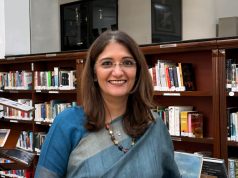
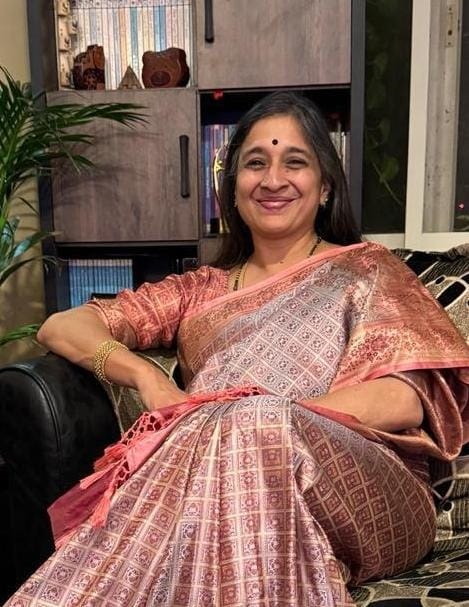
By Prof Dr Lakshmi Priya Vinjamuri
The bookshelf at home reminds me of a past that is the truth, the reality of a life filled with experiences influenced by the first hobby I ever had, that of reading books, nurtured and encouraged by my mother and meticulously fed and enriched by my father, an academician. As the fourth generation academician or I prefer to call myself a continuous learner, I was introduced, or should I say, flung into a world of books with three distinct bookshelves, one ornate in ebony teak, standing tall in my grandfather’s ancestral home, the glass door teakwood European style 12 feet long book rack at my father’s and the tiny in comparison bookshelf at my own humble abode that strike an emotional poignant chord in me. I am indeed grateful to Napalchyalji to give me an opportunity and the impetus to share my journey with the ten most impactful books I have read over the years.
The first book that had a lasting impact on me is Gone with the Wind by Margaret Mitchell, (The Macmillan Company (New York)) a classic in American Literature set in the 1930’s. The book is about the journey of a woman who dreamed, lost, survived and achieved new heights through sheer determination and gumption and how the protagonist Scarlett O’Hara adapts herself to the emerging and dynamic scenarios of war despite the destruction and pain the war had brought in her life. This novel has a drive that a woman must protect and conserve her home in the most adverse of situations. The one line that struck a chord in my heart “tomorrow is another day” stays to this day.
George Bernard Shaw’s Pygmalion, (Penguin Classics) is a play about a phonetics professor who makes a bet that he can transform a poor Cockney flower girl into a proper lady by changing the way she speaks. Humorous yet with a strong message, it is one of the most optimistic works of literature on the dynamics of the mind of an educated woman who learns to choose independence. A very strong influence, Pygmalion is a beautiful and well-articulated critique on the elitist British class system that highlights that social class is only skin deep and based on superficiality of speech and manners often compromising on the true worth of humanism and humanity.
The Moonstone by Wilkie Collins (Penguin Classics), by far, is my favorite, a remarkable read for a concoction of suspense, romance and humor. I reminisce to this day when Miss Elisha my English teacher coaxed me into reading this work, enticing me to the fact that Wilkie Collins is the Father of Detective novels and the 1st generation English writers of detective fiction. The book endeared to me as it “traces the influence of characters on circumstances” instead of “tracing the influence of circumstances on characters” in the author’s own words. The story written in the first-person races through the annals of history revolving around the journey of the Moonstone, before it was christened the Kohinoor, intriguing even to this day as perhaps one of the few epistolary works composed of distinct, animate and multiple voices.
Nikolai Vasilievich Gogol’s Dead Souls (Penguin Classics) was one of the ebullient masterpieces on human types and their depiction, a magnificent satire on social hypocrisy relevant to this day. The sea of characters, each distinct and sometimes dire, do reflect on the circumstances of society at large. Personally, I like the characterisation of Chichikov, the stranger and his audacious suggestion of using the souls of the dead, still on census as a collateral to evade tax. The book held my imagination for long and has a special place in my life’s learnings and is close to my heart for being a suggest from my late father at a time when I had many unanswered questions and believed in an idealistic society, free of corruption and hypocrisy.
Pico Iyer’s Lady and the Monk (Penguin Books) is a book I read more as a member of the expat women in Singapore for a book review club. Looking back, this book has a string of nostalgia and each time life traversed me to unexplored domains, I fondly remember the travelogue of Pico Iyer as reflection of life, where in continuously and contiguously living an ancient life in modern lifestyles is an idea I personally can relate to the rich and verbose language in grandiose imagery juxtaposed with the contradicting life of paradoxes inspires me each time I read this narrative to reflect on this mundane, meticulous, methodical and meaningless life we lead in search of the truth, a hypocritical contradiction that we embrace and endure. A single quote to describe it aptly would be “relive a life of paradoxes and contradictions”.
Palace of Illusions by Chitra Banerjee Divakaruni (Picador, Pan Mac Millan) is a recent read that mesmerized, enthralled and motivated me not just for the style of the narrative but the portrayal of the protagonist Draupadi, a prominent character from the Great Epic Mahabharata. The journey of Draupadi as a woman of substance, embracing her insecurities, accepting her flaws, swallowing her heartache, fighting for righteousness, arrogant in her decisions, adamant in her resolve, determined in her revenge, stoic in her faith and trust in Lord Krishna opened a Pandora’s box of relatable experiences thereby making the read an impactful and insightful one. The treatment of the subject in pure human tones of the contemporary era in my opinion had been the icing on the cake.
Three cups of Tea by Greg Mortenson and David O’ Relin, (Viking Press, Penguin Books) a memoir of the author Greg narrating on his failed climb to Mount K2 that facilitated a paradigm shift in the dynamics of his thoughts and changed his persona and career from an aspiring mountaineer to a builder of educational institutions in the remote lands of Pakistan and Afghanistan. The narrative feels realistic and true, exuding a raw sense of purpose that drives the author’s intention. I took to the saying of the Balti, “The first time you share tea with a Balti, you are a stranger. The second time you take tea, you are an honored guest. The third time you share a cup of tea, you become family.”
The Kite Runner by Khaled Hosseini (Riverhead Books) is one of the latest captivating stories that was not just moving but realistic that the journey of the boys, the abuse and life at a later phase all seemed to be compiled into one enchanting and immersive read. The book is very reflective and had a lasting impression, for it was a stark reality of one’s own life’s journey and acceptance of the choices that continue to incessantly haunt them. An excellent book on the man’s journey of redemption as he confronts his past and the choices made henceforth in his lifetime, the book is a must read to understand the reality of the Afghan war, the conditions of the victims of war, the prominence of violence and abuse against young boys and the gruesome bestiality that still exists in the face of human rights activism.
Metamorphosis by Franz Kafka (Penguin Classics) has been a revelation, a game changer moving me into the realms of philosophical thoughts on how worthy we are, a book on the transformation of the protagonist into an insect that can be imagined as also perceived both literally and allegorically, and Kafka does a great job of both. A sad story though I would not categorize it as a tragedy as the man who turned into an insect overnight, the one who provided for his family, the very person who was once loved but later despised for his form, he who faced isolation, desolation and rejection, finally dies and that’s happy, salvation and release from the hurt, pain and betrayal he experienced in his life. A moving novella, this philosophical work has a strong impact on any reader.
The Autobiography of a Yogi by Paramahansa Yogananda (The Philosophical Library, New York) from my late father’s collection has been a priced possession and continues to be one of the most intriguing and reflective works I have ever read. The book is a simple to read account of the life of Swami Yogananda by the master himself through the various phases of his life and his incessant search for God, and his relationship with his spiritual master, Sri Yukteswar. An exponent of Kriya Yoga, the book narrates the spiritual philosophy and techniques to achieve Moksha, salvation, in practical and scientific terms which are appealing to the present generation. This book by Yogi is an impeccable work of a genius, gives me that clarity which sometimes gets hazy in realizing the true nature of the self, which extends far beyond the self to encompass the universe in its entirety and as a whole.
The books off my shelves and on my shelves that influenced and shaped me are multitude. Recollecting, reminiscing and reviewing books of almost 3 decades of reading would not have been possible without the intervention of the divine cosmic energy driving an ignoramus of my stature.
(Prof Dr Lakshmi Priya Vinjamuri is a double doctorate in Molecular Oncology and Intellectual Property Law and is presently associated with Uttaranchal University as a Professor of Law.)