Book Review
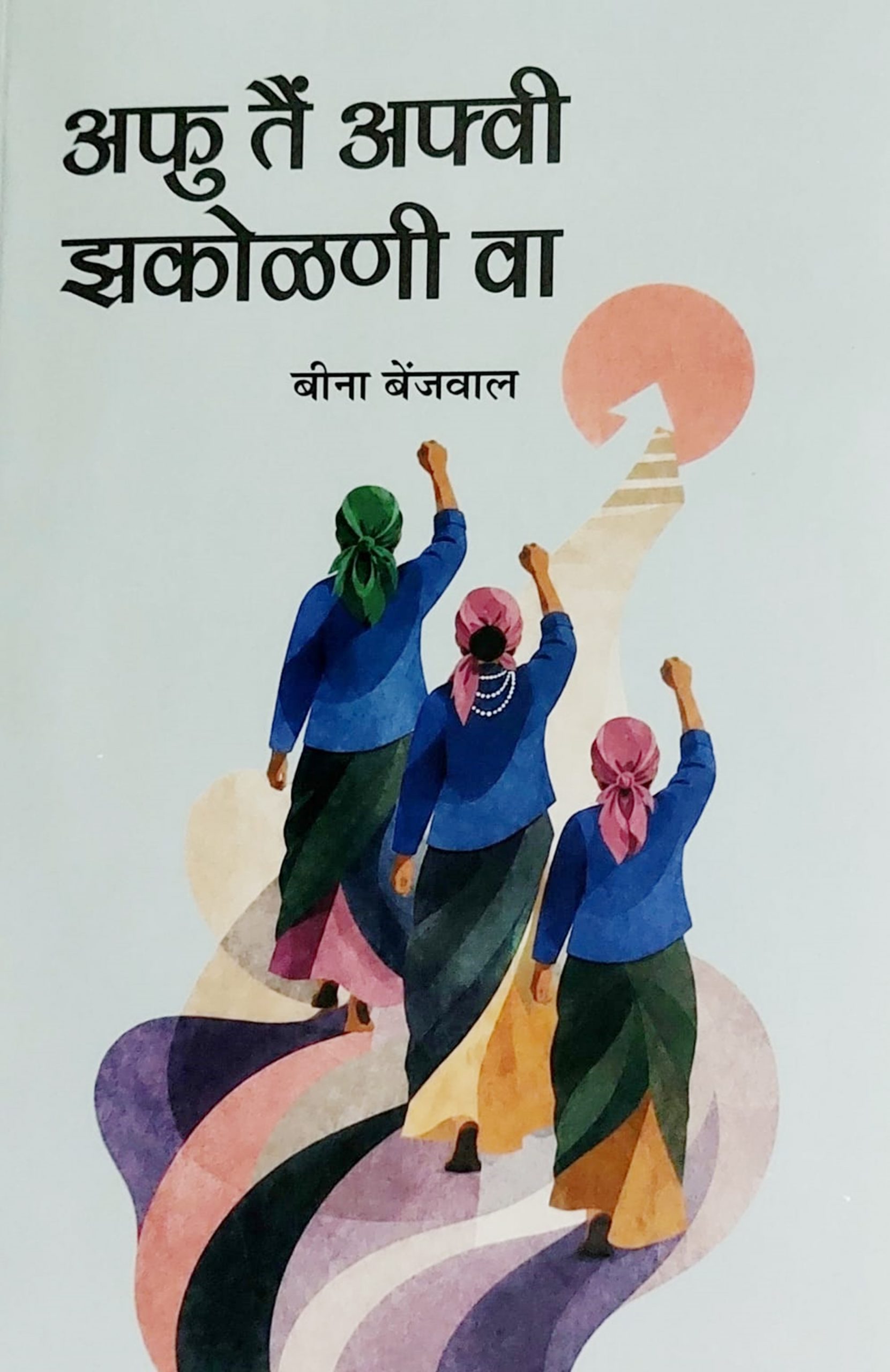
Beena Benjwal’s “Afu Tain Afwi Jhakolni Wa”
 By Dr Anoop Virendra Kathait
Before the sun dispels the mist and dawn, a woman in the hills is already awake. She climbs the rough slopes, cuts the grass, tends the household and keeps the home’s rituals alive. In her freshly released collection, Afu Tain Afwi Jhakolni Wa, Beena Benjwal, an adroit poetess of Garhwali literature, finally gives that woman a revolutionary voice.
Often regarded as the Mahadevi Verma of Uttarakhand, Beena writes with the essence of that great Hindi poetess: with tenderness and quiet forte, and with a deep understanding of a woman’s inner world. The book is drawn from the self-motivating drive of a woman who has spent her entire life in hills and mountains. It is a moving witness to resilience, written by someone who knows these lands.
“Whether she belongs to the mountains, the plains or any continent, the woman in these verses has proved herself at every phase of life.”
The ultimate sacrifice and extraordinary courage run through these verses. The poems stand witness to an adventurous odyssey of survival: for life itself, for motherland, family, rituals and relationships, and above all for the pahadi soul that sustains them.
Hill life does not hiatus for adversity, and neither do these poems. The poetess does not ask for any pity but a call. She asks to be solid at every phase of life. The collection brings together 81 poems, including Ukaal, Dathuli, Silotu, Bwe, Eknasya, Pufyaan, Palenthro, Ghaas, Mukhjatra, Dalkhu, Karda Baar, Rumuk, Chhoun, Itga Raind Gunjais, Wa, Garri Gagar and Naya Bata, etc.
Even the titles read like a walk through a hill village: the everyday tools, the fields, the kitchen, the slope and the road ahead. Together the poems reflect an unrelenting feminism, one that grows from lived experience rather than sayings, and they offer a ray of hope towards empowerment. The closing poems, with Naya Baata among them, point forward, as though the poet is handing the reader a lamp to find the next path of the journey.
Her each poem speaks as much to the native reader as to women of any nation who walk a path of struggle and criticism. A reader in a city flat or a distant continent may never have climbed a Garhwali slope or tough terrain, yet can imbibe the feel of struggling solitude inside. The mountain, in this book, is a metaphor as much as a place. Benjwal defines a hurdle as a new challenge in the life of a hard woman. She is symbol of toughness and a hope for upcoming days ahead.
A world-class creation, the collection affirms the simple, classic style for which Benjwaal is valued. She does not beautify her lines or hide behind difficult imagery. She writes plainly but sensitively, and that is precisely what gives her poetry both warmth and depth. Like a mountain spring her words of verse are flowing to reach that pinnacle of world literature where woman is celebrated as the masterwork created by God.
Regional literature keeps a language’s memory alive, and Garhwali poetry like this carries the language, customs and inner life of the hills reflection towards new generation. This tremendous collection places Benjwal in a lineage of women poets who made isolated feeling a public strength. In giving the hill woman her own voice, she enriches Garhwali letters and widens the conversation on women’s empowerment far beyond the Himalayan foothills. Any creation regenerates an energy to lead the life for a purpose and a message to stand by itself.
The beauty of this collection is a fascinating recitation itself. Beena Benjwal’s poetry should be on the bookshelf of every poetry lover. She carried the mountain; now she sings it as a universal call for empowerment.
Book: Afu Thain Afwi Jhakolni Wa | Author: Beena Benjwaal | Language: Garhwali | Genre: Poetry | Poems: 81
(The author is an educator, poet, critic and short story writer based in the Doon hills)