Books from My Shelves
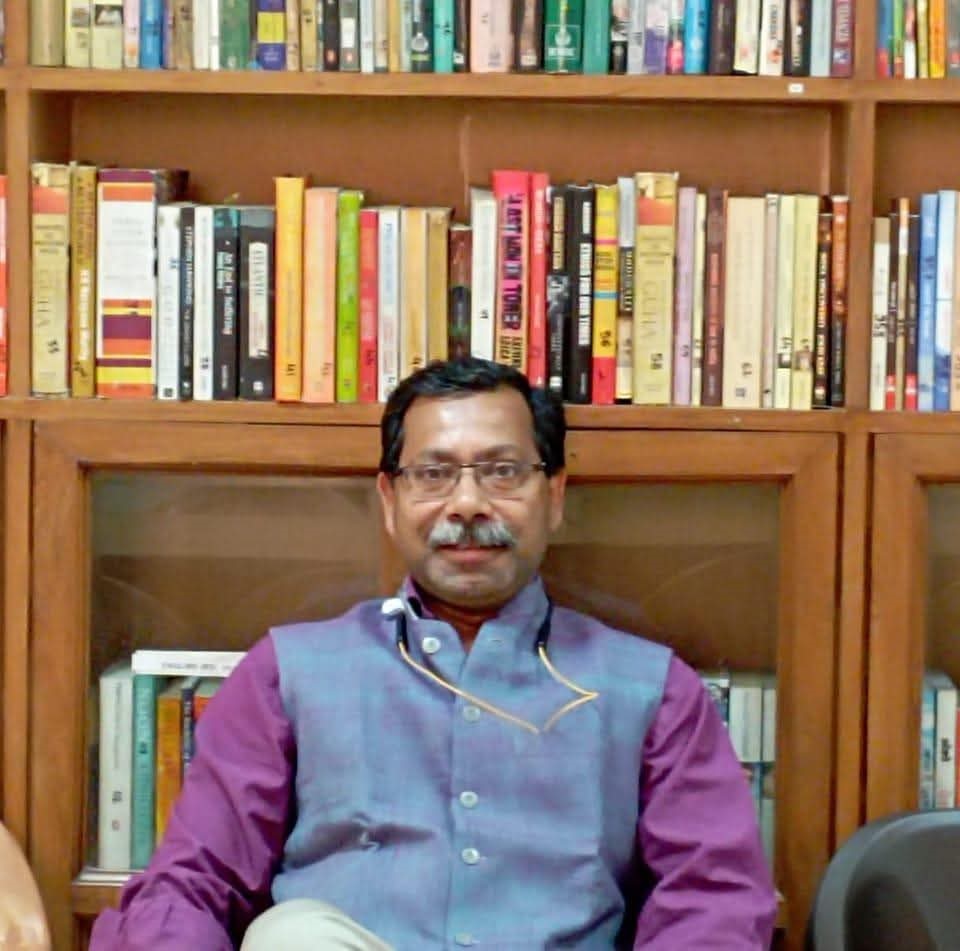
By SUNIL BHATT
Going through the column “Books from My Shelves” in the Garhwal Post, I wondered how we can define our ‘book shelf’. Is it merely an assortment of books lying on my racks, almirahs, tables, and even by my bedside? Here on my study table, I have books on the history of the freedom movement, helping me with my work these days. Some are on the rack behind me, which I used last month for my article on Sahir Ludhianvi. Others are peeping from my almirah, which I love to refer to time and again. Here is one such small book – Panchtantra Ki Kahaniyan (Stories from Panchatantra) published by the National Book Trust, which we all have been reading since our childhood. But for me, it is not just a children’s book. It is profound wisdom presented through interesting stories—with characters drawn from our surroundings. It is a hallmark of the great secular literature we Indians have inherited from our past. It is more powerful than many modern self-help books and can easily be called one of the oldest works of the genre. Its charm never fades.
Is it merely these books, or is it, in fact, I who am attached to them in such a way? There could be many such books for different people. This raises another question—can we not describe or visualize the ‘book shelf’ as a layer of books stacked along the journey of our lives? Indeed, this is how I want to see my ‘book shelf’ – a journey through readings from my past, allowing me to look at different stages of life—each experience and each emotion feeling like a separate shelf that together make up my story. Yet selecting only ten books, as my editor has asked, is a very difficult choice. The list can easily be long, and not just for me, but for every contributor to this series, for each of us is influenced by hundreds of books. Still, here are some that I would like to suggest:
Parsai Rachnawali (Collected Works of Harishankar Parsai), published in six volumes by Rajkamal Prakashan, is one thing I can recommend to all. Harishankar Parsai is regarded as the greatest Hindi satirist of all time. The credit for making satire a popular mode of writing goes to him. Leaving his school job, he chose to become a full-time writer and started writing ‘serious’ satire. His articles, stories, and novellas reflect the realities of post-independence India, presenting a narrative of his era through the eyes of the common person, who is often at the receiving end of the ruthlessness of the system. His political writings reveal a deep understanding of both national and global politics, giving him an edge over other authors of his time. His remarkable skill in presenting complex issues in a simple, accessible manner made him immensely popular among the masses.
Talkhiyan (Bitterness), a compilation of Urdu ghazals and nazms by Sahir Ludhianvi, is one book whose magic still rules since its publication in 1944. It is regarded as the second most widely sold book after Mirza Ghalib’s Diwan. With this work, Sahir took Urdu poetry away from the conventional wine and women themes of the darbar and brought it close to the common person of his times. His poems on the Bengal famine, wars and their horrors, and the suffering of the masses stand apart. He offered a strikingly different perspective on the Taj Mahal, portraying it not as a timeless symbol of love, but as a monument built by a wealthy emperor to display his grandeur under the guise of his devotion to his wife. Aao Ki Koi Khwab Bunen (Let’s Weave a Dream) is his second compilation, which earned him the prestigious Soviet Land Nehru Award in 1973.
Sahir was equally remarkable as a songwriter and penned more than 700 songs. His forte lay in the way he addressed social issues through his songs. A study of his songs was undertaken by the author of this article under the title Sahir Ludhianvi: Mere Geet Tumhare (My Songs Are Yours). The book explored his film journey of three decades, spanning from 1948 to 1982. It is divided into several chapters which examine the issues Sahir took up in his songs, or parts of these songs. Through these chapters, the book attempts to understand Sahir’s thought process and concludes that he addressed a wide range of themes in his songs. He not only struck at social evils but also articulated his views on various complex subjects such as the idea of India, poverty, religious harmony, the status of women, the concept of waqt (time), and love.
Gandhiji’s autobiography, The Story of My Experiments with Truth, is a book that can be read for its deeply introspective narrative that blends personal confession with philosophical reflection. Written with striking honesty and simplicity, it traces his journey from childhood to his role as a leader of India’s freedom struggle. Here, he emphasized not his grand achievements but the moral and spiritual experiments that shaped his life. He presented himself not as a saint but as a seeker—constantly testing the principles of truth, non-violence, and self-discipline in everyday situations.
Another important autobiography of the last century is Jawaharlal Nehru’s ‘An Autobiography’. It is a thoughtful and personal account of his early life and political journey, reflecting his struggles, doubts, and ideals as he grew into a leader of India’s freedom movement. Nehru did not simply narrate events; he probed his own mind, sharing how history, philosophy, and politics had shaped his vision. The book’s value lies in the way it intertwines his personal story with the larger story of India’s awakening, making it both inspiring and profoundly human. Significantly, much of the autobiography was written during his jail terms in Uttarakhand—he began it in June 1934 at the Dehradun jail and completed it in February 1935 at the Almora jail.
Regarding the history of Uttarakhand, the book written by this author, Uttarakhand Mein Gandhi: Yatra aur Vichar, deserves consideration. It offers a vivid account of Mahatma Gandhi’s eight visits to the Haridwar, Dehradun, Mussoorie, and Kumaon regions. Drawing upon contemporary newspapers, books, and the memoirs of politicians, the work serves as an authentic document on the relationship Gandhiji shared with Uttarakhand and its people. Enriched with details of his speeches and writings, the book serves not only as a travelogue but also offers a window into Gandhian philosophy.
Another book on Gandhi by the author of these lines, Gandhi ki Raah Par Dehradun: 1919-1947 (Dehradun on Gandhi’s Path), explores the role Dehradun has played in the freedom struggle movement. The book traces developments in a year-wise manner, covering each year from 1919 to 1947 in detail. Be it the Salt March of Kharakhet; picketing at Astley Hall & Parade Ground; visits by leaders such as Nehru, Gandhi, Madan Mohan Malviya, Subhash Bose, and Sarojini Naidu; the Internment Camp for European prisoners of the Second World War; the making of Town Hall; or the horrors of partition—the book presents accurate details of these events supported by sources ranging from court documents to contemporary newspapers like Garhwali, Shakti, Leader, The Independent, Hindustan Times, Abhyudaya, and National Herald.
When it comes to the freedom struggle, the magnanimous work of Ramachandra Guha—Gandhi: The Years That Changed the World, 1914–1948—is a must-have for any library. Widely praised as a deeply researched biography, it captures Gandhi’s political, spiritual, and personal complexities during his most influential years. The book is admired for its balance, narrative richness, and use of newly available archival material, though some critics note Guha’s tendency to soften Gandhi’s flaws.
In conclusion, all that can be said is that each book represents a stage of life, a set of values, or a moment of transformation, and together they form a rich narrative of our personal growth. The idea reminds us that no individual is defined by a single book or moment. So, dear reader, don’t restrict yourself to one or two lists. Go ahead and create your own list—and make it as long as possible. Happy reading.
(Sunil Bhatt, raised in Dehradun and currently based in Delhi NCR, has been researching Uttarakhand’s participation in the freedom struggle for the past eight years. He has written a monthly series for ‘Yugvani’ that shed new light on Mahatma Gandhi’s visits to Uttarakhand. The series was published as a book in 2024 – Uttarakhand Mein Gandhi: Yatra aur Vichar. His 2023 book on Dehradun’s history, ‘Gandhi Ki Raah Par Dehradun 1919–1947’ was widely acclaimed. He has also published two research-based books on the songs of Sahir Ludhianvi: ‘Sahir Ke Hindi Geet’ and ‘Sahir Ludhianvi: Mere Geet Tumhare’. Beyond books on Sahir, his articles, blogs, short stories, poems, satires, and ghazals have appeared in Outlook, Naya Gyanodaya, Shukravaar, Jansatta, Dainik Jagran, Parikatha, Lafz, Pakhi, and other publications. His science and environment writings in Hindi and English have been published in Rashtriya Sahara, Vigyan Pragati, The Pioneer, The Statesman, and others. In 2020, his poems were included in the Representative Children’s Poetry Anthology.)