By OUR STAFF REPORTER
Srinagar (Garhwal), 19 Oct: Prof. Shri Prakash Singh, Vice-Chancellor of Hemvati Nandan Bahuguna Garhwal University (HNBGU), visited Kedarnath Dham on Monday and offered prayers to Baba Kedar, seeking peace, prosperity and well-being for the country and the state.
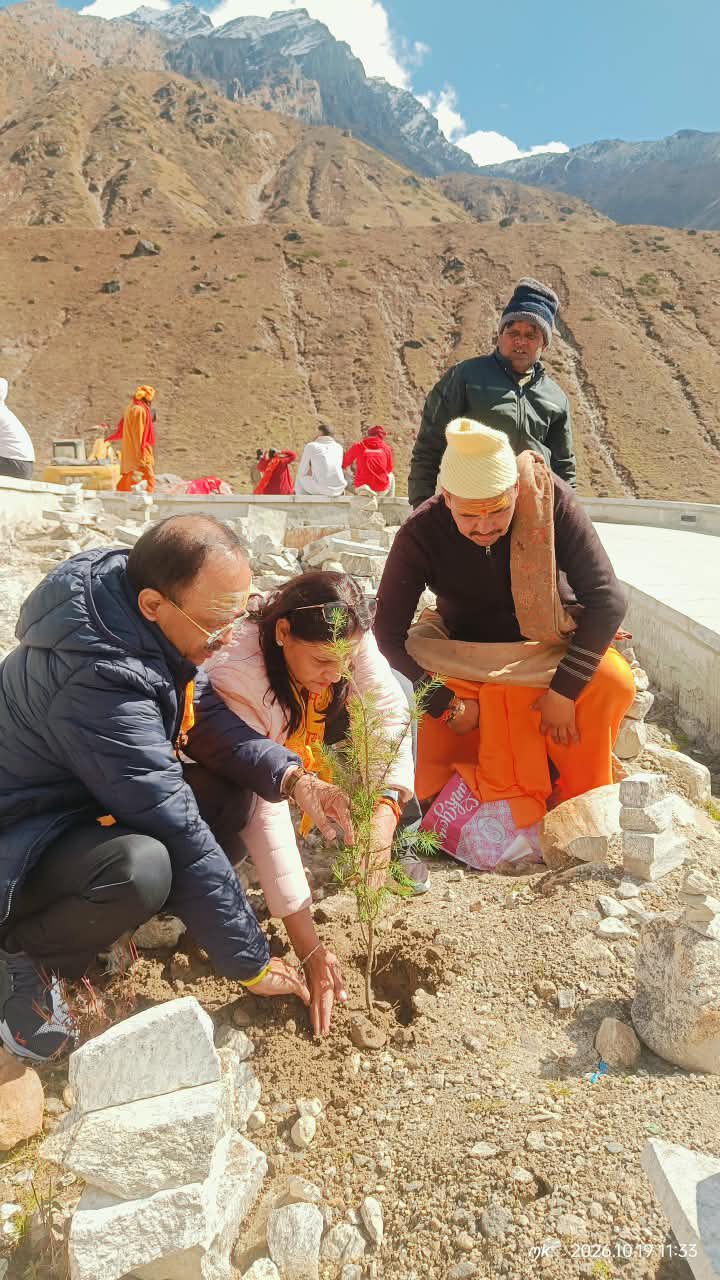
On the occasion, he planted buransh (rhododendron) and deodar saplings, conveying a message of environmental conservation, nature preservation and protection of the Himalayan ecosystem.
Prof. Singh said that the Himalayas are not merely a natural heritage but also an integral part of India’s cultural, spiritual and social identity. Preserving their rich biodiversity is a collective responsibility, he added.
Emphasising the growing importance of environmental conservation and the balanced use of natural resources, the Vice-Chancellor said that climate change, rising temperatures, irregular rainfall and increasing pressure on natural resources have made plantation and conservation efforts more important than ever.
He stressed that planting saplings alone is not sufficient; their regular care, protection and proper growth are equally essential. The true purpose of plantation can be achieved only when the saplings survive and grow into trees that contribute to environmental sustainability.
Highlighting the ecological and spiritual significance of Kedarnath Dham, Prof. Singh said that the region’s forests, water sources, mountain vegetation and biodiversity play a vital role in maintaining the Himalayan ecological balance. He emphasised the need to promote environmentally responsible development, conserve forests and adopt nature-friendly practices in such ecologically sensitive areas.
He appealed to people, particularly tourists and visitors, to plant more trees in their surroundings and actively participate in safeguarding the natural heritage of the Himalayas.
The plantation of buransh and deodar saplings also holds ecological significance. Buransh, the state tree of Uttarakhand, is known for its vibrant red flowers and medicinal properties. Blooming in spring, it enhances the natural beauty of the mountainous region and forms an important part of local biodiversity. Its flowers are traditionally used in beverages and various local products, while the tree also provides a favourable habitat for birds and other wildlife.
Deodar, an important coniferous tree of the Himalayan region, is known for its longevity, evergreen foliage and durable timber. Deodar forests contribute to maintaining mountain ecosystems, conserving soil and sustaining natural habitats. Vegetation cover can also help improve rainwater infiltration and reduce soil erosion, depending on local soil, slope, climatic conditions and forest management practices.
Prof. Singh observed that protecting trees such as buransh and deodar, which are suited to Himalayan conditions, is an important step towards strengthening the mountain environment. He also emphasised the need to select plant species according to local climate, altitude and soil conditions.
He expressed confidence that collective participation by society, educational institutions and young people could transform environmental conservation into a broader public movement. He called upon everyone to develop greater sensitivity towards nature and work together to preserve the Himalayas’ invaluable natural wealth for future generations.
Kedarnath priest Arvind Posti, senior scientist Dr. Sudeep Semwal from HAPPRC, Mukesh Karasi and others were present on the occasion.